
Slate Floor Cleaning, Sealing & Restoration in California
Dull, dirty, hazy, or worn slate tile does not automatically need to be replaced. In many cases, professional slate floor cleaning, sealer removal, detailing, and resealing can dramatically improve the appearance of the stone while helping protect it from stains, moisture, dirt, and everyday wear.
Slate is a natural stone with significant variation in color, texture, density, and porosity. Different types of slate can also react differently to cleaners and sealers, which is why the condition of the stone, its location, and the existing finish should all be evaluated before restoration begins.
At California Tile Restoration, Fritz Wittmann brings more than 23 years of hands-on restoration experience to slate, Saltillo, terracotta, flagstone, and other natural stone surfaces. Detailed restoration work is performed by hand so edges, corners, grout joints, stairs, and other difficult areas receive the attention that machines often miss.
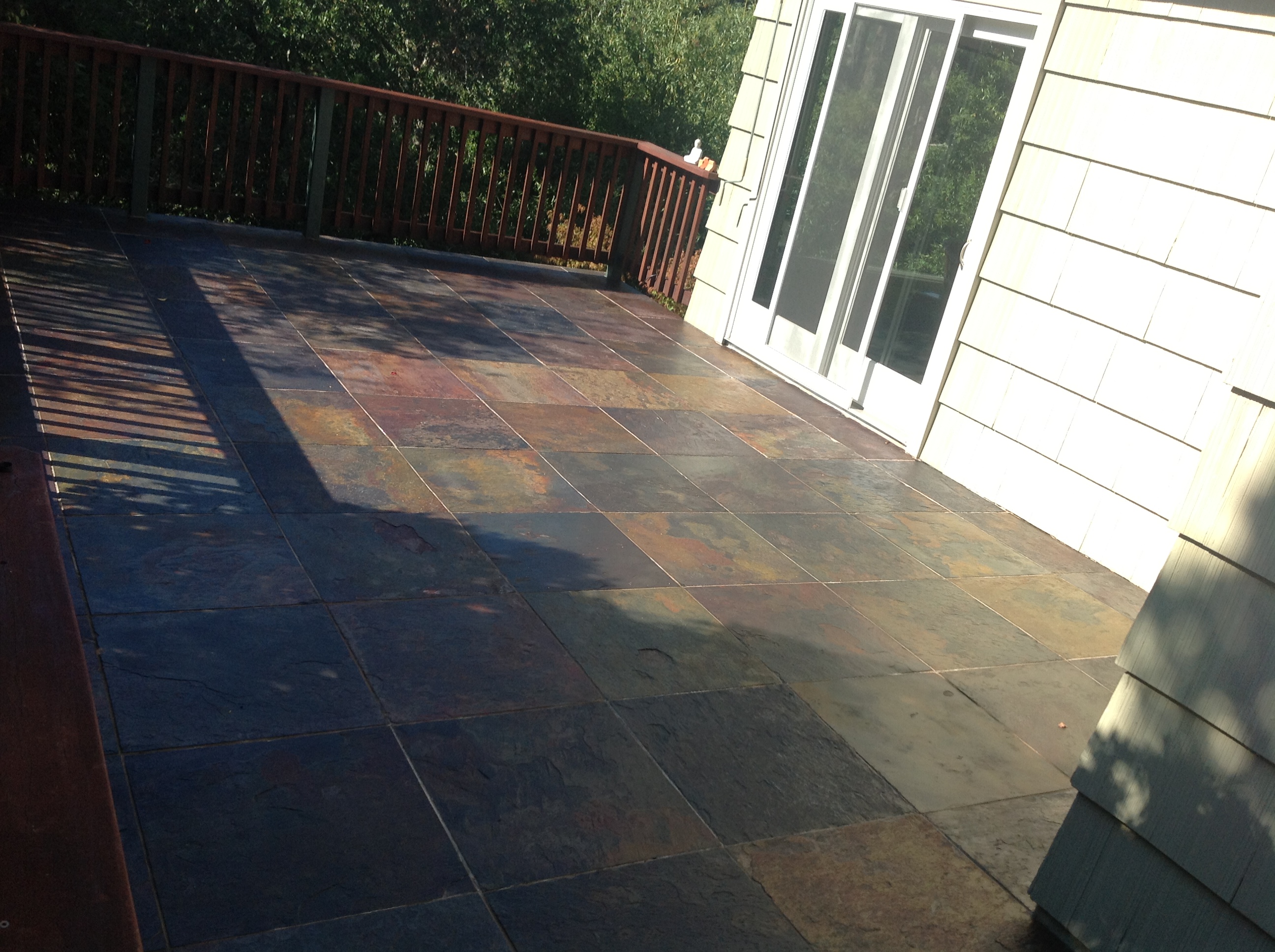
Can Old Slate Floors Be Restored?
Yes. Many slate floors can be restored when the underlying stone is still in suitable condition. A floor that looks dry, faded, dirty, uneven, or difficult to clean may have deteriorated sealer, embedded contamination, or years of surface wear rather than permanent damage to the stone itself.
Depending on the condition of the floor, restoration may involve:
- Deep cleaning the slate and grout
- Removing old floor polish or sealer
- Detailing edges, grout joints, corners, and difficult areas
- Allowing the stone to dry properly
- Applying an appropriate new sealing system
- Building the desired level of sheen or natural appearance
If the existing finish has deteriorated or dirt has become embedded in it, our professional tile cleaning and sealer stripping service may be necessary before the slate can be properly cleaned and resealed.
Interior Slate and Exterior Slate Need Different Care
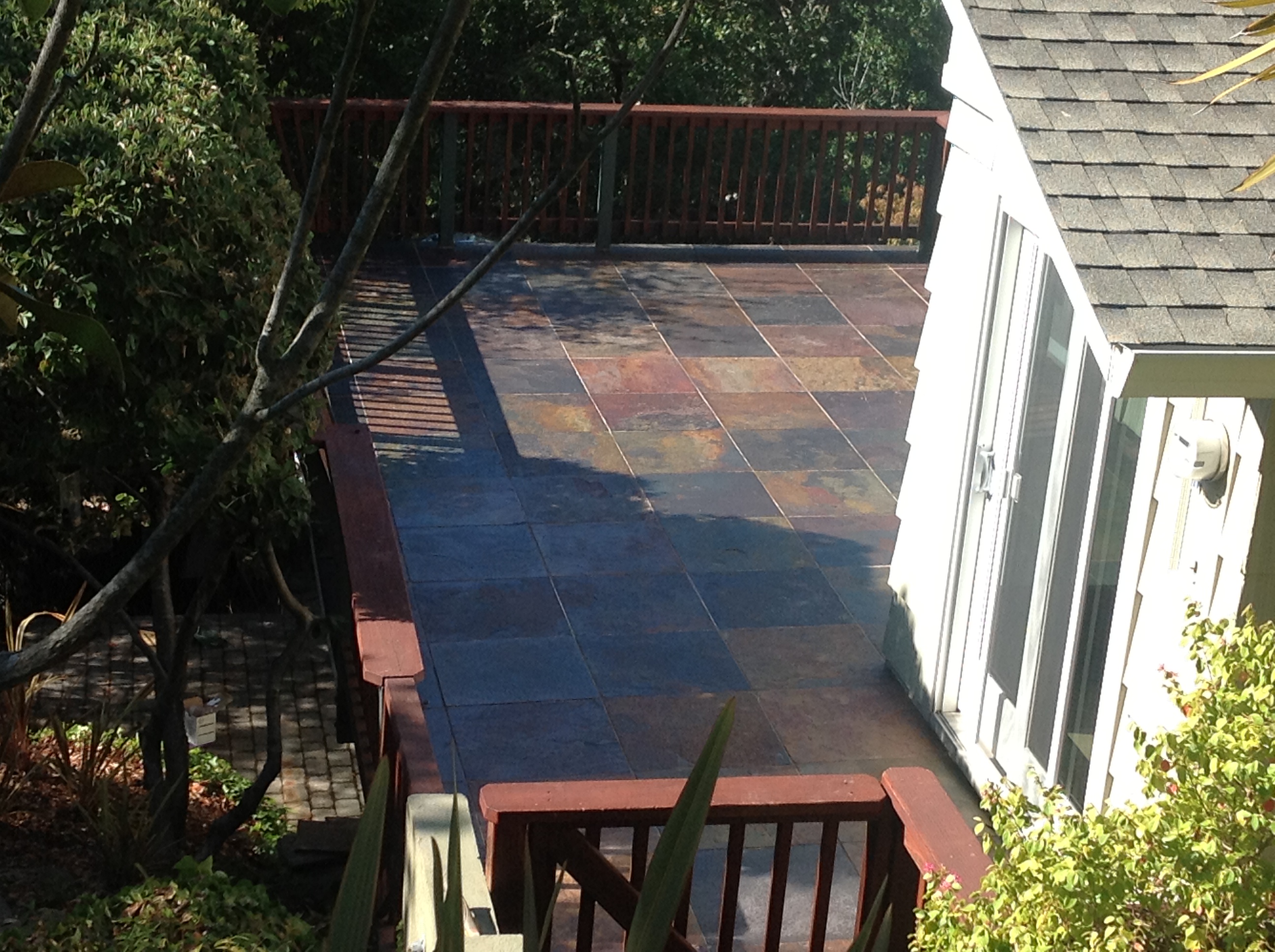
Slate is used throughout homes and businesses on floors, entryways, kitchens, bathrooms, showers, patios, walkways, walls, counters, and other surfaces. The correct restoration and sealing approach depends heavily on whether the stone is located indoors or exposed to outdoor conditions.
Interior slate typically faces foot traffic, spills, oils, cleaning chemicals, furniture, and everyday dirt. Exterior slate must also deal with rain, sprinklers, UV exposure, drainage problems, standing moisture, mold, algae, and changing weather conditions.
For that reason, I do not treat every slate floor with the same product or sealing system.
How We Protect Interior Slate Floors
For appropriate interior slate installations where a topical finish is desired, a protective sealer and compatible floor finish can create a sacrificial layer above the stone.
The idea is simple: you want normal wear, light scratches, dirt, and spills affecting the protective finish rather than immediately reaching the raw slate itself.
This can provide additional protection in high-traffic areas and make future maintenance much easier when the system is properly applied and maintained.
Homeowners who prefer a more natural or lower-luster appearance may have different sealing options. Our tile sealing and polishing services cover multiple finish options depending on the stone and desired appearance.
Why Slate Floors Become Difficult to Clean
Over time, dirt can become embedded in an old coating, floor polish, deteriorated sealer, and grout joints. When that happens, repeatedly mopping the surface may no longer produce the result you expect.
The problem is not always that the stone itself is permanently dirty. Sometimes the contamination is sitting within or beneath an aging finish.
In those situations, the proper restoration process may require removing the old coating first. Once the deteriorated finish and embedded dirt are gone, the actual slate and grout become accessible for detailed cleaning.
Professional Slate Sealer Removal and Stripping
If an existing slate coating has reached the end of its useful life, we may need to completely remove it before applying a new finish.
The appropriate stripping method depends on the type of coating already on the stone. The goal is to remove the deteriorated sealer or floor finish without unnecessarily damaging the underlying slate.
After the old coating is removed, the floor can be detailed, cleaned, dried, and evaluated for resealing.
This is one of the major differences between routine maintenance and complete restoration. Cleaning the top of a failing coating is not the same thing as restoring the stone underneath it.
Slate Floor Maintenance Can Help Avoid Complete Restoration
When a slate floor has been properly prepared and sealed, regular maintenance can dramatically extend the life of the finish.
Based on Fritz's experience, an interior slate floor with a maintainable protective finish may benefit from periodic deep cleaning and replenishment of the appropriate floor finish before the underlying sealer completely deteriorates.
The exact maintenance interval depends on:
- Foot traffic
- Type of slate
- Type of sealer or finish
- Cleaning products being used
- Pets and children
- Kitchen grease and spills
- Moisture exposure
- Indoor versus outdoor placement
Waiting until a floor is heavily scratched, contaminated, peeling, or impossible to clean usually means more restoration work later.
What Does Properly Restored Slate Look Like?
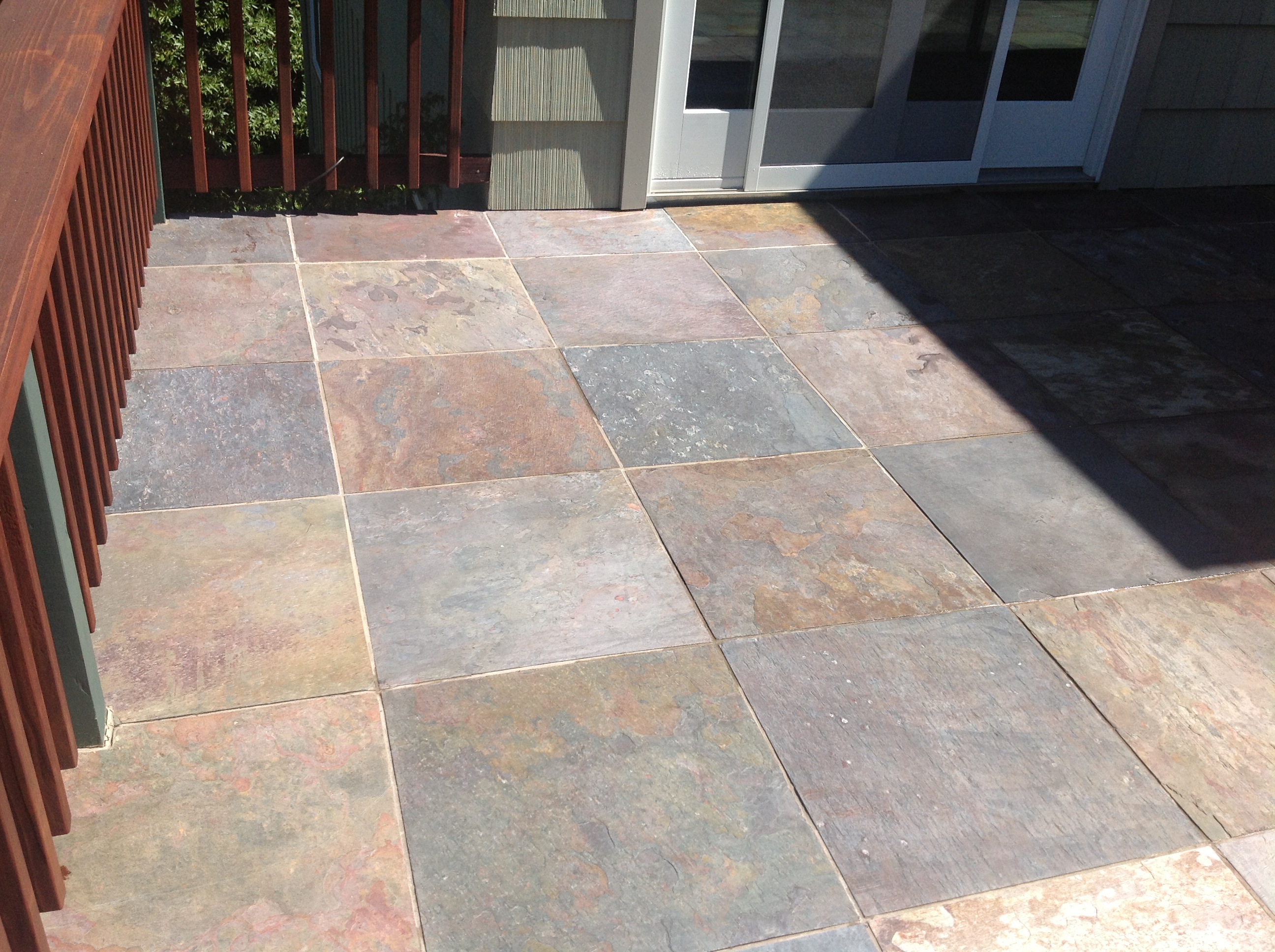
One of the reasons homeowners choose slate is its natural variation. Green slate, multicolored slate, African slate, Vermont slate, and irregular-cut stone can contain dramatic differences in tone and texture from one piece to another.
A good restoration should enhance that character rather than make every piece look artificially identical.
Once years of dirt and deteriorated finish are removed, the natural colors and variation of the slate can become much more visible again.
Why Detailed Hand Restoration Matters for Slate
Slate floors contain more than just broad flat surfaces. Grout joints, uneven stone edges, corners, stairs, transitions, baseboards, cabinets, bathrooms, and other detailed areas all contribute to how the finished floor looks.
California Tile Restoration performs detailed restoration work by hand because machines cannot properly address every edge, grout joint, corner, and difficult area.
That hands-on approach is especially important when restoring irregular natural stone where individual pieces may vary in texture, height, porosity, and condition.
Learn more about our broader stone and marble restoration services for natural stone floors, counters, showers, and other surfaces.
Should You Clean, Reseal, or Completely Restore Your Slate?
The correct answer depends on what is actually wrong with the floor.
Your Slate May Only Need Deep Cleaning If:
- The existing sealer is still intact
- The floor is simply carrying surface dirt
- The grout needs detailed cleaning
- There is no significant peeling, hazing, or coating failure
Your Slate May Need Resealing If:
- The stone is becoming increasingly absorbent
- The existing protection has worn thin
- Water or stains penetrate areas that were previously protected
- The floor has been cleaned and prepared but needs renewed protection
Your Slate May Need Complete Restoration If:
- The coating is peeling or deteriorating
- Dirt is embedded in the old finish
- The surface is cloudy, hazy, or uneven
- Previous coatings need to be removed
- The grout remains dirty even after routine cleaning
- Years of neglected maintenance have substantially changed the appearance
Slate Restoration in Marin County and the Bay Area
California Tile Restoration serves residential and commercial clients throughout Northern California, with a strong focus on San Rafael, Marin County, Sonoma County, Napa County, and communities throughout the greater Bay Area.
Our restoration experience includes slate, Saltillo, terracotta, Mexican pavers, flagstone, marble, brick, and other natural stone and tile surfaces.
If your slate floor is dull, dirty, faded, poorly sealed, or becoming increasingly difficult to maintain, the solution may be restoration rather than replacement.
Ready to Bring Your Slate Floor Back to Life?
Before replacing a tired slate floor or covering it with another material, find out whether the existing stone can be cleaned, stripped, restored, and properly protected.
Explore our complete tile and stone restoration services or call Fritz Wittmann at (707) 384-1172 to discuss your slate restoration project.
California Tile Restoration
CSLB #1074843
Frequently Asked Questions About Slate Floor Restoration
Can an old slate floor be restored instead of replaced?
Yes. Many slate floors can be restored when the underlying stone remains in suitable condition. Professional restoration may include sealer removal, deep cleaning, grout detailing, drying, and application of a new protective finish.
How do I know if my slate floor needs sealer removal?
Slate may need sealer removal when the existing finish is peeling, cloudy, hazy, heavily scratched, contaminated with embedded dirt, or preventing the stone and grout from being properly cleaned.
What is the best sealer for interior slate floors?
The best sealer depends on the type and condition of the slate and the desired appearance. For appropriate interior installations, Fritz may use a protective topical sealing system when additional surface protection and a higher or lower sheen are desired.
Should exterior slate use the same sealer as interior slate?
Not necessarily. Exterior slate is exposed to rain, sprinklers, UV light, drainage issues, standing moisture, and weather changes. Those conditions need to be considered when selecting an exterior sealing system.
How often should slate floors be professionally maintained?
There is no single schedule for every slate floor. Maintenance depends on traffic, the existing finish, cleaning methods, moisture exposure, and the type of stone. Periodic deep cleaning and maintenance before the finish completely fails can help reduce the need for more extensive restoration later.
Can dirt become trapped underneath slate sealer?
Yes. Dirt and contamination can become embedded in deteriorating floor finish or sealer. When that happens, normal surface cleaning may not reach the slate and grout underneath, and the old coating may need to be removed first.