

Saltillo Tile Dirty, Peeling, or Dull? Why It Happens and How to Fix It
Saltillo tile can look incredible when it is properly sealed and maintained, but once the finish gets scratched, wears unevenly, or starts trapping dirt, the floor can quickly become dull, blotchy, sticky, or difficult to clean. Many homeowners assume the tile itself is ruined, when in reality the biggest problem is often the failing sealer sitting on top.
That was the case on this Saltillo tile floor in El Cajon, just outside San Diego. The floor had been stripped, resealed, and refinished by the homeowners. The tile itself was not beyond saving, but the re-applied sealer had become blotchy and streaky, and a grout patch in one hallway was left gray while the rest of the floor used Sahara Tan grout. The result was a floor that looked uneven, worn, and unfinished.
If your Saltillo floor has become scratched, peeling, dirty, dull, or unevenly sealed, the solution is usually not to keep adding more sealer. It is to identify what is failing, fully remove the old coatings when necessary, clean the tile and grout properly, and then rebuild the finish the right way. If you need professional help, learn more about our tile cleaning and sealer stripping services and our tile sealing and polishing services throughout Northern California.
Scratches and Surface Damage Invite Dirt Into the Finish
When a sealed Saltillo tile floor becomes scratched or etched, it creates weak points in the finish. Dirt, grime, moisture, oils, and cleaning residue can begin collecting in those damaged areas, making the floor look darker, dirtier, and more worn over time.
Interior Saltillo usually lasts much longer when it is sealed correctly and maintained on schedule because it is not constantly exposed to rain, sprinklers, and outdoor weather. Exterior Saltillo patios are different and require a different sealing approach, usually without a heavy topical coating that can fail outdoors.
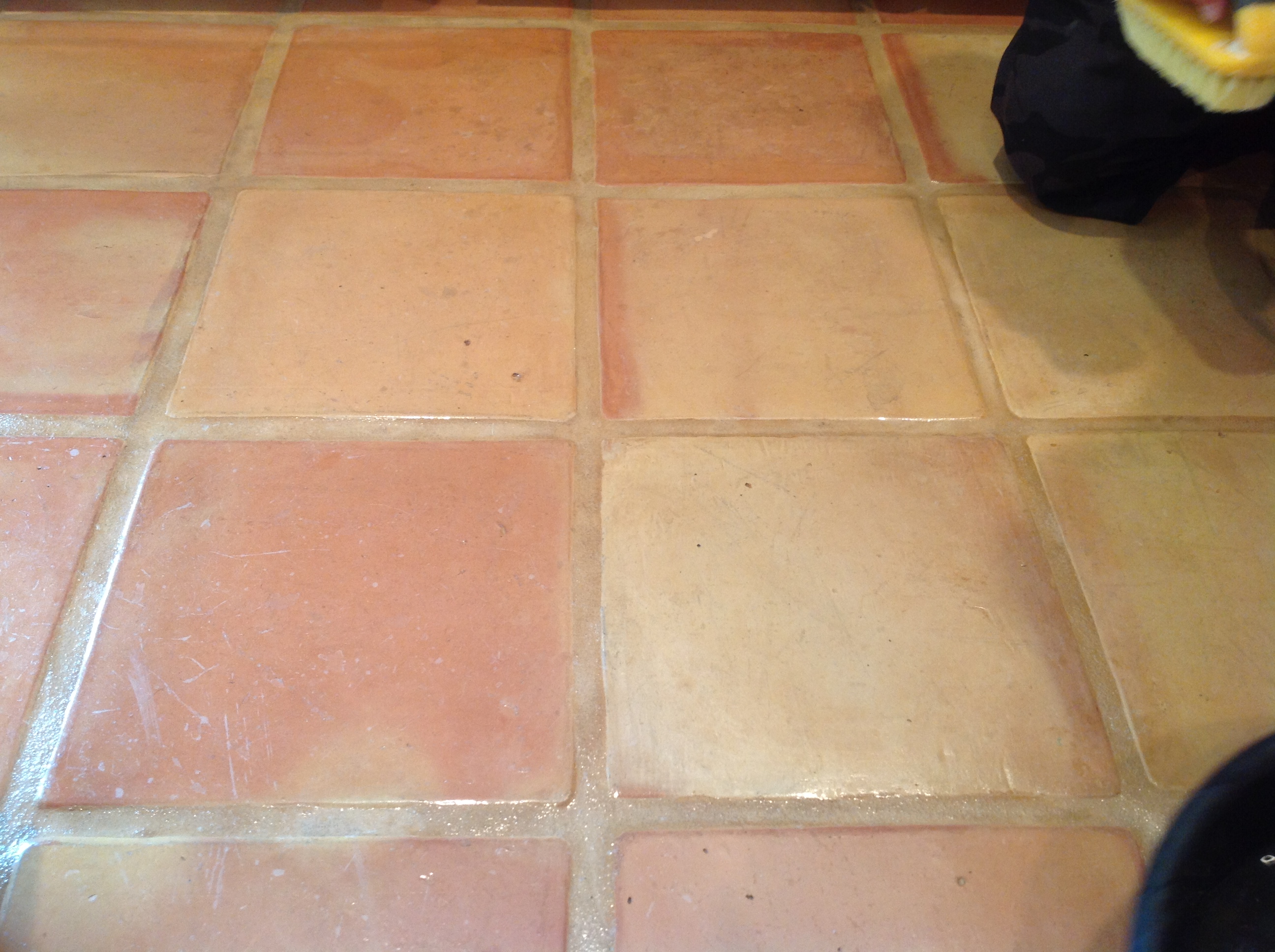
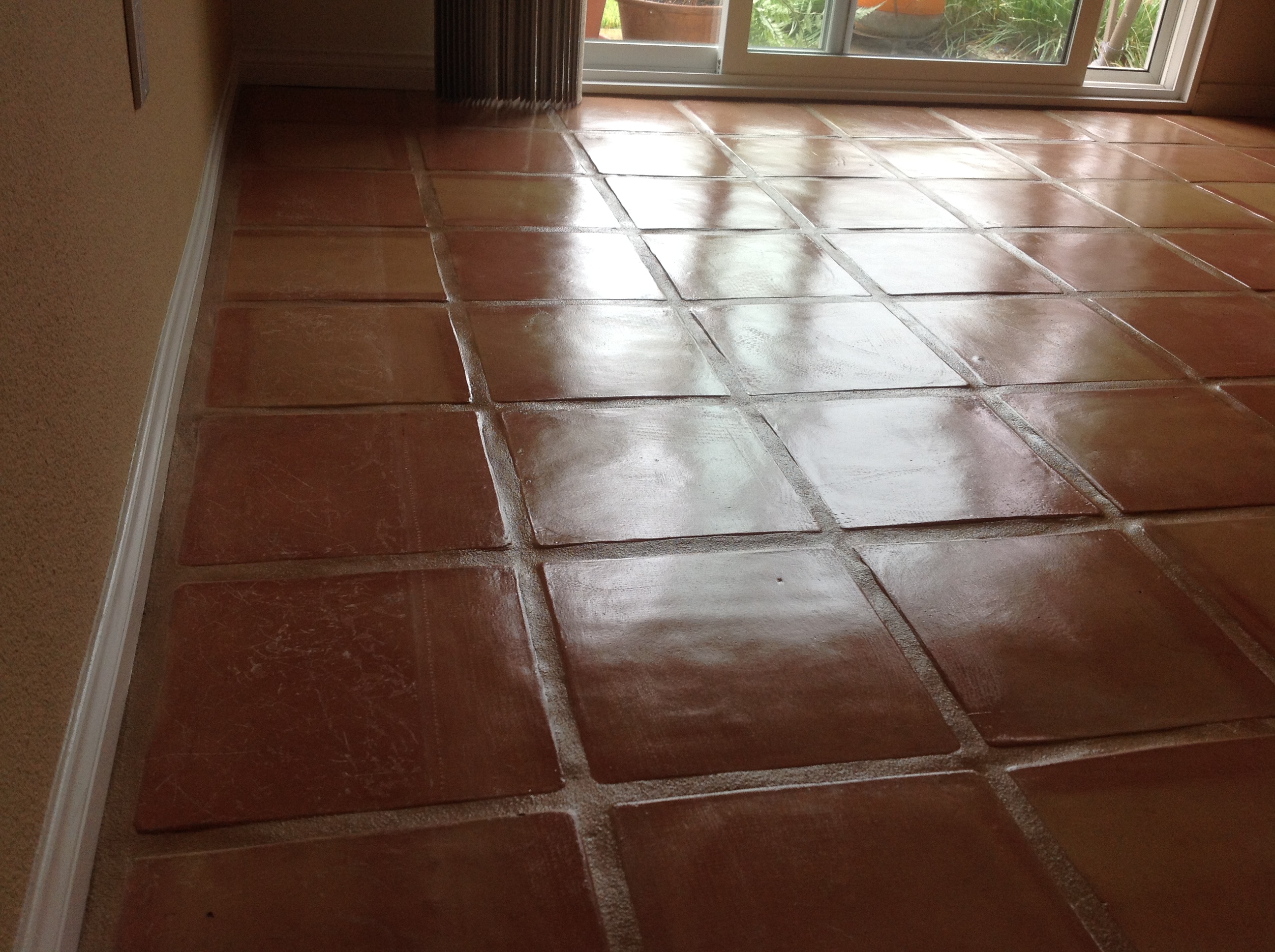
In this project, a rubber-bottom rug had actually bonded to the existing sealer, which is not uncommon on Saltillo floors. That kind of damage makes the finish look worse and can complicate the restoration process.
Why DIY Stripping Often Leads to Blotchy, Peeling Sealer
A lot of homeowners try to save the floor themselves by stripping and resealing it, but Saltillo does not forgive shortcuts. If the old finish is not fully removed, the new sealer will not bond consistently. At first, it may seem acceptable. Then the streaking, patchiness, peeling, and blotching begin showing up more and more.
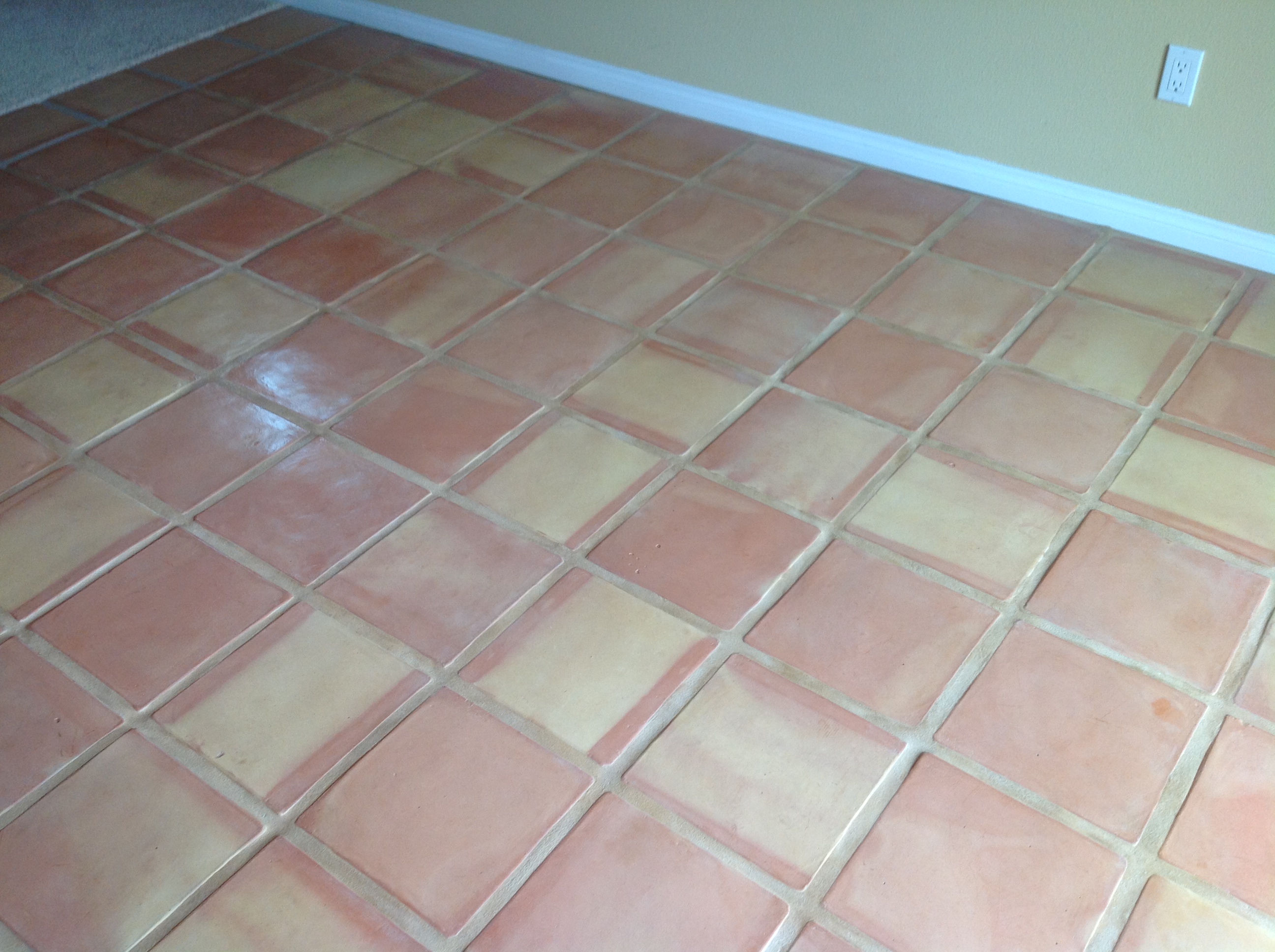
On this 300-square-foot floor, the homeowners had stripped and refinished the Saltillo themselves and added around 30 pavers in a hallway. The floor was not especially dirty, but the bigger problem was the re-applied sealer. It had started to peel and left blotchy streaks across the floor.
The lesson is simple: when the preparation is incomplete, the final finish will eventually show it.
Where the Peeling and Blotching Comes From
The peeling happened because patches of the previous floor finish were still left on the tile and grout during the stripping process. That means the new sealer was being applied over a mixed surface, part exposed tile, part leftover finish. As with most restoration work, preparation is everything.
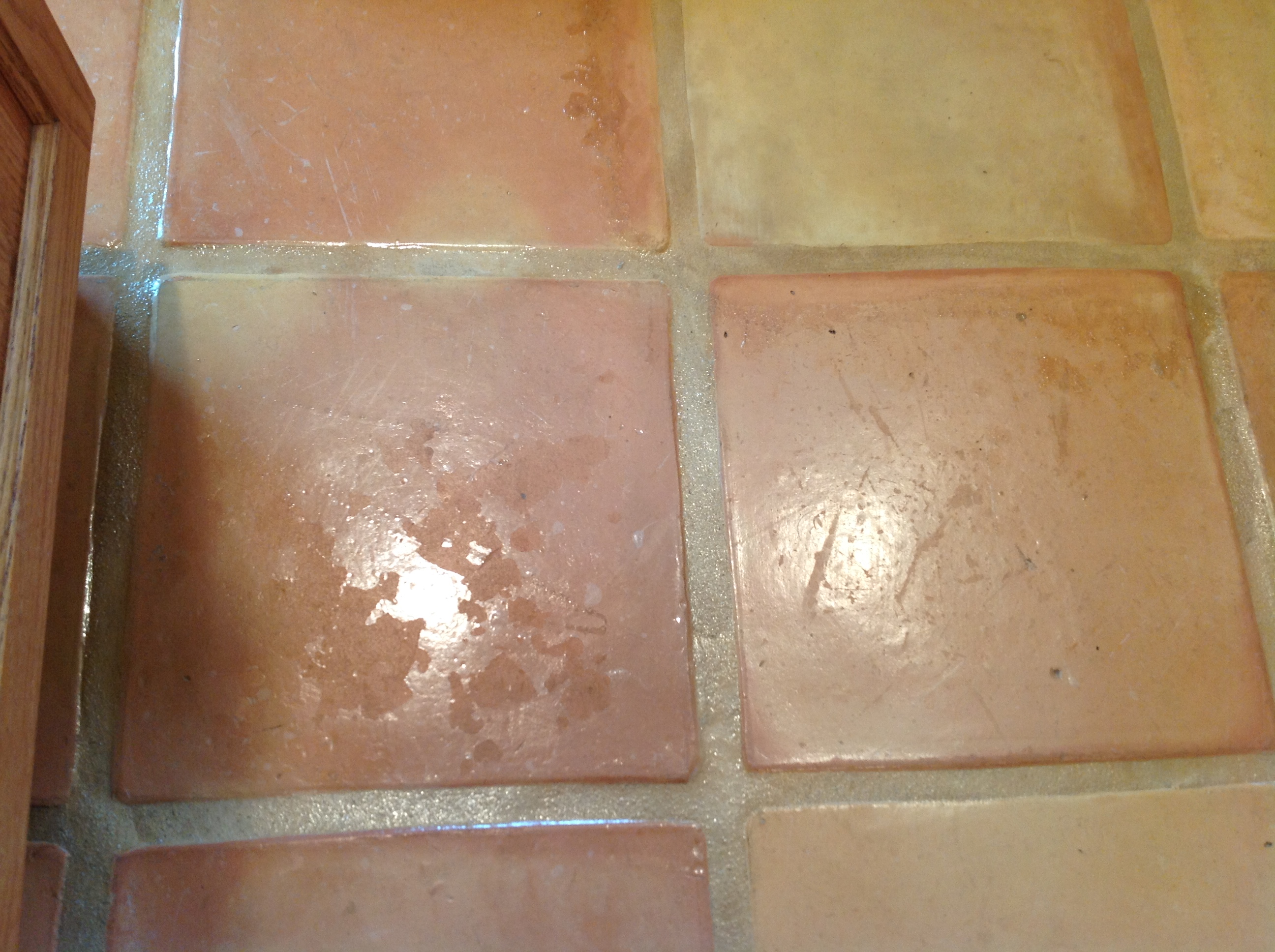
Instead of stopping when the problem first appeared, more layers of sealer were added in an attempt to hide the uneven areas. That only made the failure more obvious.
Saltillo Must Be Fully Stripped Before It Can Be Properly Refinished
To correct the problem, we completely stripped the existing sealer, wax, and embedded dirt from both the Saltillo tile and the grout by hand. Detailed work matters on Saltillo because corners, grout joints, edges, and irregular surface areas can hold onto old finish if you are not thorough.
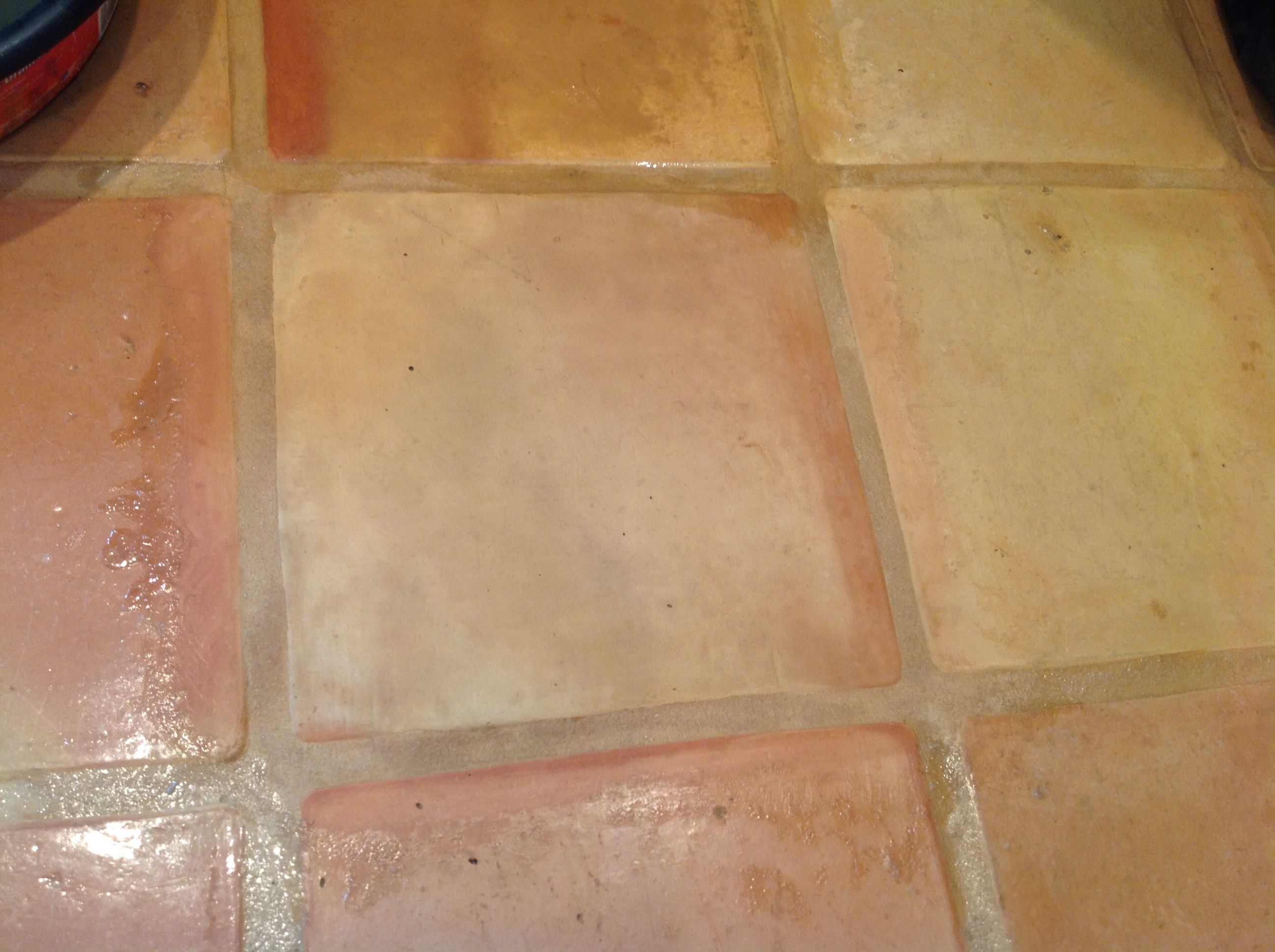
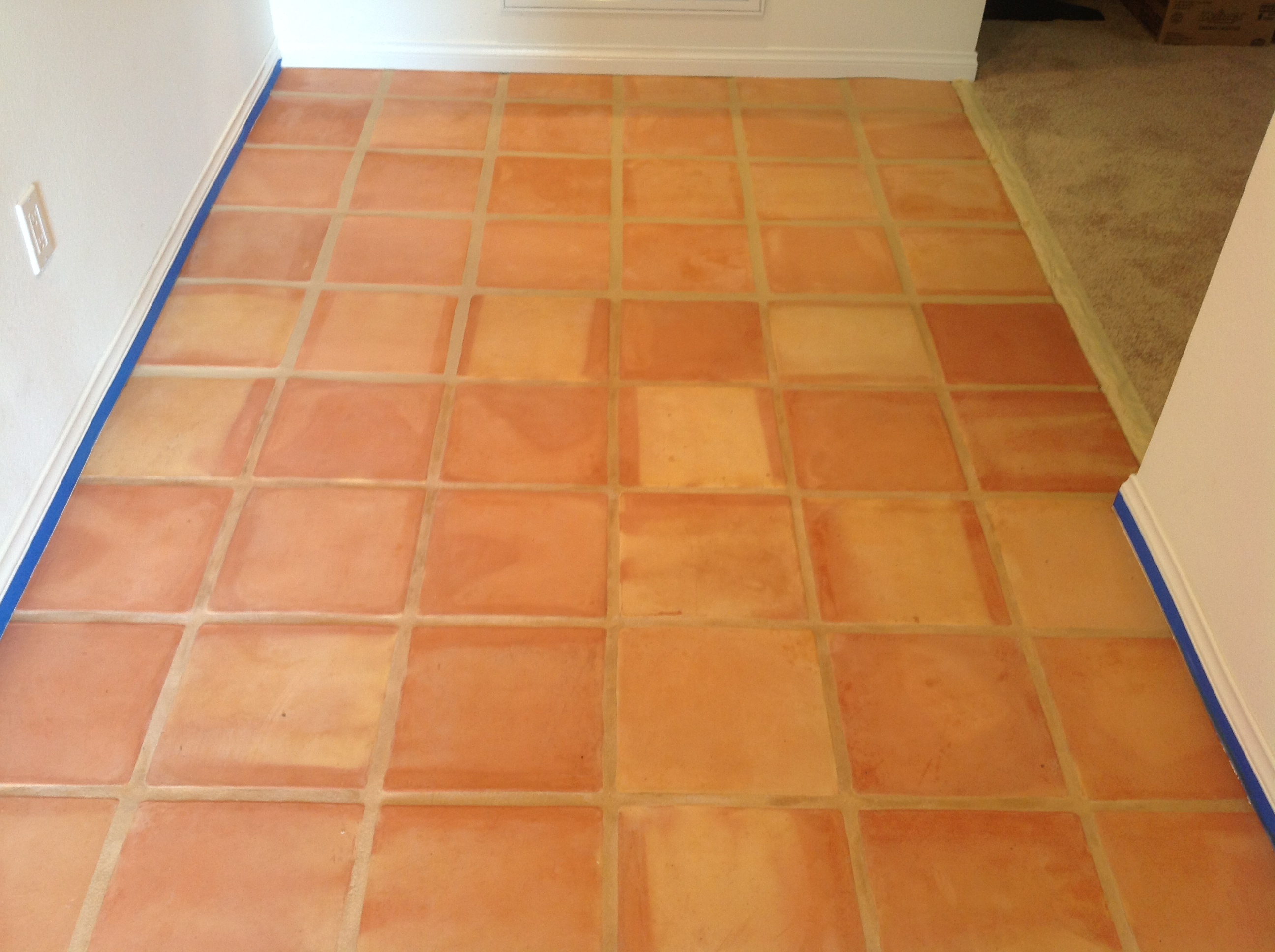
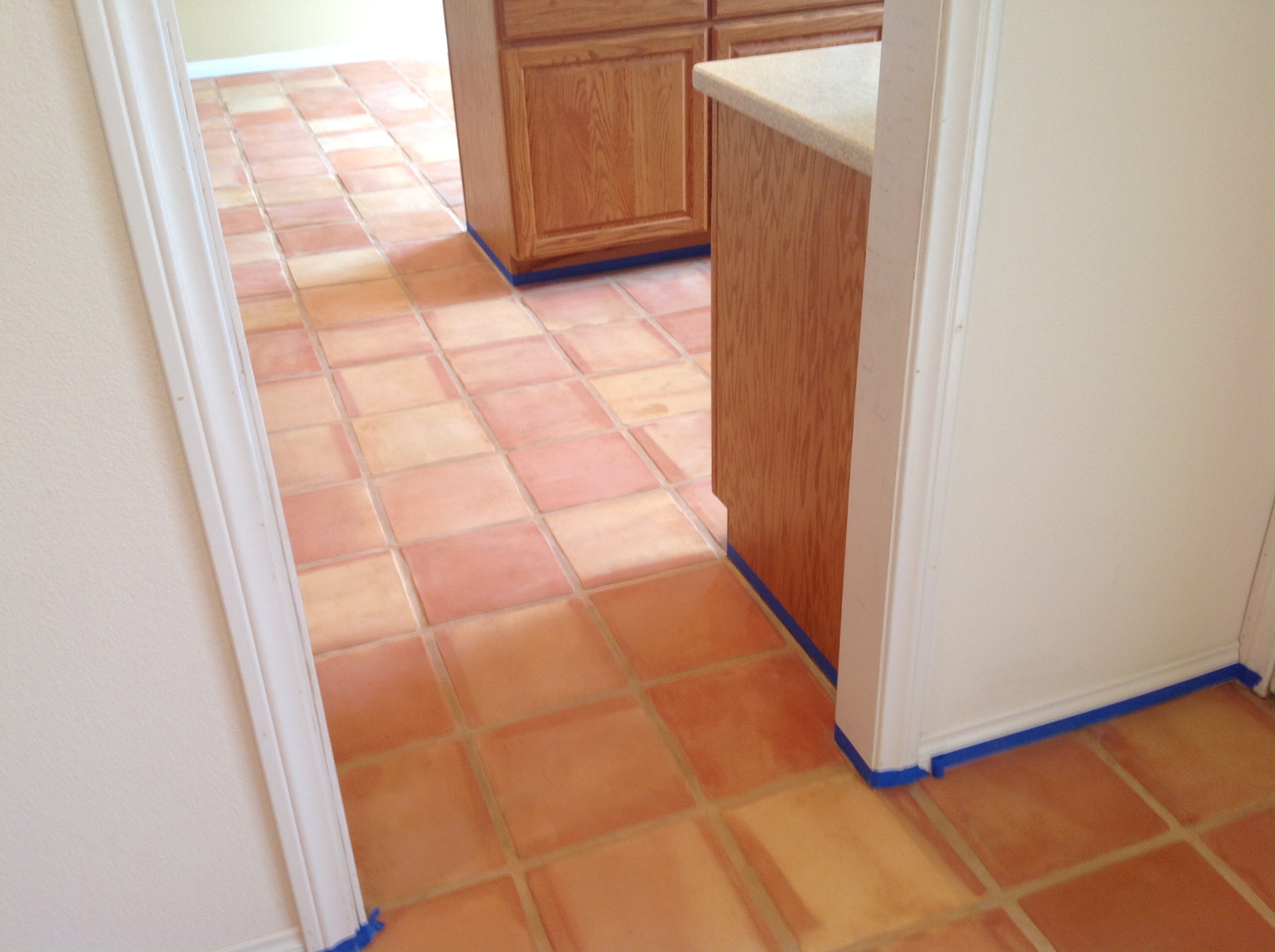
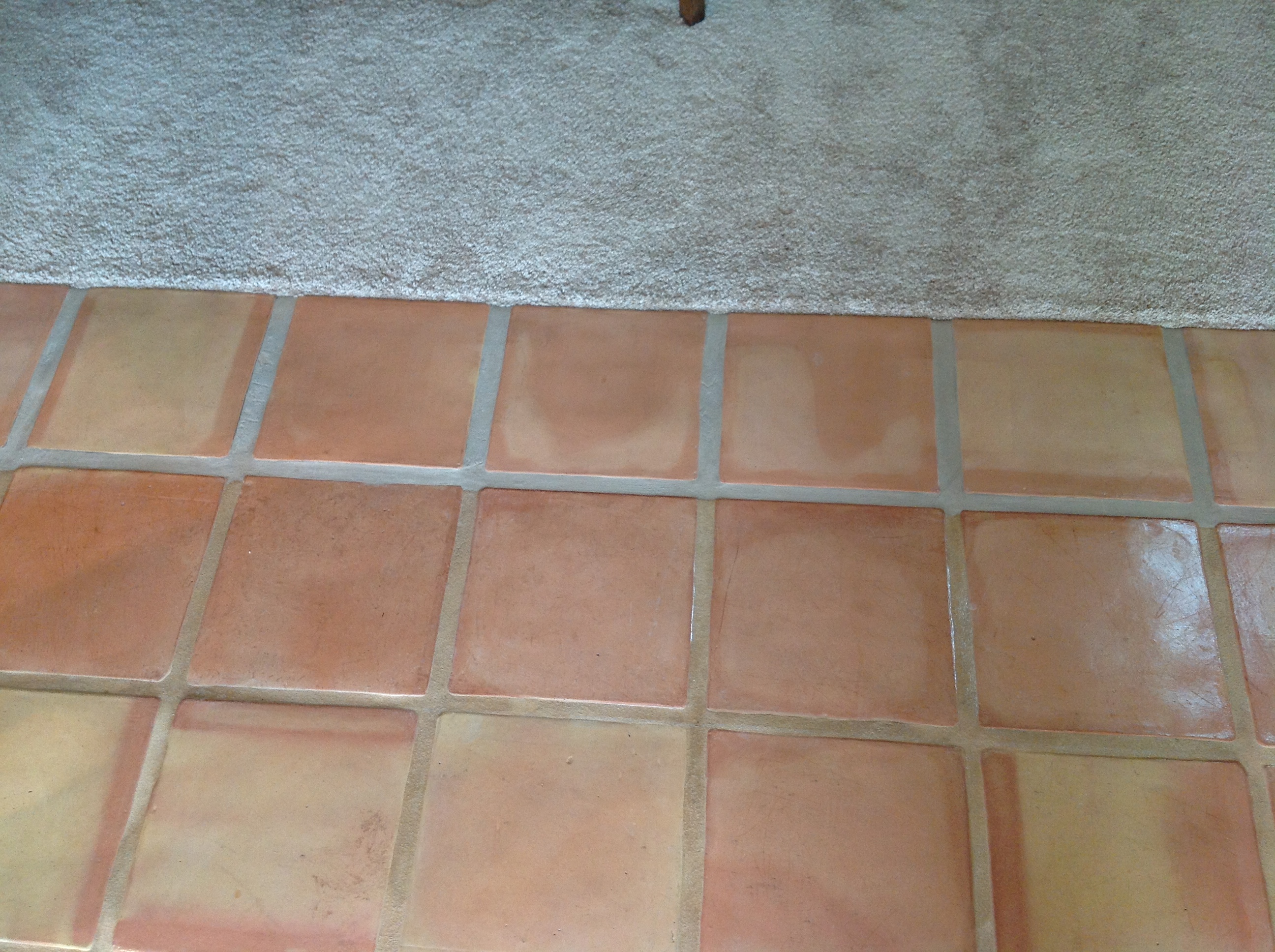
You can immediately see the difference once the removal process begins. This also made the hallway grout mismatch more obvious, the new gray repair did not blend with the original Sahara Tan grout.
If your Saltillo floor is no longer responding to routine cleaning, you may also want to read why cleaning Saltillo tile is not working anymore and what to know before choosing a Saltillo tile cleaner.
Grout Color Matching Can Dramatically Improve the Final Look
One detail that made a big visual difference on this floor was the grout correction. The gray patch did not match the original grout color, so after the Saltillo was stripped and cleaned, we blended the repair area to better match the existing Sahara Tan grout.

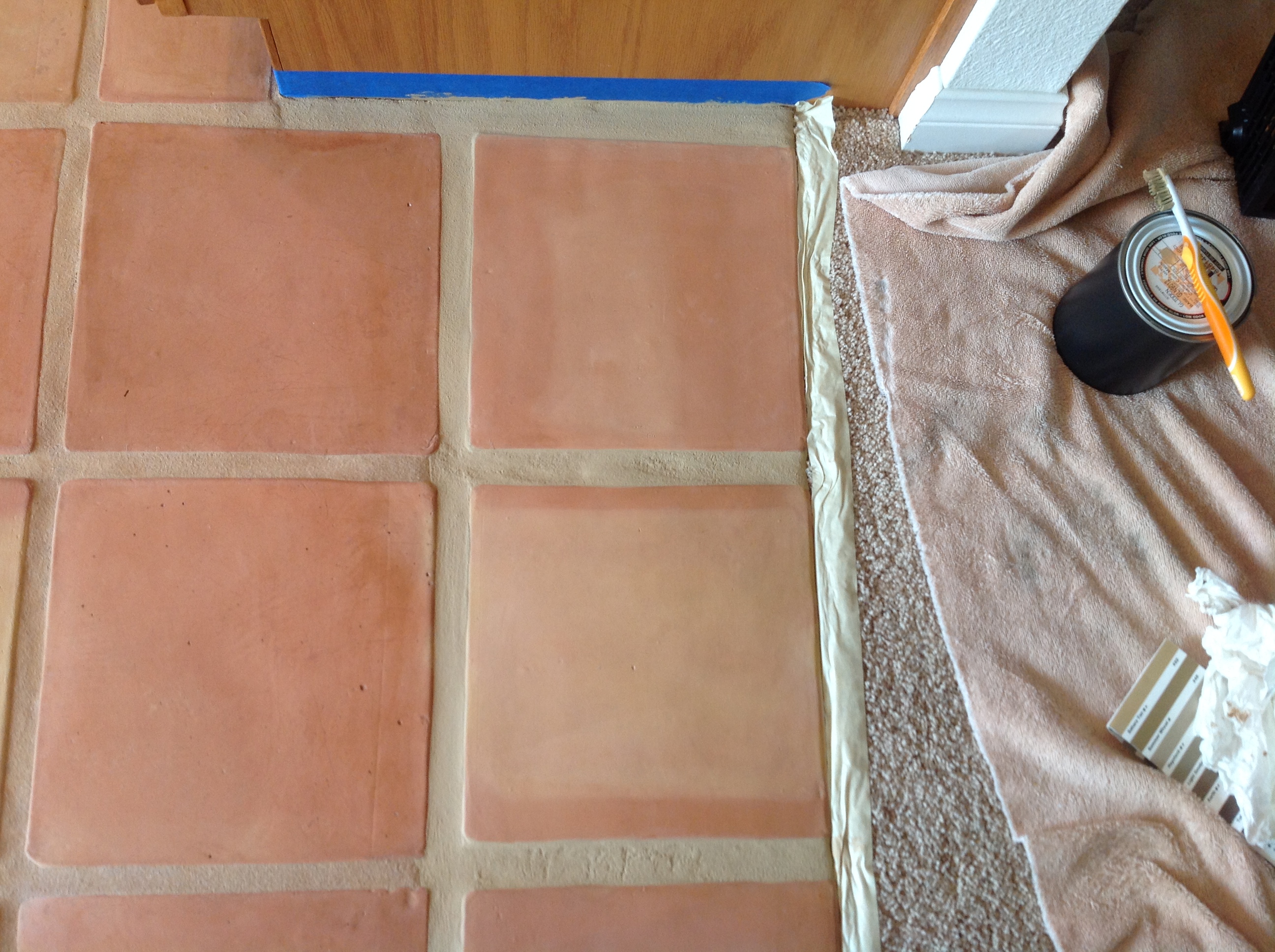
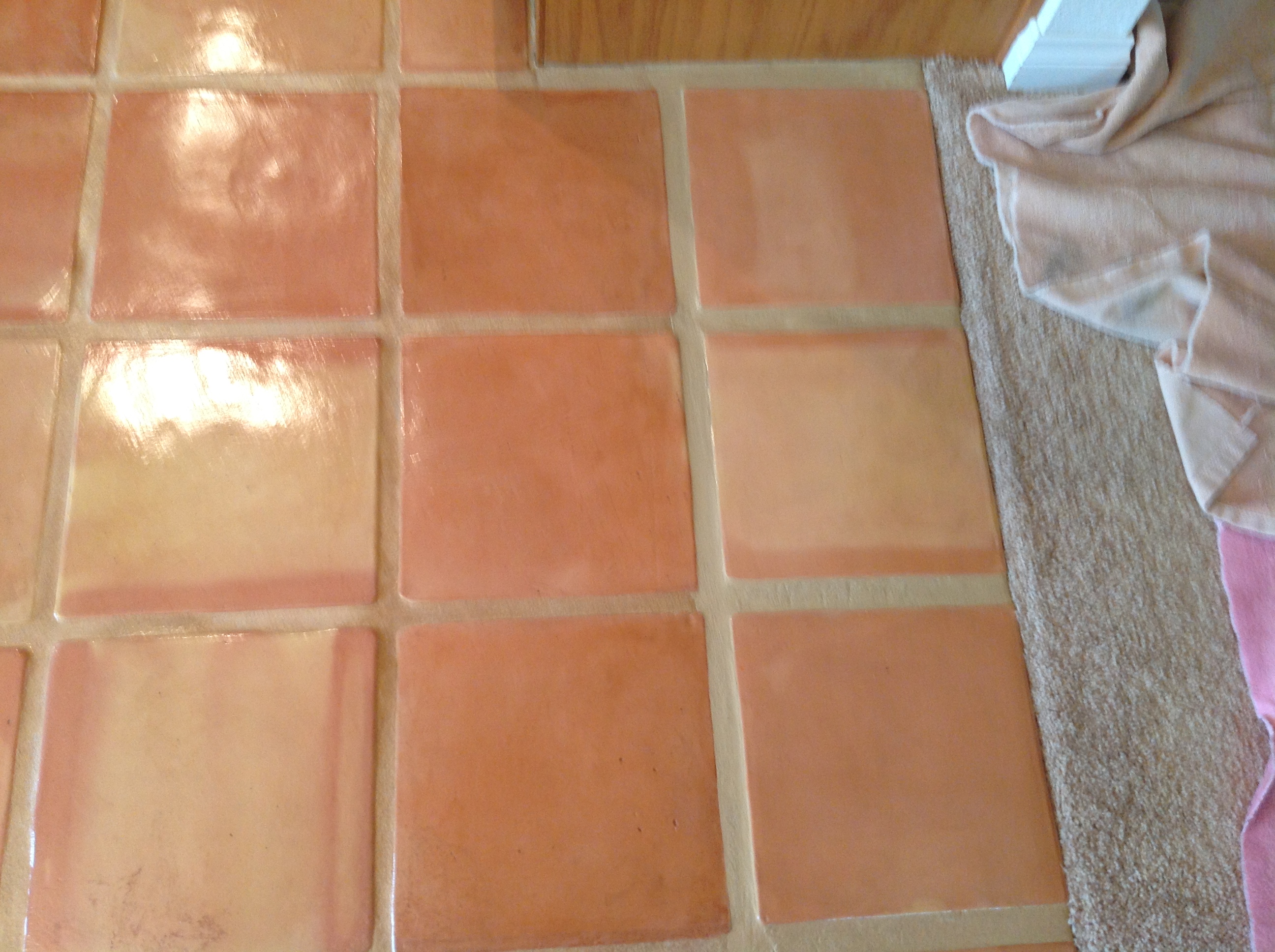

It was not a perfect invisible match, but it was a major improvement over gray grout standing out against the rest of the floor. Small details like that can make the final restoration feel much more cohesive.
After Proper Sealing, the Floor Looks Like Saltillo Again
Once the floor was fully stripped, cleaned, detailed, and prepared, we reapplied the finish correctly. The result was a clean, rich, high-shine Saltillo floor with much better consistency and a grout color that blended far better than before.

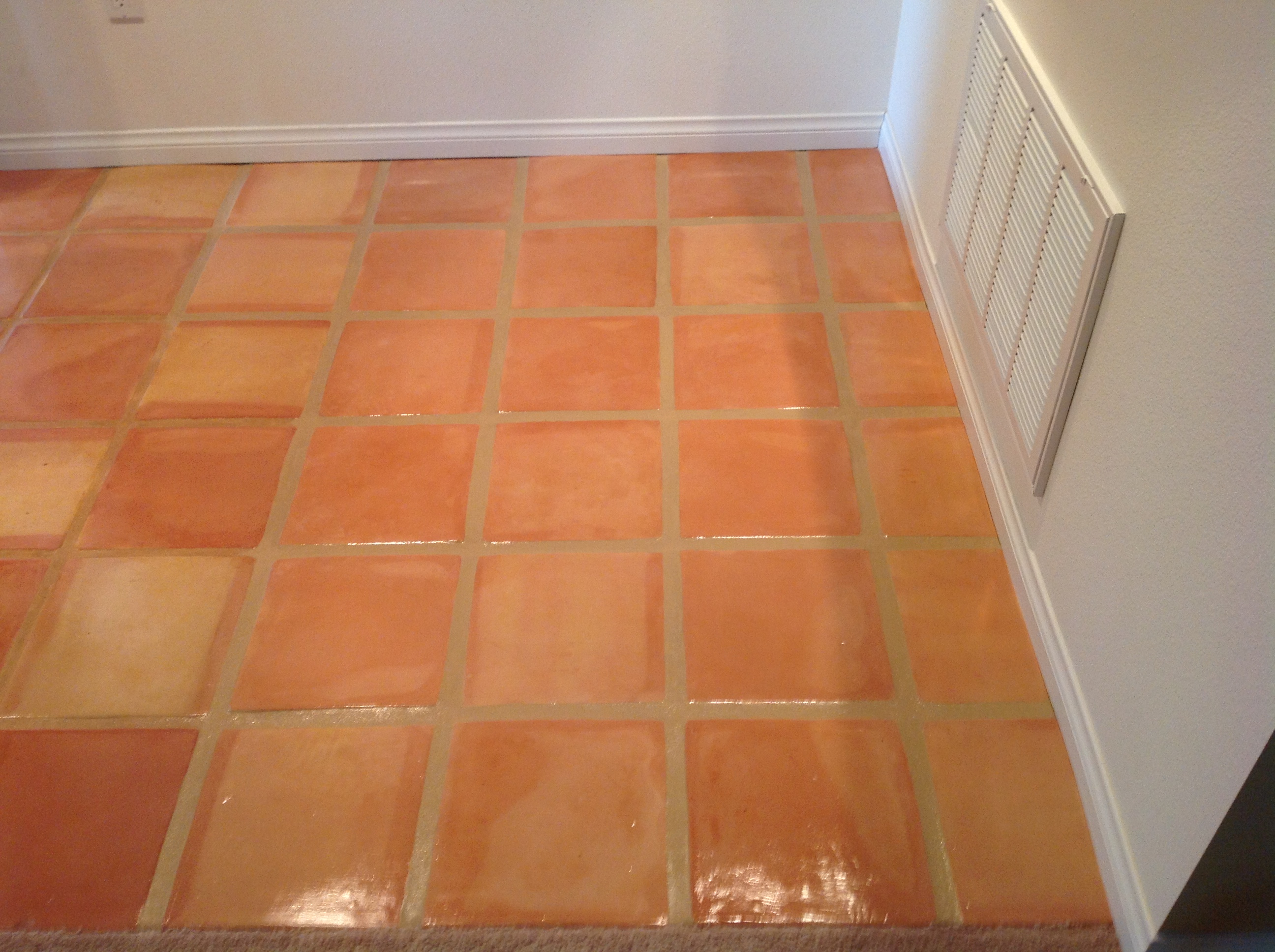
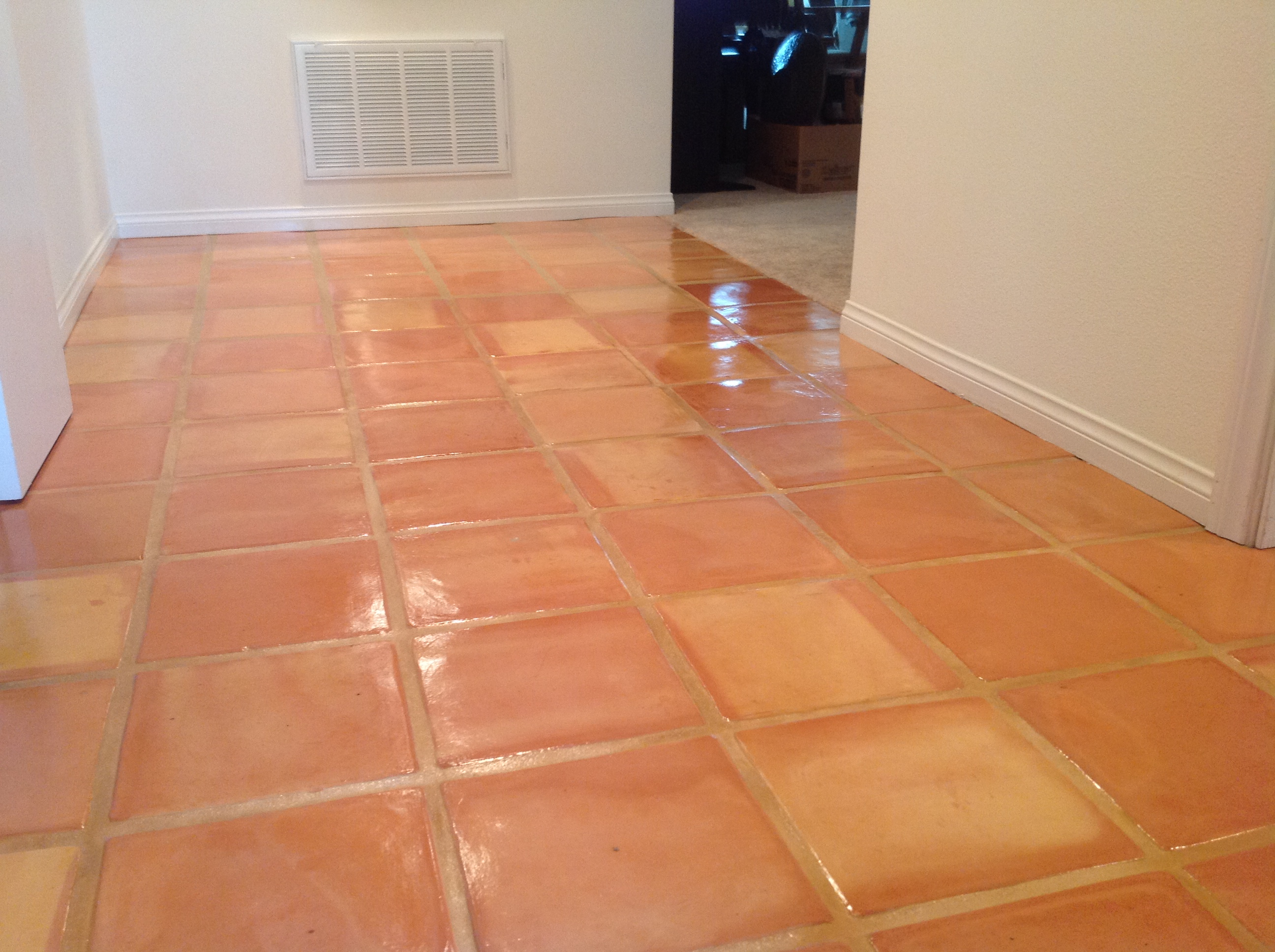
Saltillo floors do not have to be replaced just because they are scratched, peeling, dull, or dirty. In many cases, the right restoration process can save the floor and make it far easier to maintain going forward. If you are also thinking about updating the look, you may want to explore our Saltillo and terracotta tile staining options.
Saltillo Tile Restoration in Northern California
California Tile Restoration helps homeowners throughout Marin County, Sonoma County, Napa, San Rafael, the Bay Area, and surrounding Northern California communities restore Saltillo tile that has become dirty, peeling, dull, blotchy, or difficult to maintain.
If your floor needs more than ordinary cleaning, the most important step is figuring out why the finish failed in the first place. Once that is clear, the floor can be stripped, corrected, and refinished the right way.
Need Help Restoring a Dull or Peeling Saltillo Floor?
See how we strip failing sealer, deep clean Saltillo tile, correct problem areas, and rebuild the finish properly.
View Our Tile Cleaning & Sealer Stripping Services
View Our Tile Sealing & Polishing Services
Call Fritz Wittmann at (707) 384-1172
Frequently Asked Questions About Dirty, Peeling, or Dull Saltillo Tile
Why does Saltillo tile start looking dull or dirty even after cleaning?
In many cases, the problem is not just surface dirt. Old sealer can wear unevenly, become scratched, or trap grime within the finish, making the floor look dull or dirty even after mopping. When that happens, the finish may need to be stripped before the tile can be properly cleaned and refinished.
Can I just add more sealer to fix blotchy Saltillo tile?
Usually no. If the old finish was not fully removed, applying more sealer on top often makes the problem worse. Blotchy or peeling Saltillo usually needs the failed finish removed first so the new sealer can bond properly.
Why did my Saltillo sealer start peeling?
Peeling often happens when the previous finish was not fully stripped, the surface was not prepared correctly, or incompatible layers of sealer were applied. Moisture, wear, and improper maintenance can also contribute to premature failure.
Can damaged Saltillo tile be restored instead of replaced?
Often yes. If the tile itself is still structurally sound, many Saltillo floors can be restored by stripping the old finish, cleaning the tile and grout, correcting color inconsistencies, and applying the proper sealer and finish.
What should I avoid putting on sealed Saltillo floors?
Rubber-backed rugs can be a problem because they may bond with the finish over time. It is also wise to avoid harsh cleaners and maintenance shortcuts that can scratch or break down the protective coating.