

San Francisco Marble Countertop Polishing & Grout Restoration
Marble countertops can lose their shine surprisingly fast when the wrong cleaning products are used. Acidic or harsh chemical cleaners can etch the stone, leaving dull spots, cloudy reflections, and uneven areas that ordinary cleaning will not remove.
This marble tile countertop project was in the Sunset District of San Francisco. The kitchen island was covered with Crema Marfil marble tile that had been badly etched by a chlorine-based disinfectant cleaner. Some areas had light surface damage, while other spots were much deeper where the cleaner had apparently pooled and remained on the marble longer.
The countertop no longer matched the quality of the surrounding kitchen, but the marble itself could still be restored. The solution was to clean the stone and grout, remove the damaged surface evenly, progressively restore the polish, and then protect the finished countertop with a penetrating sealer.
If your marble has become dull, etched, stained, or difficult to maintain, learn more about our professional stone and marble restoration services throughout San Francisco, Marin County, the Bay Area, and Northern California.
Why the Marble Countertop Looked Dull and Cloudy
Marble is sensitive to certain chemicals. When an incompatible cleaner reacts with the surface, it can create etching that changes the way light reflects from the stone. Instead of a crisp reflection, the marble may look hazy, cloudy, or covered with dull spots.
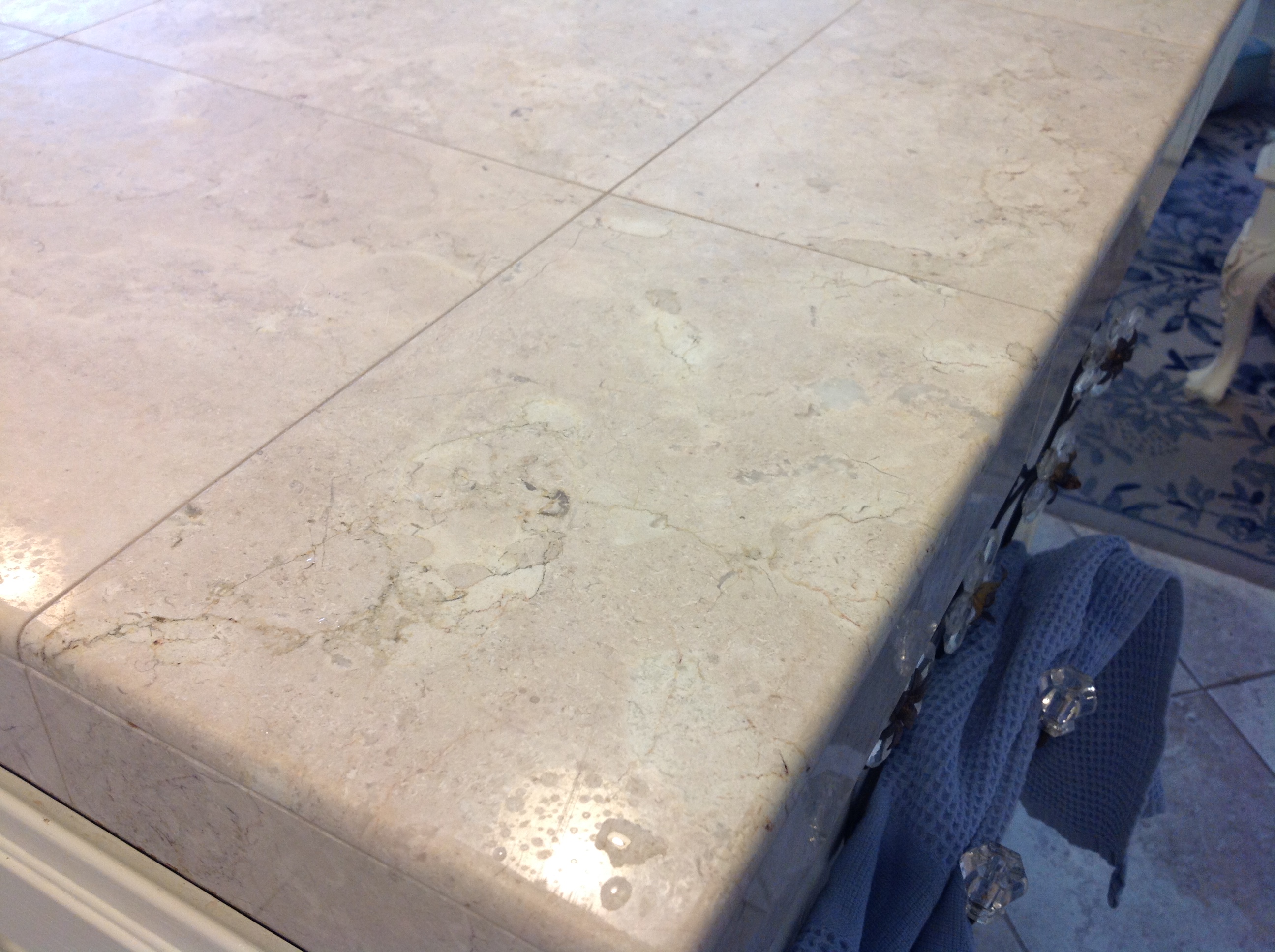
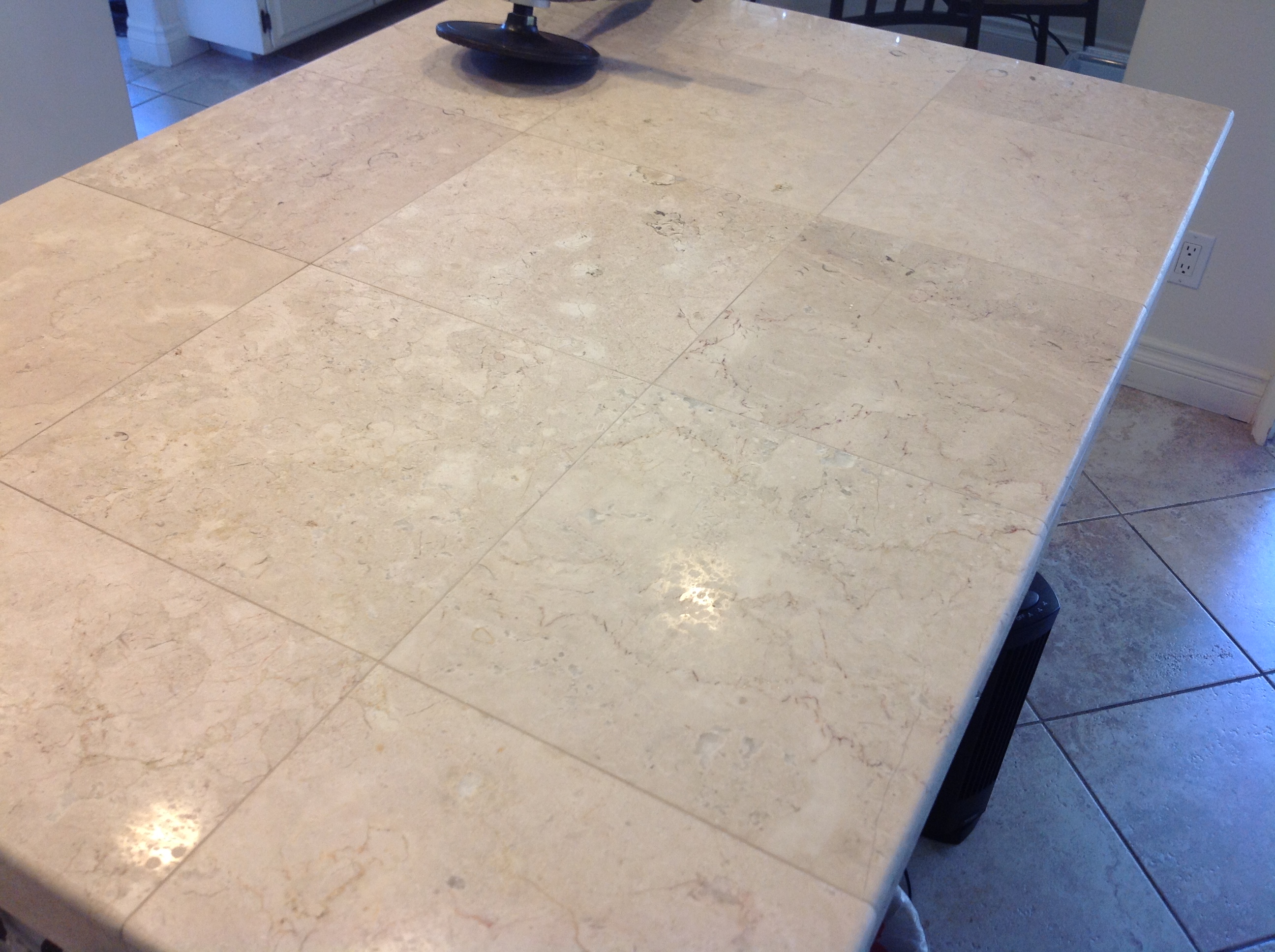


The damage was difficult to photograph because etching often becomes most obvious when light reflects across the surface. In the before photos, the reflected lights appear fuzzy and distorted instead of crisp, which is one of the clearest signs that the polished marble surface has been damaged.
Cleaning the Marble Tile and Discolored Grout
Before polishing could begin, the countertop and grout needed to be thoroughly cleaned. The etched areas had already begun collecting oily residue and everyday kitchen soil, while the antique-white, non-sanded grout had become noticeably darker from cooking residue and improper cleaning products.
Cleaning is an important part of the restoration because polishing over contaminated stone or dirty grout does not solve the underlying problem.
For surfaces that need more than routine maintenance, our tile and stone cleaning services address embedded contamination, old finishes, and problem areas before restoration or sealing begins.
Honing the Marble Until the Etching Is Removed
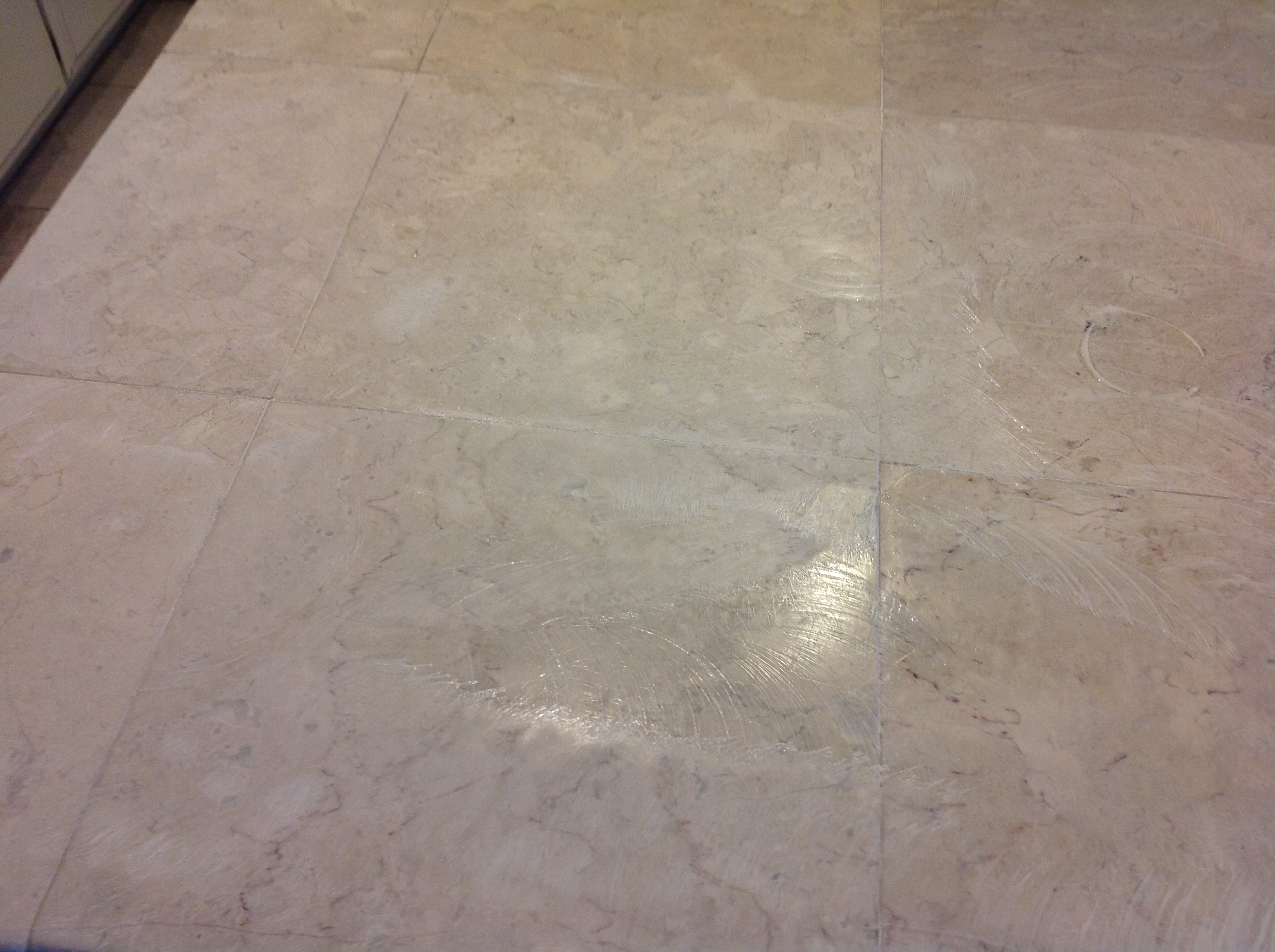
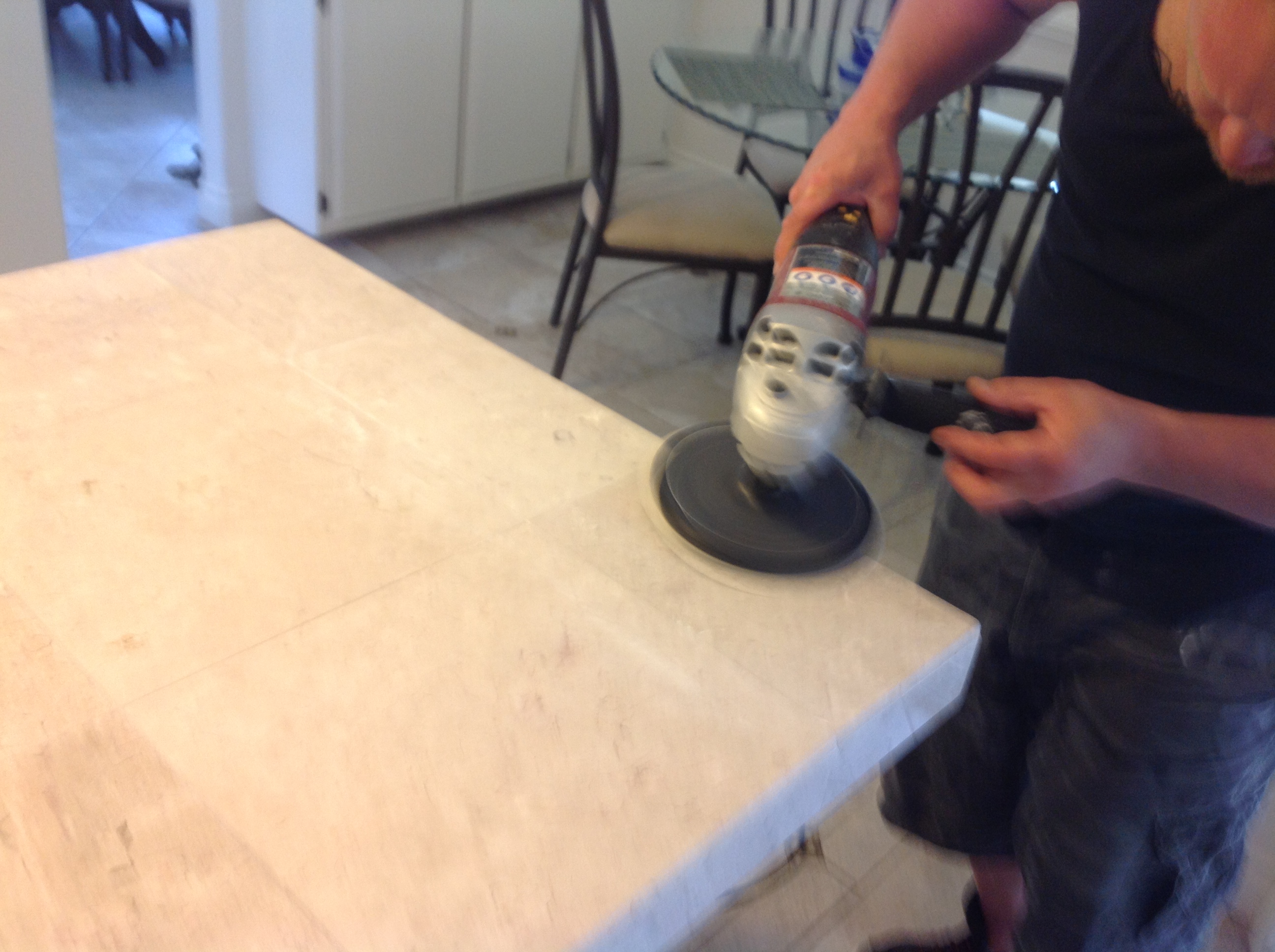
The next step was to flatten and smooth the marble surface enough to remove the deepest visible etching.
This is the part of the process that requires patience. If one section is polished before the deepest etch marks have been removed, those damaged areas can reappear as soon as the shine starts returning. At that point, the surface has to be taken back down and worked again.


Polishing the Marble Back to a Clear Shine
Once the damaged surface was leveled and the etching removed, the marble could be progressively polished back to a smooth, reflective finish.
This is where the transformation becomes obvious. Instead of fuzzy reflections and hundreds of dull spots, the finished marble begins reflecting light clearly again and the natural color and movement in the stone become much more visible.
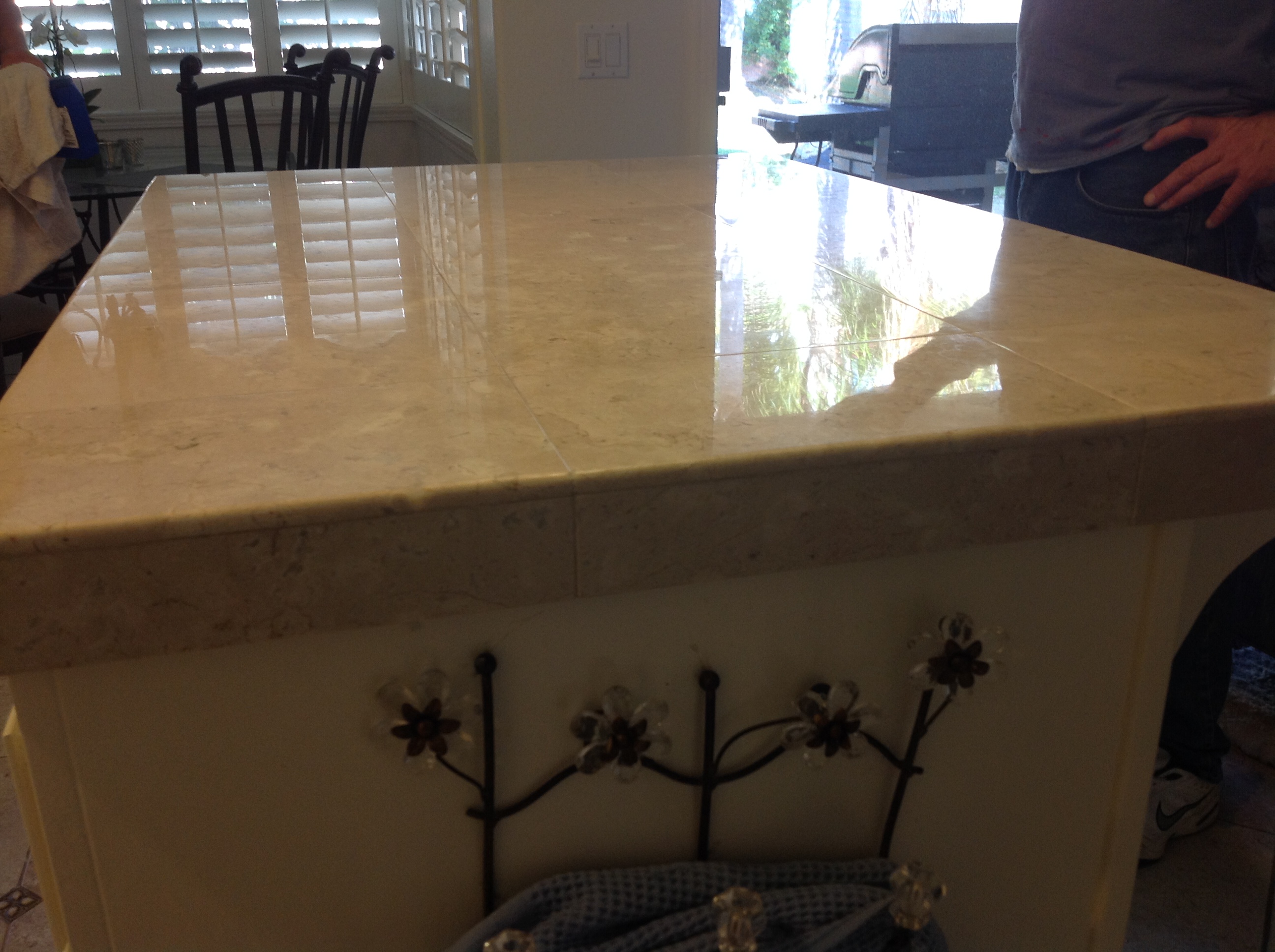
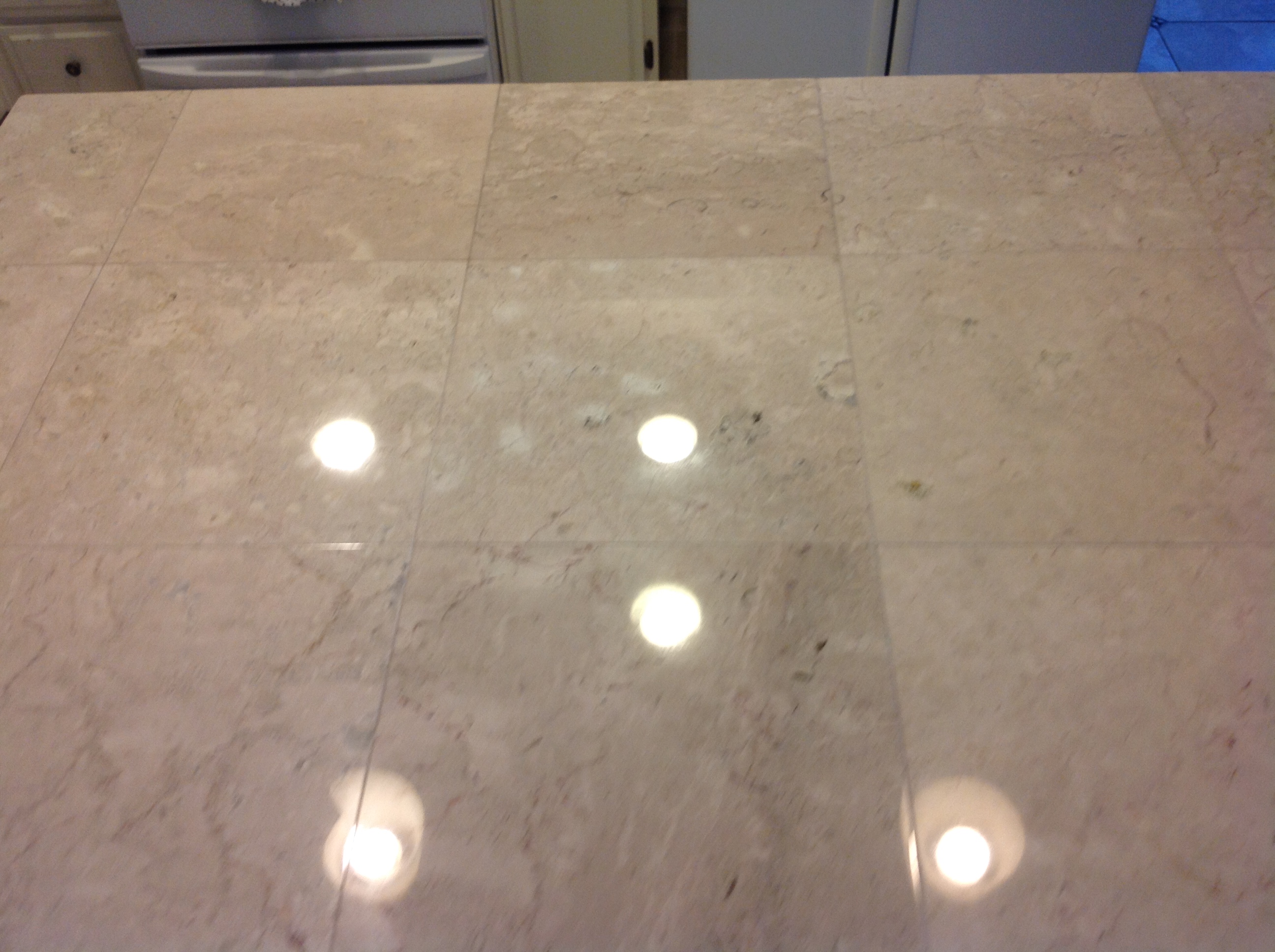
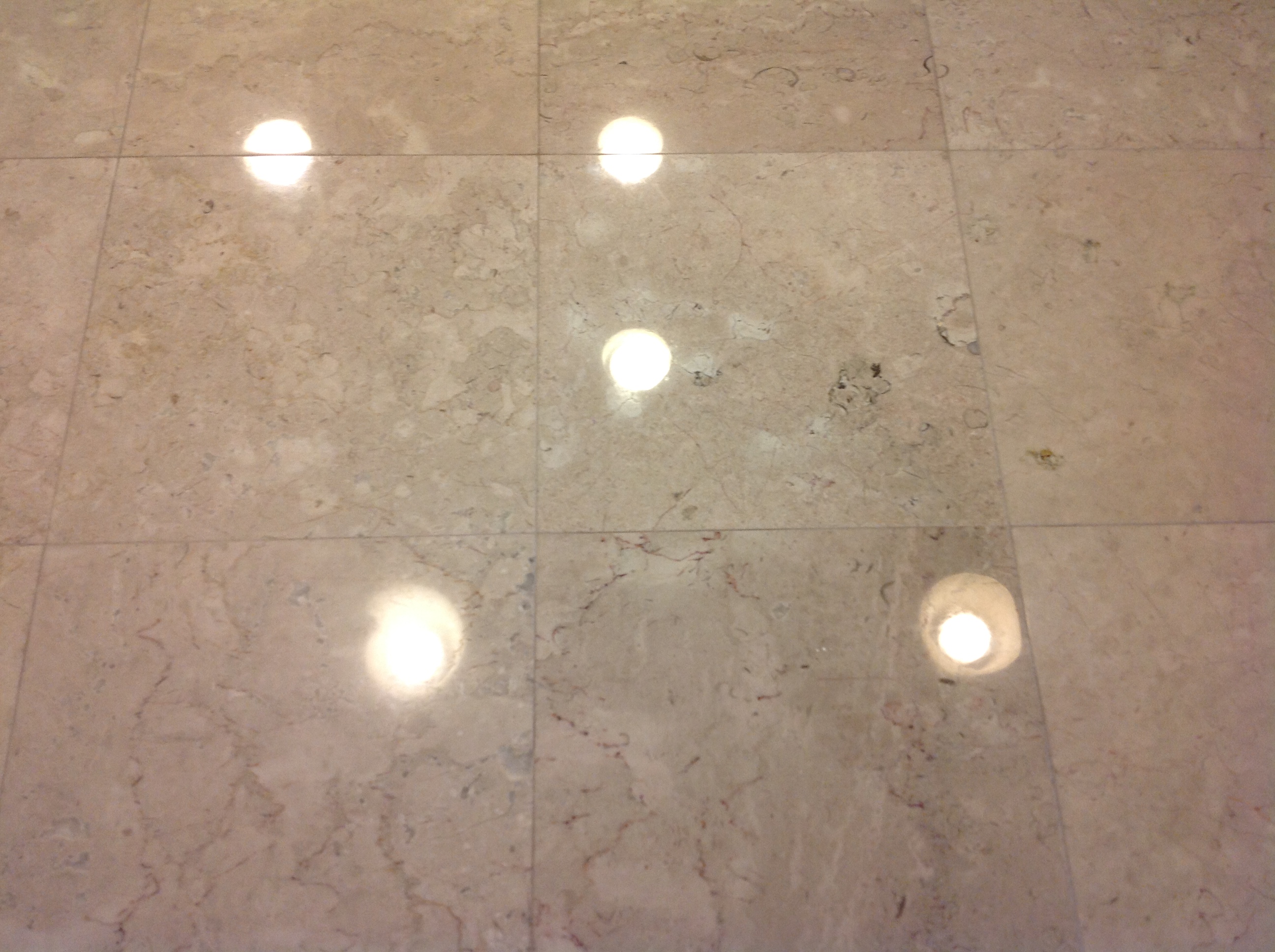
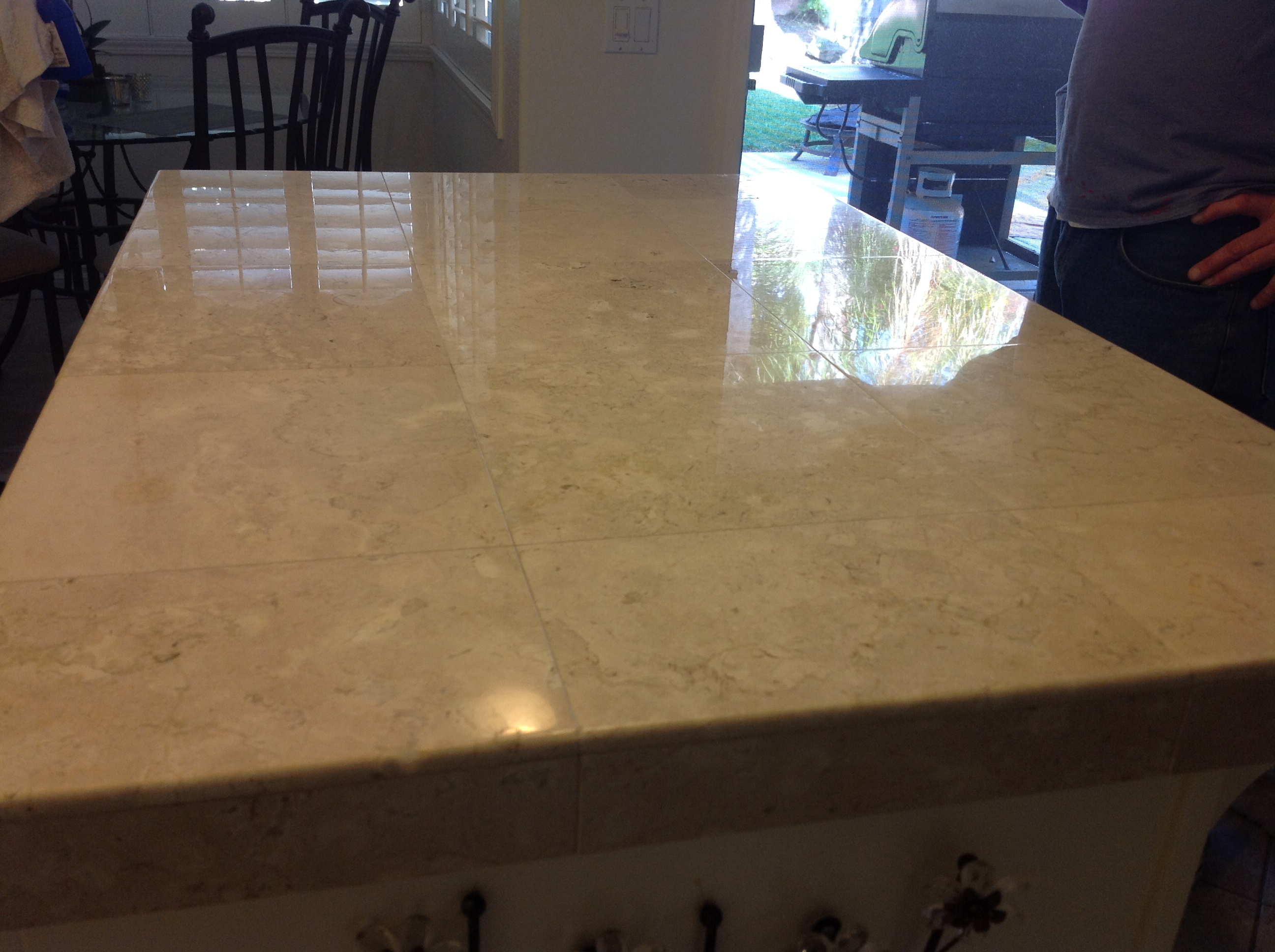
The difference was significant enough that the homeowner, who had been hesitant about the before photos, was much happier to have the finished countertop photographed once the restoration was complete.
Sealing the Marble and Grout After Polishing
The final step was applying a penetrating sealer to the marble and grout. A properly selected penetrating sealer helps reduce the absorption of water and oils and can make routine cleanup easier.
Sealing does not make marble immune to etching, so the choice of everyday cleaning products still matters. Avoiding harsh or incompatible cleaners is one of the most important steps in preserving the polished finish.
You can learn more about our broader tile and stone restoration services for countertops, floors, showers, and other surfaces throughout Northern California.
Can Dull or Etched Marble Be Restored?
In many cases, yes. Etched marble often looks permanently ruined because cleaning does not improve it, but the damage may only affect the polished surface.
Professional restoration can involve cleaning, honing, polishing, grout detailing, and sealing depending on the condition of the stone. The important part is identifying whether the problem is etching, staining, surface residue, physical damage, or a combination of several issues before choosing the repair process.
Professional Marble Restoration in San Francisco and the Bay Area
California Tile Restoration provides marble and natural stone restoration throughout San Francisco, Marin County, San Rafael, Sonoma County, Napa, and surrounding Bay Area communities.
From etched marble countertops and dull floors to stained grout and worn stone surfaces, the goal is to restore the material rather than cover up the damage.
You can also view more completed restoration work in our tile and stone restoration gallery.
Is Your Marble Dull, Etched, or Losing Its Shine?
Professional honing and polishing may be able to restore the surface without replacing the stone.
View Our Stone & Marble Restoration Services
Call Fritz Wittmann at (707) 384-1172
Frequently Asked Questions About Marble Countertop Polishing
Why does my marble countertop have dull spots?
Dull spots on polished marble are often caused by etching. Certain acidic, chlorine-based, or otherwise incompatible cleaners can react with the marble surface and change its polish, leaving cloudy or flat-looking areas that normal cleaning cannot remove.
Can etched marble countertops be polished again?
Often yes. Depending on the depth of the damage, the marble can be honed to remove the etched surface and then progressively polished until the desired shine returns.
Will cleaning remove etching from marble?
No. Cleaning can remove dirt, oils, and residue, but it does not repair a chemically etched surface. Etching changes the finish of the marble itself and generally requires honing and polishing.
Should marble countertops be sealed after polishing?
A penetrating sealer is often applied after restoration to help reduce the absorption of water and oils. Sealer can make maintenance easier, but it does not prevent chemical etching, so appropriate cleaning products are still important.
Can discolored grout around marble tile be restored?
Often yes. Grout can collect cooking residue, oils, dirt, and cleaner buildup over time. Cleaning and detailing the grout as part of the marble restoration process can significantly improve the overall appearance of the countertop.