

Should You Replace or Restore Your Saltillo Tile Floor?
Before replacing an old Saltillo tile floor with wood or another flooring material, find out whether the existing pavers can be restored. If your Saltillo tile is dirty, hazy, peeling, flaking, blistering, or seemingly impossible to clean, the problem may be failing sealer rather than ruined tile.
In many cases, completely removing the old coating, cleaning and detailing the raw clay pavers, allowing them to dry properly, and applying the right new sealer can dramatically transform an existing floor.
After more than 23 years of hands-on experience and over 1,000 paver projects, I've seen plenty of Saltillo floors that homeowners thought needed to be torn out. Before making that decision, it's worth understanding what professional restoration can—and cannot—do.
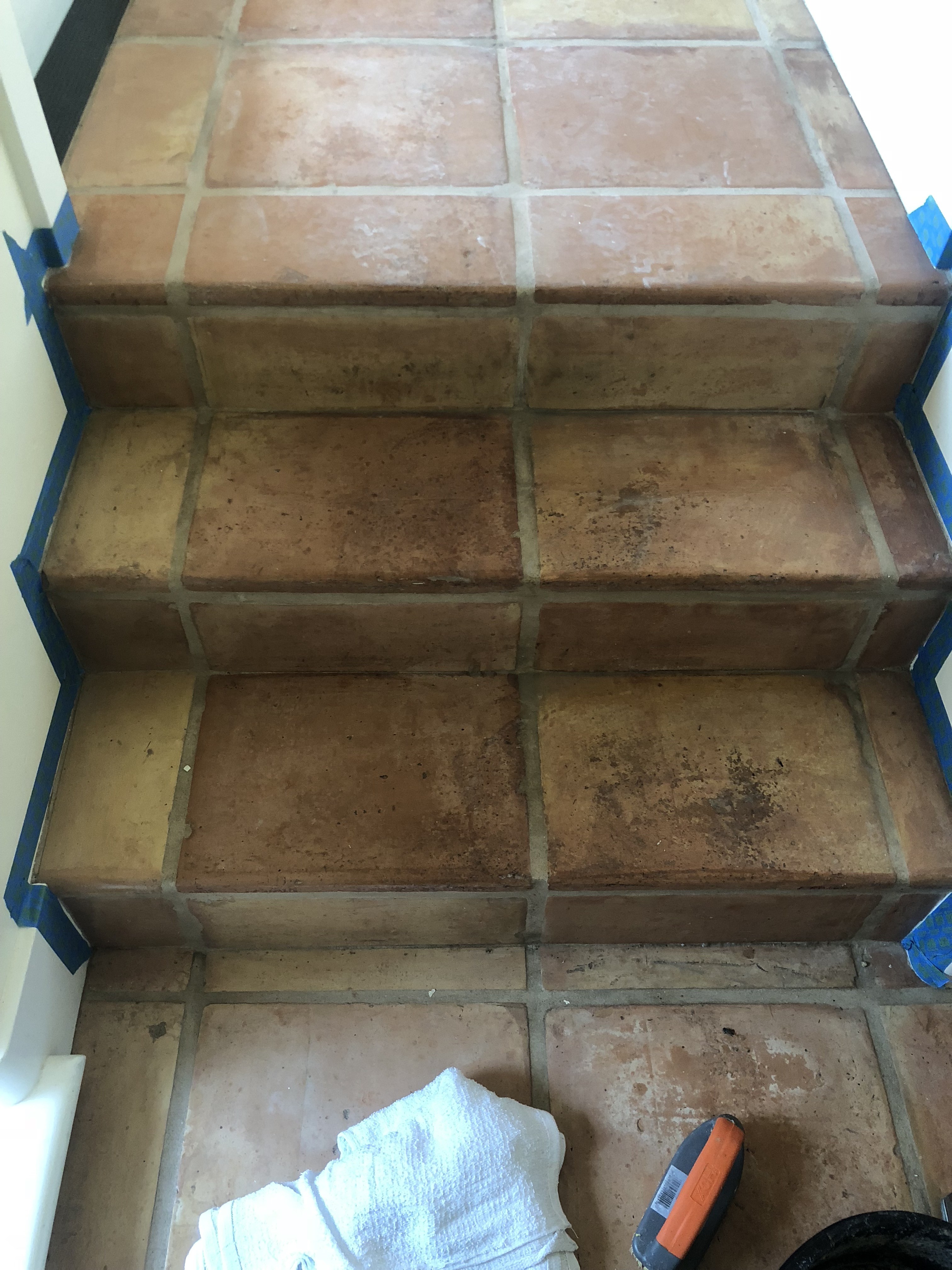
Can Old Saltillo Tile Be Restored Instead of Replaced?
Yes, many old Saltillo and terracotta tile floors can potentially be restored instead of replaced, provided the underlying pavers are still suitable for restoration. A floor that looks dull, dirty, scratched, hazy, white, or worn may simply have a deteriorated coating that needs to be completely removed.
Saltillo is a porous clay tile with natural variations and imperfections that give each floor its distinctive character. If the pavers themselves remain restorable, stripping away years of old sealer, embedded dirt, wax, lacquer, stain, or other topical coatings can reveal the raw tile underneath.

Signs Your Saltillo Tile May Need Restoration
Your Saltillo or terracotta tile floor may be a candidate for professional restoration if you're seeing problems such as:
- Tile and grout that no longer come clean with normal maintenance
- White, cloudy, or hazy areas in the existing finish
- Sealer that is peeling, flaking, or blistering
- Dirt that appears permanently embedded in the floor
- Scratched, dull, or uneven areas of old finish
- Tile that turns noticeably darker when it gets wet, which may indicate inadequate protection
If you've tried cleaning repeatedly without improving the appearance, read my guide explaining why cleaning Saltillo tile sometimes stops working. The problem may be dirt trapped in deteriorated sealer rather than dirt sitting on the surface.
How Saltillo Tile Restoration Works
Proper Saltillo tile restoration is not simply a matter of mopping the floor or running a machine across it. The process may involve completely removing the existing sealer and other topical coatings, cleaning and detailing the exposed tile and grout, allowing the porous clay to dry properly, and applying a suitable new sealing system.
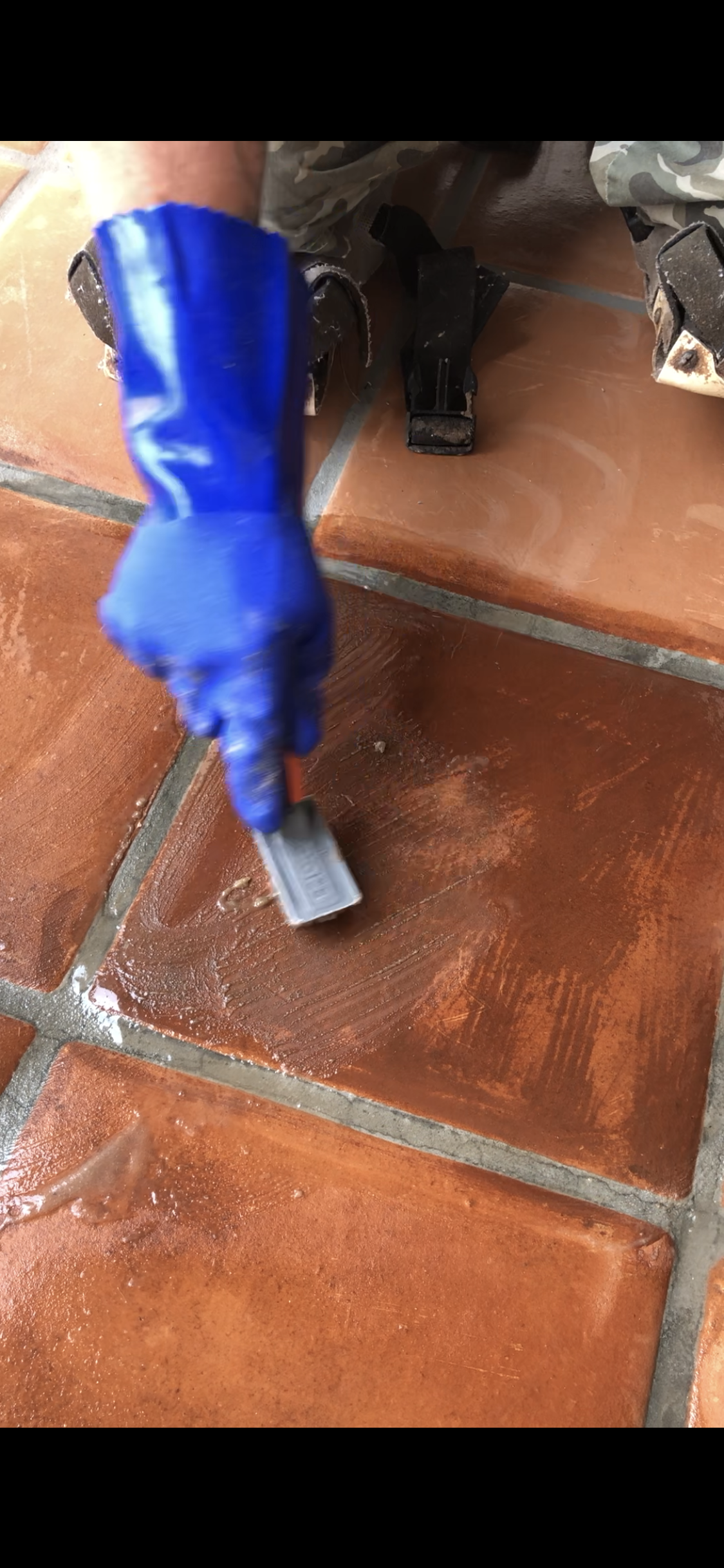
Step 1: Completely Remove the Old Sealer
One of the most important parts of restoring a Saltillo floor is completely removing the old sealer, wax, lacquer, stain, or other topical coating that needs to come off.
At California Tile Restoration, our detailed paver restoration work is performed by hand, on hands and knees. This allows us to work closely with every tile and grout joint while reaching corners, edges, stairs, underneath cabinets, behind toilets, and other areas machines cannot properly detail.
You can learn more about our professional tile cleaning and sealer stripping process.
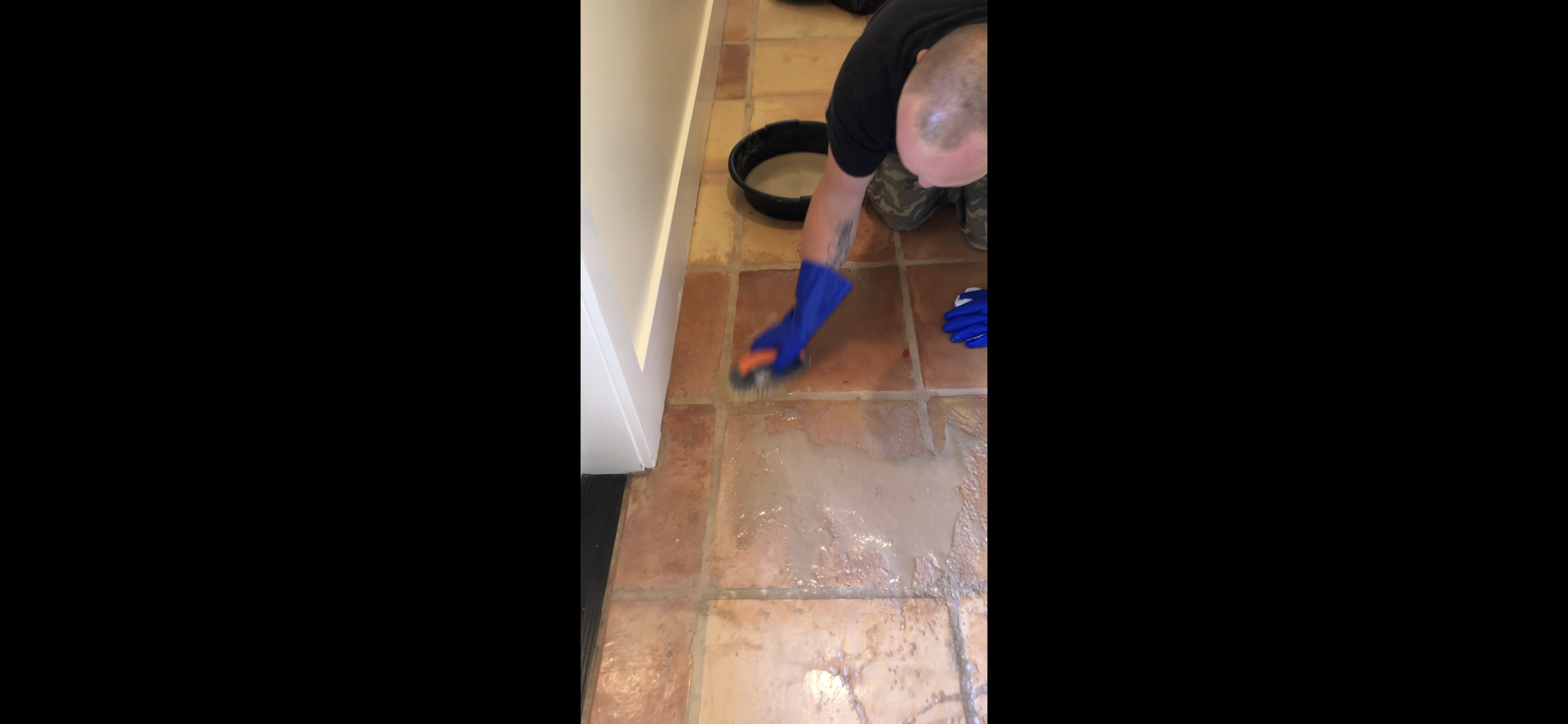
You Can't Clean Dirt If You Can't Reach It
If dirt is embedded beneath or within old failing sealer, ordinary cleaning cannot properly reach it. That's why complete sealer removal can be essential. Once the old coating is gone, the actual tile and grout become accessible for deeper cleaning and detailing.
Watch the video below for a closer look at the Saltillo tile stripping and refinishing process:
Incomplete sealer removal can leave old finish and embedded contamination behind. That can affect the final appearance and potentially interfere with the performance of a newly applied coating.

Step 2: Deep Clean the Raw Saltillo Tile and Grout
After the old coating has been completely removed, the raw Saltillo tile and grout can be properly cleaned and detailed. This is where a dramatic visual difference may become apparent because dirt and residue that were previously trapped in or beneath the old finish can finally be addressed.

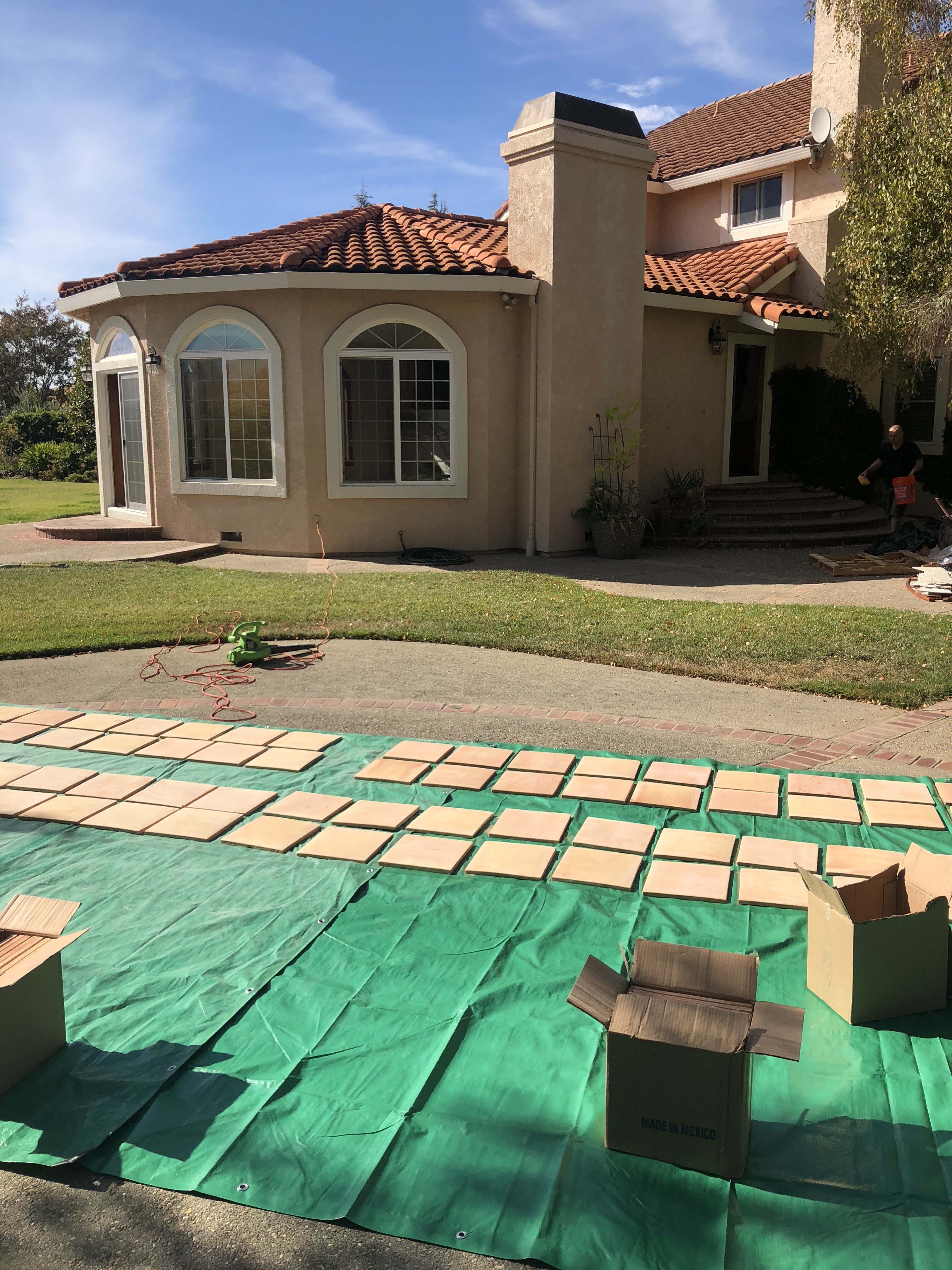
What About Outdoor Saltillo and Terracotta Tile?
Exterior Saltillo and terracotta pavers face different challenges from indoor floors. Rain, sprinklers, UV exposure, standing water, drainage problems, mold, algae, and other environmental conditions can all affect porous clay tile and its protective sealer.
Watch the video below for more information about outdoor Saltillo and terracotta tile restoration:
For exterior pavers, choosing the right sealing system is especially important. Fritz's documented approach favors protection suited to outdoor exposure rather than assuming the same topical coating used indoors is appropriate for every exterior installation.
Watch this video for Fritz's advice on cleaning outdoor terracotta tile:
You can also read the complete guide to the best way to clean outdoor terracotta and Saltillo tile.
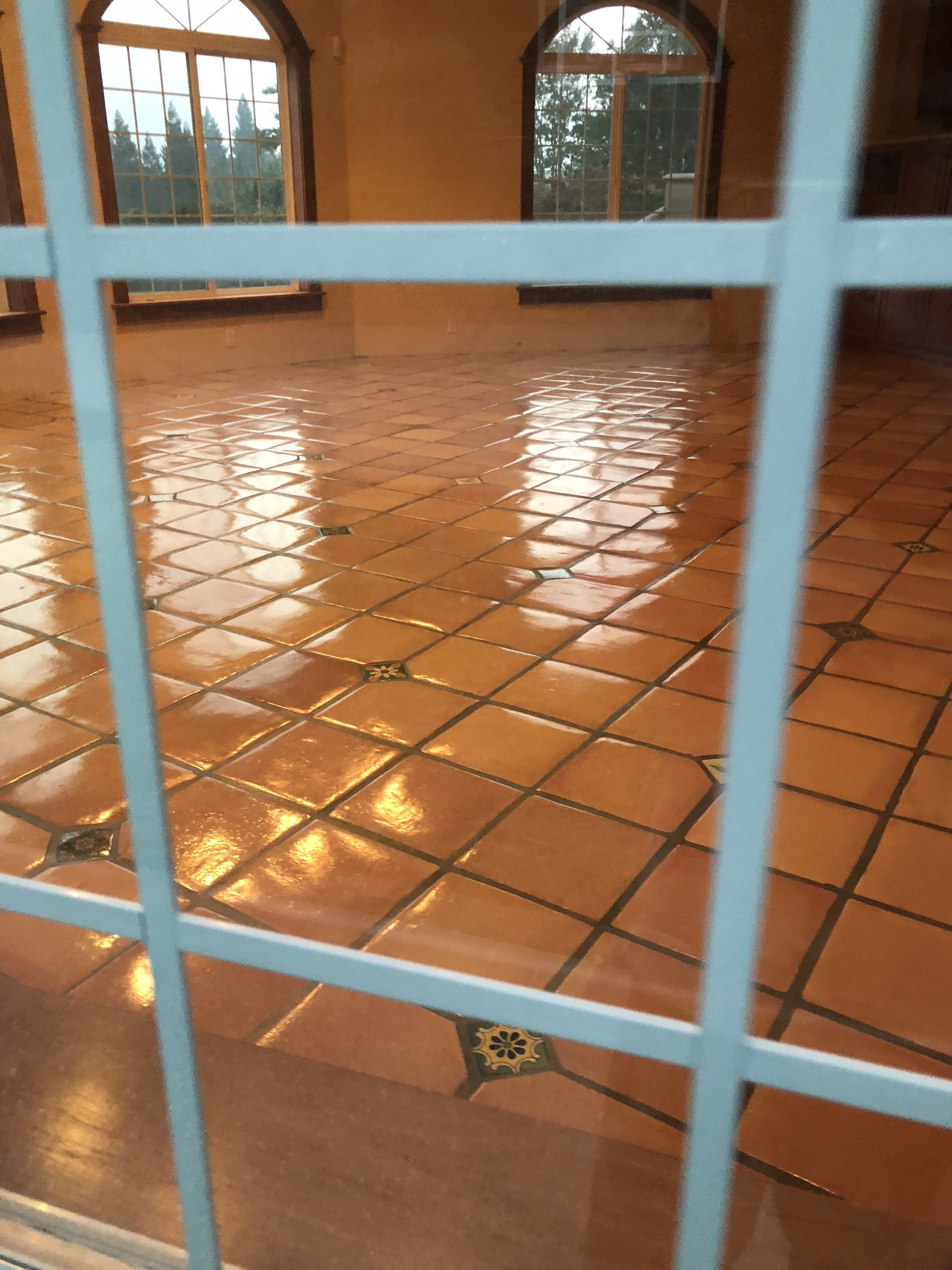
Why Sealing Makes Such a Dramatic Difference
After stripping and cleaning, the transformation becomes even more noticeable when the properly prepared Saltillo tile is sealed. The right sealing process can enhance the appearance of the clay while creating a protective layer that makes routine maintenance easier.

How Many Coats of Sealer Does Indoor Saltillo Tile Need?
Based on Fritz's firsthand experience, indoor Saltillo and terracotta pavers may require approximately five to eight coats of sealer depending on the tile and its porosity. The exact requirements can vary because porous clay pavers do not all absorb sealer in precisely the same way.
Fritz has repeatedly found that insufficient sealer is a common problem with Saltillo floors. The goal of a properly built-up topical sealing system indoors is to create a protective finish so normal wear, dirt, and light scratches affect the sealer rather than immediately reaching the raw clay and grout beneath it.
For more information about available finishes, see our tile staining, sealing, and polishing services.
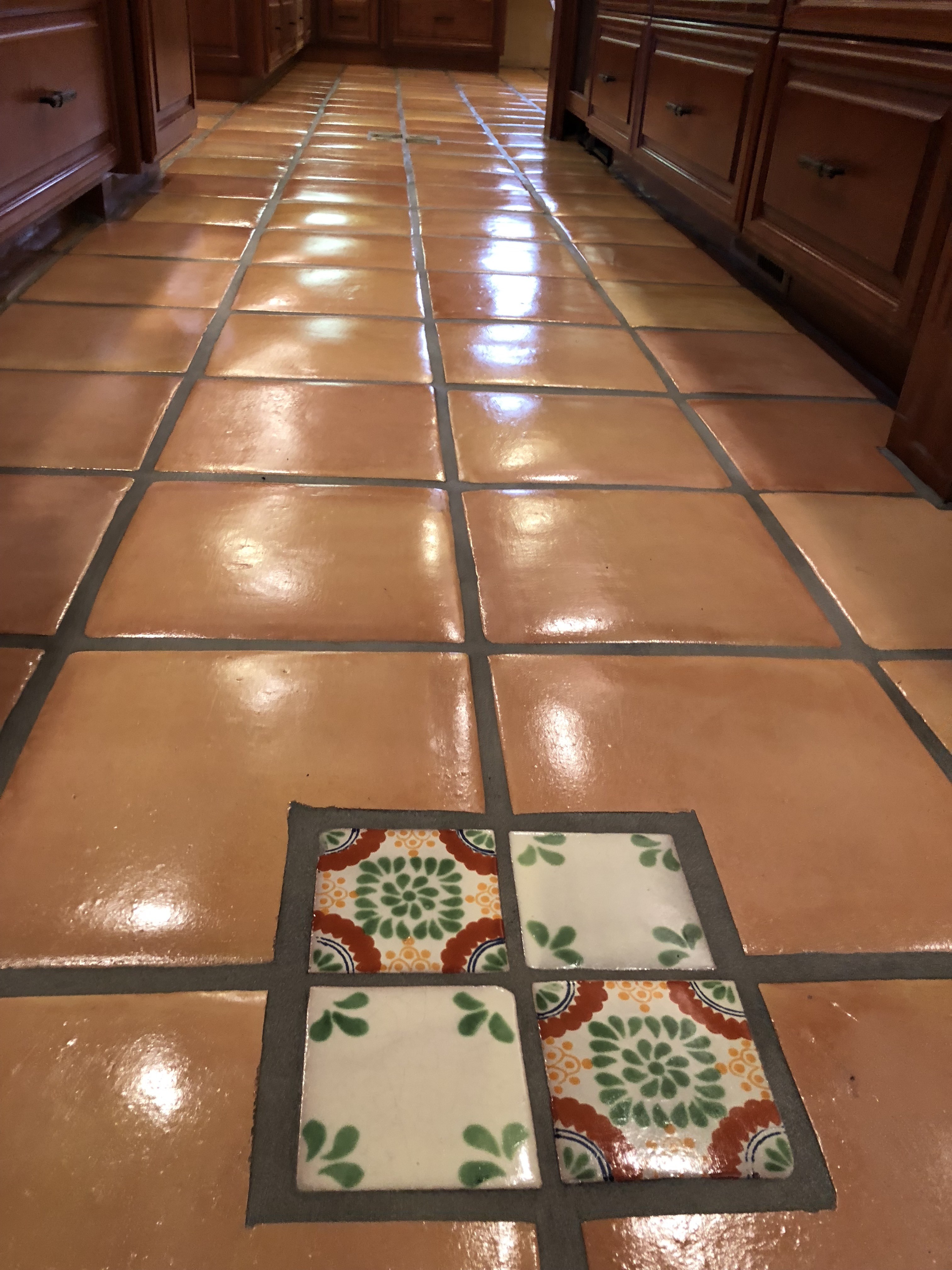
Does Saltillo Tile Turning Dark When Wet Mean It Needs Sealer?
A noticeable darkening when Saltillo tile gets wet can be a sign that moisture is being absorbed into the porous clay rather than repelled by an adequate protective finish. However, the overall condition of the floor and its existing sealer should be evaluated before deciding on the proper treatment.
For interior Saltillo floors, homeowners may choose between higher-gloss and lower-luster finishes depending on their preferred appearance and the needs of the floor.
Watch the video below for more information about Saltillo tile sealing:
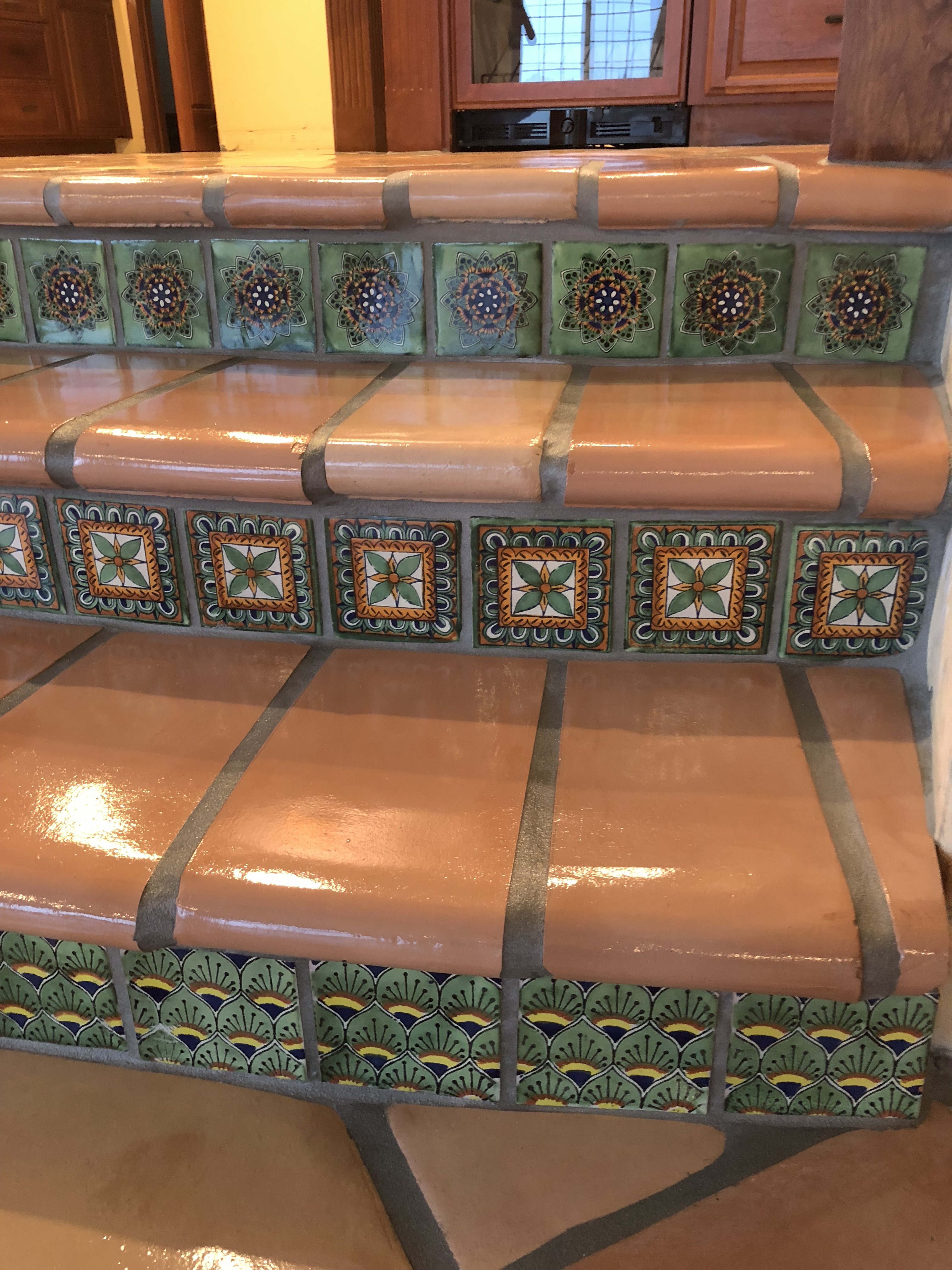
When Should You Replace Saltillo Tile Instead of Restoring It?
Restoration can be an excellent option for many floors, but it isn't automatically the right answer in every situation. Replacement may need to be considered when there is extensive physical damage, major substrate or installation problems, widespread loose or broken pavers, or when the homeowner simply no longer wants Saltillo tile.
However, a floor should not necessarily be written off simply because it looks dirty, hazy, scratched, or worn. Those symptoms may be related to the existing sealer and could potentially be addressed through proper restoration.
So before you trash those old Saltillo tiles, think twice. You could have rough diamonds that simply need to be cut and polished—or, in this case, rough terracotta tiles that need to be stripped, cleaned, refinished, resealed, and restored by someone who understands porous clay pavers.
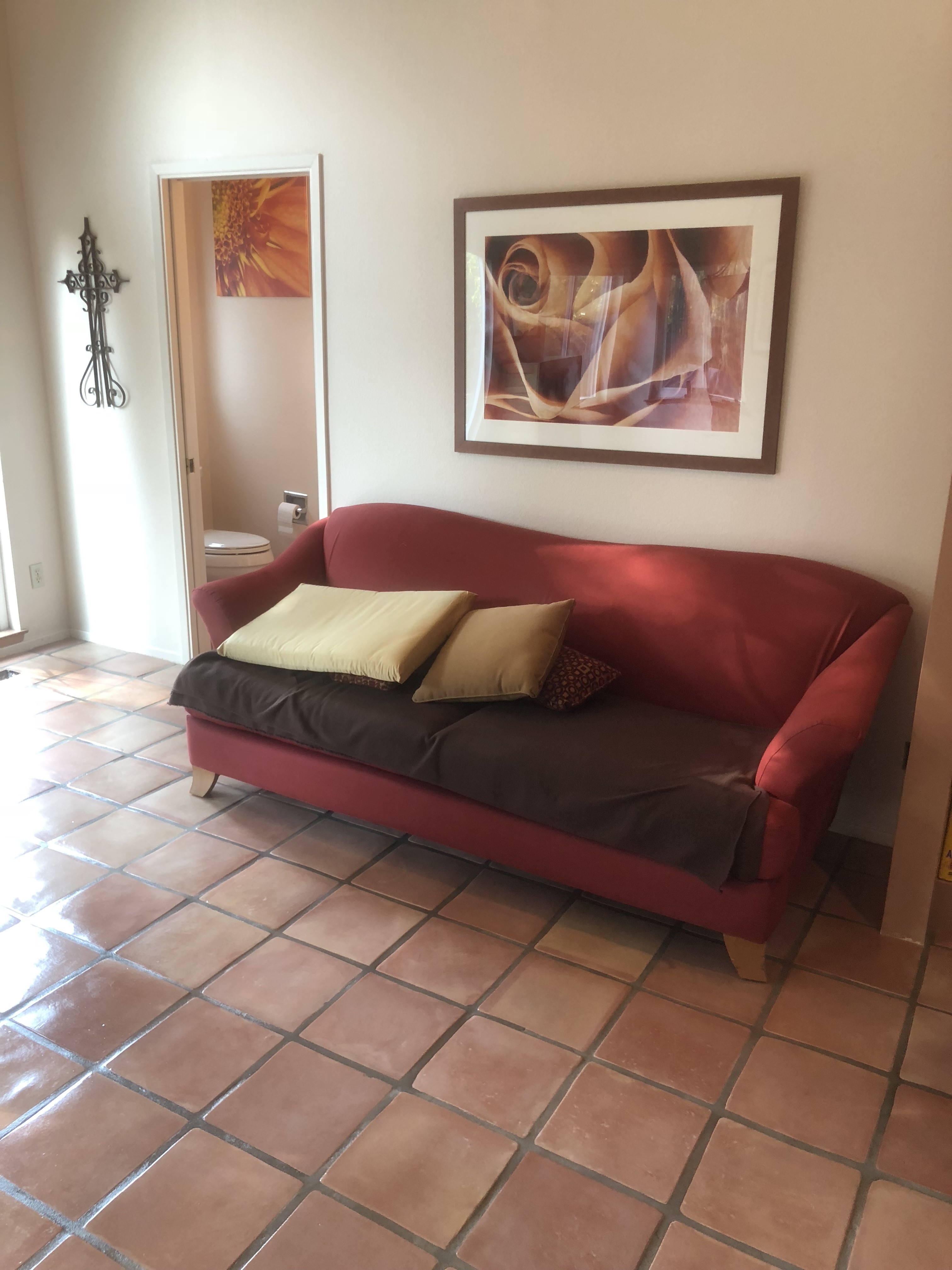
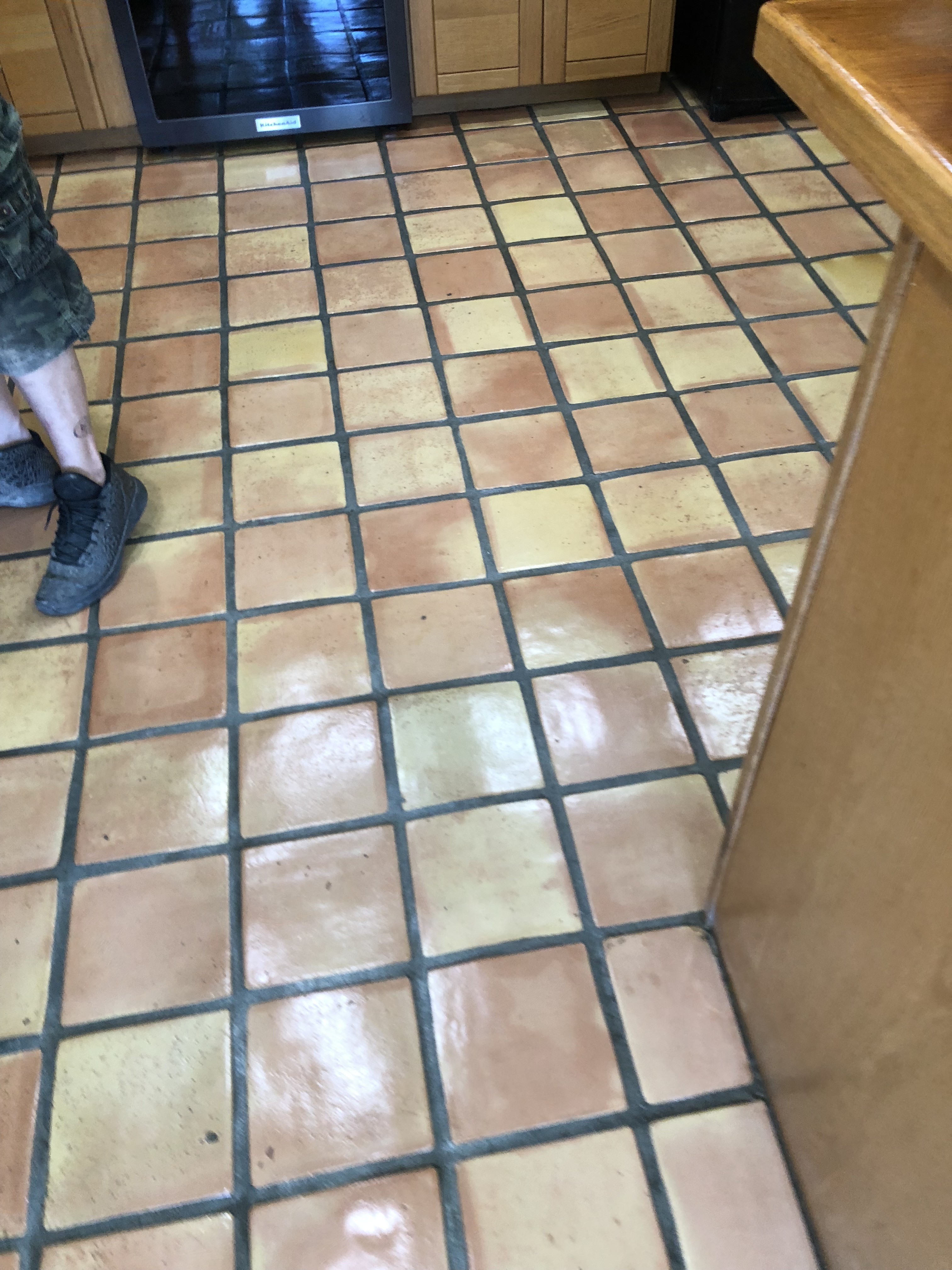
Restore or Replace Saltillo Tile? The Bottom Line
If your Saltillo floor is dirty, dull, hazy, peeling, flaking, blistering, or seemingly impossible to clean, don't assume replacement is your only option. The underlying pavers may still be suitable for restoration once the failed coating and embedded contamination are properly removed.
The decision ultimately depends on the physical condition of the tile, the installation, the extent of any damage, and your goals for the space. But before committing to demolition, it makes sense to find out whether your existing floor can be restored.
Need Help Deciding Whether to Restore Your Saltillo Tile?
California Tile Restoration specializes in detailed Saltillo, terracotta, and Mexican paver restoration, including sealer stripping, cleaning, staining, custom color matching, sealing, polishing, and selected paver installation and replacement work.
With more than 23 years of hands-on experience and over 1,000 paver projects completed, Fritz Wittmann has restored clay tile floors throughout Northern California, including San Rafael, Marin County, Sonoma County, Napa County, the Bay Area, and surrounding communities.
Explore our complete tile restoration services or call (707) 384-1172 to discuss whether your existing Saltillo floor may be a candidate for restoration.
Frequently Asked Questions About Restoring Saltillo Tile
Is it better to restore or replace old Saltillo tile?
If the underlying pavers and installation are still suitable for restoration, stripping away failed sealer, cleaning the raw tile and grout, and applying a new protective finish may dramatically improve an old Saltillo floor. Replacement may be more appropriate when there is extensive physical or installation-related damage.
Can Saltillo tile that looks white or hazy be restored?
In many cases, white or hazy areas are related to moisture problems or a failing topical sealer rather than permanent destruction of the clay tile. The floor should be evaluated to determine the actual cause and whether stripping and restoration are appropriate.
Why won't my Saltillo tile come clean anymore?
Dirt may have become embedded in old, deteriorated sealer, preventing normal cleaning from reaching the raw tile and grout underneath. Complete sealer removal may be necessary before the floor can be properly deep cleaned.
How many coats of sealer does indoor Saltillo tile need?
Based on Fritz Wittmann's firsthand experience, indoor Saltillo and terracotta tile may require approximately five to eight coats of sealer depending on the paver and its porosity. The exact amount varies according to the tile and the sealing system being used.
Can outdoor Saltillo tile be restored?
Yes, many exterior Saltillo and terracotta floors can be restored, but outdoor pavers face additional challenges from rain, sprinklers, UV exposure, standing water, drainage problems, mold, algae, and other environmental conditions. The restoration and sealing approach should account for those conditions.