

Best Sealer for Terracotta Floor Tiles and Stain Protection
The best sealer for indoor terracotta floor tiles depends on the condition of the floor, the type of finish you want, and how the tile was originally prepared. When Saltillo or terracotta tile becomes dull, sticky, difficult to clean, or constantly attracts dirt, the problem may not be your cleaner at all. The existing sealer may be deteriorating, improperly applied, or no longer protecting the porous clay beneath it.
After more than 23 years of hands-on experience and over 1,000 paver projects, I've seen homeowners waste time and money searching for stronger cleaners when the real problem is a failing sealer. Once dirt becomes embedded in deteriorating sealer, no heavy-duty tile and grout cleaner is going to restore the floor properly.
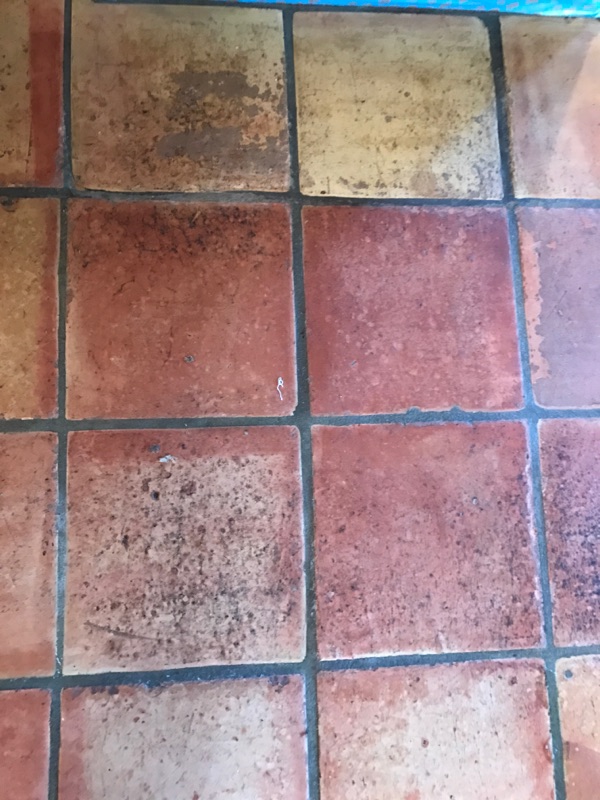
Why Does Terracotta Tile Become Dull and Sticky?
If your kitchen's terracotta floor is dull, sticky, and impossible to keep clean, dirt may be sticking directly to a deteriorating finish. This is especially common when the original tile was not properly prepared or sealed, when the coating has broken down over time, or when inappropriate cleaning products have damaged the finish.
Before buying another bottle of heavy-duty cleaner, ask a more important question: Is the tile actually dirty, or is the sealer failing?
If the existing finish is peeling, hazy, sticky, contaminated, or deteriorating, cleaning alone may not solve the problem. The old coating may need to be professionally removed through tile cleaning and sealer stripping before the floor can be properly restored and protected.
Watch: Why Your Terracotta Floor May Be Difficult to Clean
In this video, Fritz explains why Mexican tile and terracotta floors can become increasingly difficult to clean and why the original sealing process can determine how well the floor performs over time.
What Is the Best Sealer for Indoor Terracotta Floor Tiles?
For the indoor Saltillo and terracotta floors discussed in this article, I've had success using an appropriate acrylic water-based topical sealer when the tile has been correctly prepared and the desired result is a protected, finished surface.
But there is an important distinction: there is no single sealer that is best for every terracotta floor. The right choice depends on whether the floor is indoors or outdoors, the tile's porosity and condition, the existing coating, moisture exposure, and the appearance the homeowner wants to achieve.
For indoor floors where an acrylic topical coating is appropriate, proper preparation and application can help protect the porous clay from dirt and stains while making routine maintenance easier. However, applying new sealer over dirt, moisture, or a failing existing coating can create peeling, cloudiness, poor adhesion, and other problems.
Learn more about professional tile staining, sealing, and polishing options for Saltillo, terracotta, and Mexican paver floors.
Proper Sealing Can Make Terracotta Tile Easier to Clean
When indoor terracotta tile has been properly prepared, restored, and sealed, keeping it clean should not require constantly searching for the strongest chemical on the market.
The real key is consistent maintenance and good cleaning technique.
For properly sealed indoor terracotta tile:
- Clean manageable sections rather than trying to mop the entire floor with increasingly dirty water.
- Change your cleaning water frequently.
- Use a low-sudsing cleaner appropriate for the existing sealer and tile surface.
- A neutral cleaner is often sufficient for routine maintenance.
- When appropriate for the specific floor and finish, a compatible degreaser may help with greasy kitchen residue.
- Buff the floor dry instead of allowing dirty cleaning water to evaporate on the surface.
The exact cleaning product should always be compatible with the particular sealer already on the floor. Harsh or inappropriate chemicals can dull or damage certain finishes.
Don't Waste Time Looking for the Strongest Mexican Tile Cleaner
Homeowners often ask me about the best Mexican tile cleaner or the best heavy-duty product for restoring a dull Saltillo floor. But if dirt has become embedded in failing sealer, a stronger cleaner is not necessarily the answer.
The floor may need professional restoration instead.
That can involve:
- Removing the old deteriorated coating
- Detailing individual tiles and grout joints
- Correcting stains or uneven color where possible
- Allowing the porous clay to dry properly
- Applying a new sealing system appropriate for the floor
If ordinary cleaning no longer works, read more about why cleaning Saltillo tile may stop working.
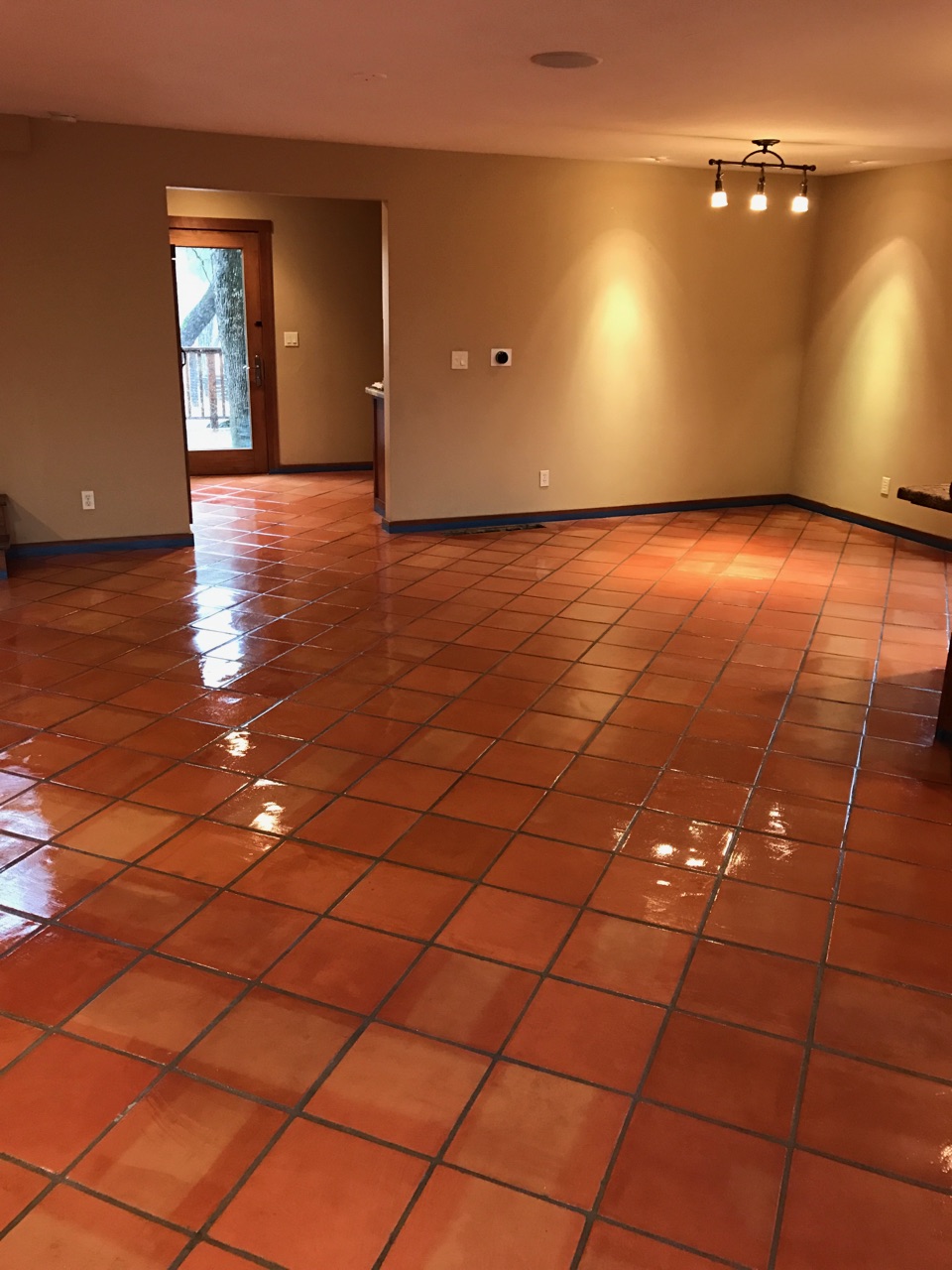
Why Buffing Terracotta Tile Dry Makes Such a Difference
One of my biggest maintenance tips for a properly sealed, high-gloss indoor terracotta floor is to buff the surface dry after cleaning.
Think about cleaning glass. You wouldn't simply move glass cleaner around with a wet rag and then leave it to dry on its own if you wanted a clear, streak-free finish. A high-gloss sealed tile surface can benefit from the same basic principle.
If dirty cleaning water is repeatedly moved across the floor and left behind, residue can dry on the surface and contribute to streaks or a dull appearance. Working in smaller sections, changing the water often, and buffing the surface dry can help produce a much cleaner result.
This is particularly important in kitchens and other high-traffic areas where grease, food residue, dirt, and frequent foot traffic can affect the appearance of the floor.
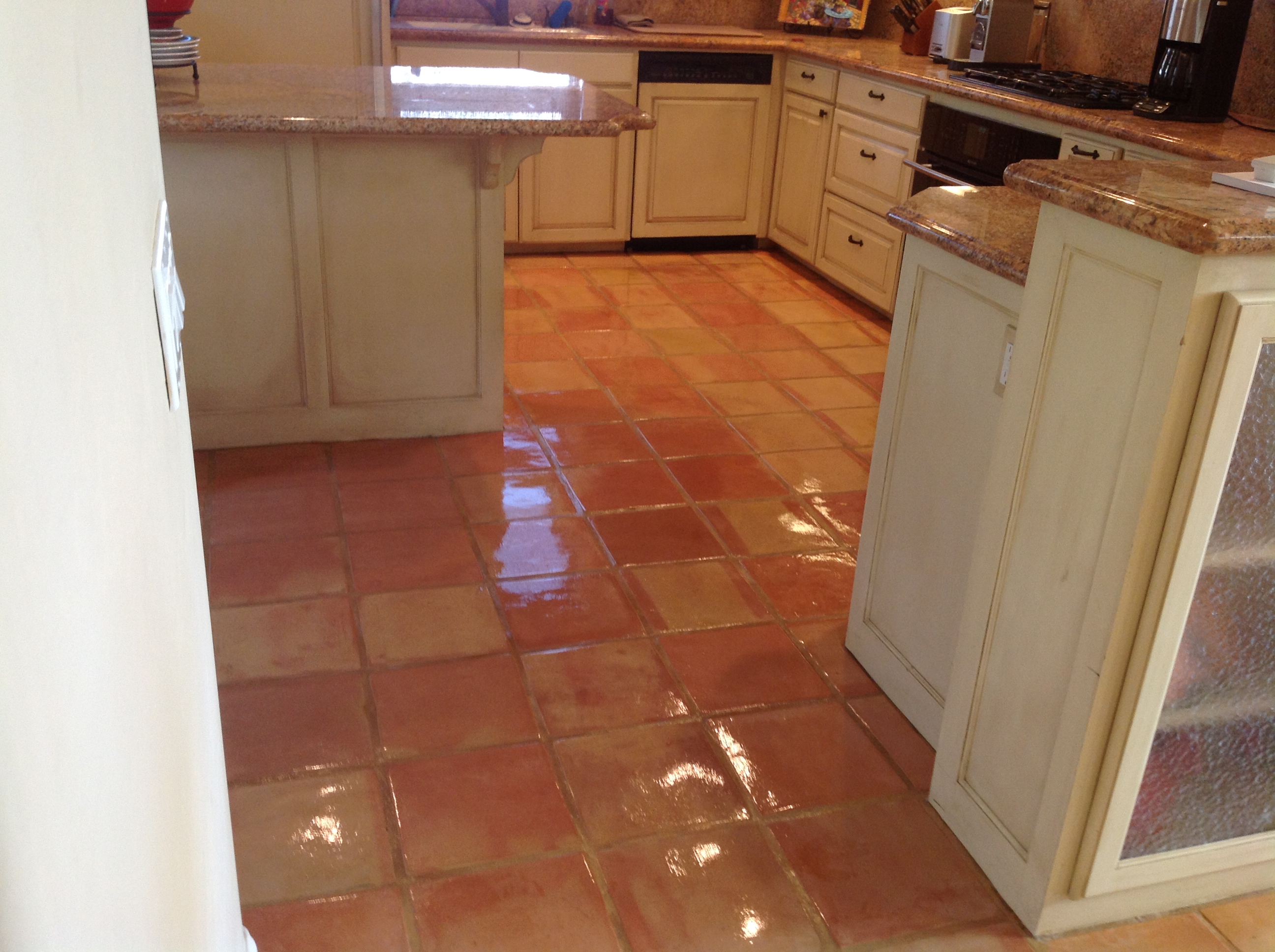
Can You Seal Over Dirty or Deteriorating Terracotta Tile?
Applying new sealer over dirt, failing coatings, or trapped moisture can create bigger problems rather than fixing the floor.
If dirt is already embedded in the existing finish, adding more sealer may simply trap that contamination beneath another layer. Likewise, if the tile contains excessive moisture, applying certain coatings before the floor is sufficiently dry can contribute to cloudiness, whitening, poor adhesion, or other finish problems.
The floor should first be evaluated to determine whether it needs routine cleaning, complete sealer removal, stain correction, or a more extensive restoration process.
Our guide to common Saltillo and terracotta tile sealing mistakes explains how improper preparation, insufficient cleaning, moisture, debris, and the wrong sealer can cause problems.
Indoor and Outdoor Terracotta Tile Need Different Sealing Strategies
One of the most important distinctions is whether the terracotta or Saltillo tile is located indoors or outdoors.
A topical coating that performs well on a properly prepared interior floor may not be appropriate for an exterior patio exposed to rain, sprinklers, morning dew, UV exposure, drainage issues, and temperature changes.
For exterior Saltillo and terracotta tile, I generally prefer appropriate penetrating or color-enhancing penetrating sealers rather than shiny topical coatings that can become cloudy, peel, blister, or trap moisture as they deteriorate.
If you're working with an exterior patio or walkway, see our guide on how to clean outdoor terracotta and Saltillo tile.
When Does Terracotta Tile Need Professional Restoration?
Your floor may need more than routine cleaning if you notice:
- A sticky surface that quickly attracts dirt
- Peeling or flaking sealer
- White, cloudy, or hazy areas
- Uneven sheen or dull patches
- Dirt trapped beneath the existing finish
- Stains that ordinary cleaning cannot remove
- Grout that remains dark or dirty despite repeated mopping
When terracotta tile reaches this condition, the solution may be to remove the deteriorated coating and restore the floor rather than continue experimenting with stronger cleaning products.
Why Detailed Hand Restoration Matters
At California Tile Restoration, our detailed restoration work is performed by hand, on hands and knees, so individual tiles and grout joints can receive the attention they need.
Machines cannot properly reach every grout joint, corner, edge, area beneath cabinets, space behind toilets, or other difficult detail areas. With more than 23 years of hands-on experience and over 1,000 paver projects completed, Fritz Wittmann specializes in restoring Saltillo, terracotta, and Mexican paver floors while preserving the character that makes these handmade clay tiles unique.
Need Help With Dull, Sticky, or Deteriorating Terracotta Tile?
If your terracotta or Saltillo floor is dull, sticky, peeling, cloudy, difficult to clean, or covered by a deteriorating sealer, California Tile Restoration can help determine whether the floor needs cleaning, sealer stripping, restoration, staining, or resealing.
We serve homeowners throughout Northern California, including San Rafael, Marin County, Sonoma County, Napa County, the Bay Area, and surrounding communities.
Explore our complete tile restoration services or call Fritz Wittmann at (707) 384-1172 to discuss your Saltillo or terracotta tile project.
Frequently Asked Questions About Terracotta Tile Sealer
What is the best sealer for indoor terracotta floor tiles?
The best sealer depends on the tile's condition, porosity, existing finish, moisture exposure, and desired appearance. For appropriate indoor Saltillo and terracotta floors, Fritz has had success with acrylic water-based topical sealers when the tile is correctly prepared and the desired result is a protected finished surface.
Why does my terracotta tile floor feel dull and sticky?
A dull or sticky floor may have deteriorating sealer that is attracting and holding dirt. If contamination has become embedded in a failing coating, stronger cleaning products may not solve the problem, and the old sealer may need to be removed.
Can I apply new sealer over old terracotta tile sealer?
It depends on the condition and compatibility of the existing finish. If the old sealer is peeling, cloudy, contaminated, or deteriorating, applying another coating over it can trap existing problems rather than fix them.
How should properly sealed terracotta tile be cleaned?
Work in manageable sections, change the cleaning water frequently, use a low-sudsing cleaner compatible with the existing finish, and buff the surface dry to reduce residue and streaking. Avoid harsh chemicals that may damage or dull the sealer.
Is the same sealer best for indoor and outdoor Saltillo tile?
No. Indoor and outdoor environments present different challenges. Fritz generally prefers penetrating or color-enhancing penetrating sealers for exterior Saltillo and terracotta because outdoor tile is exposed to rain, sprinklers, UV rays, moisture, and temperature changes.