

Why Tile Cleaning Machines Can Damage Saltillo, Slate, Flagstone & Brick
Buffers, sanders, steam machines, carpet-cleaning equipment, and pressure washers can look like an easy shortcut for cleaning tile and stone. Sometimes machines have a place, but on irregular, porous surfaces such as Saltillo, slate, flagstone, and brick, the wrong equipment or technique can create new problems instead of solving the old ones.
After years of restoring tile and stone, I have seen what happens when a machine is expected to do detailed restoration work it simply cannot reach. Low grout joints stay dirty, high spots get overworked, edges are missed, porous materials become oversaturated, and aggressive tools can permanently change the surface of the tile.
That does not mean every machine is useless. It means the equipment has to match the material and the job. When old sealer, wax, embedded dirt, or damaged finishes are involved, careful preparation and detailed hand work often matter more than speed.
If your floor has failing coatings or embedded contamination, learn more about our professional tile cleaning and sealer stripping services throughout Marin County, the Bay Area, and Northern California.
Why Buffers Can Miss Dirt and Old Finish
A floor buffer uses a flat pad or brush that spins across the surface. That can work well on some flat, uniform flooring, but Saltillo, slate, flagstone, brick, and other textured materials are rarely perfectly flat from piece to piece.
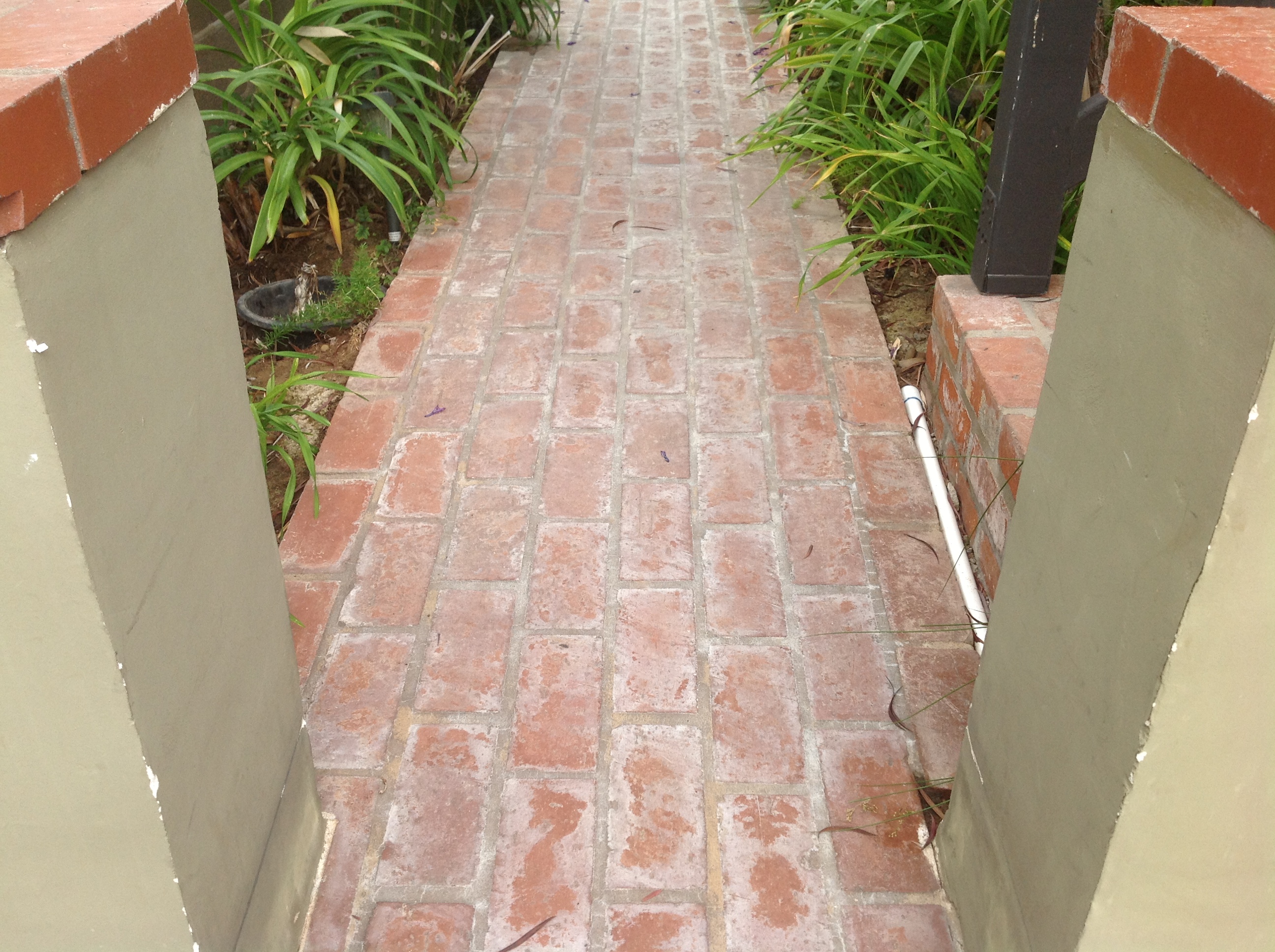
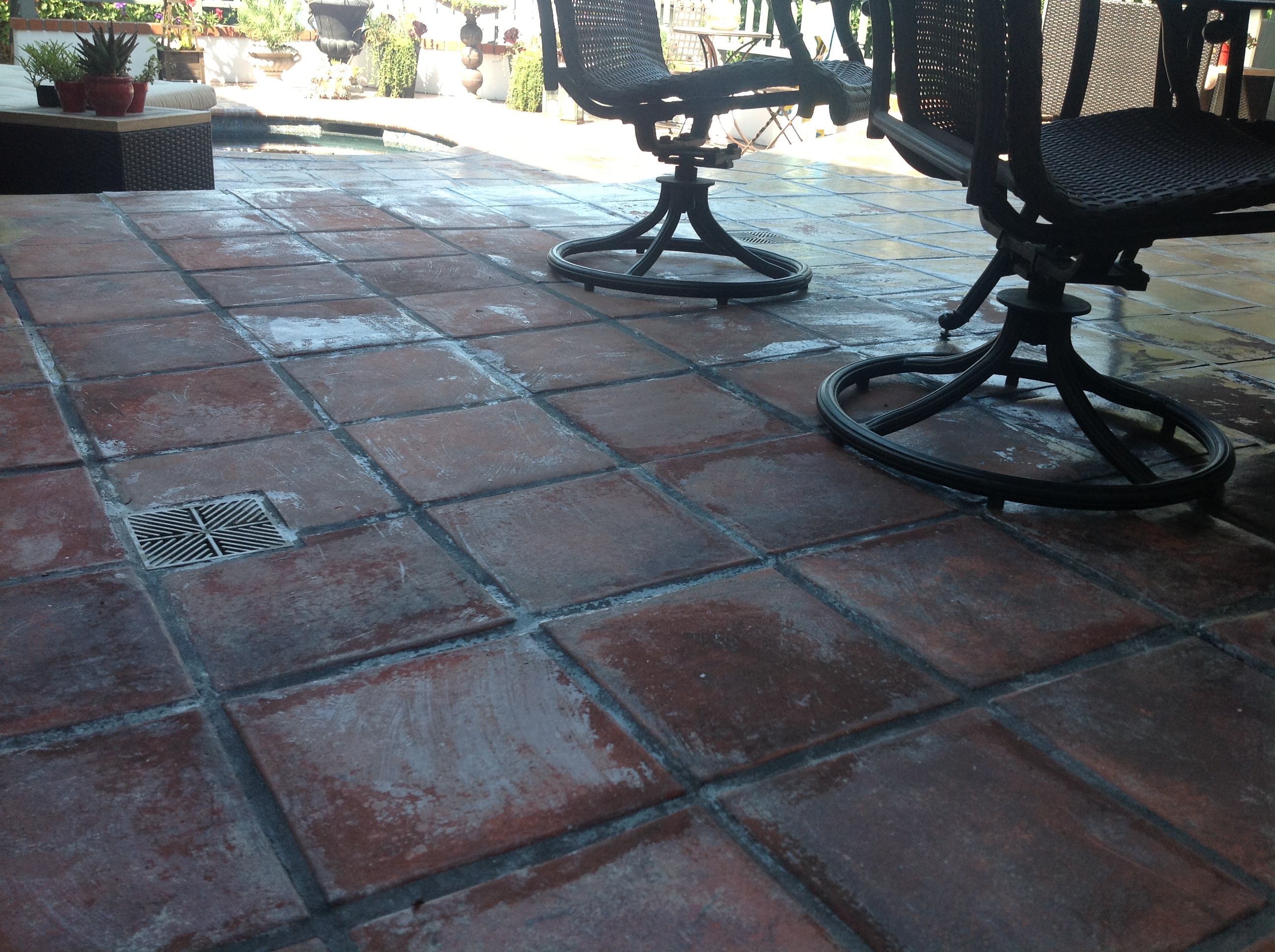
The grout usually sits lower than the face of the tile. On an irregular floor, one paver can also sit slightly higher or lower than the next. A flat buffer naturally makes better contact with the high areas while missing some of the lower sections and grout joints.
That creates a common problem: the floor looks partly cleaned, but the low areas, grout, edges, and textured sections still hold dirt or finish.
When stronger stripping chemicals and repeated machine passes are used to compensate, the risk increases that the high areas will be overworked while the low areas still are not fully stripped.
Sealer Removal Requires More Than Surface Cleaning
Removing old sealer is different from removing surface dirt or wax. If the purpose of the restoration is to expose the tile underneath, then the existing coating has to be removed consistently across the entire floor.
Leaving patches of old coating behind can cause problems when new sealer is applied. The new finish may absorb differently, bond unevenly, or reveal blotchy sections that were difficult to see while the floor was wet.
This is especially important with porous materials such as Mexican Saltillo tile. Our article about dirty, peeling, and dull Saltillo tile shows what can happen when an old finish is not fully removed before resealing.
Machines Cannot Reach Every Detail
Tile restoration is often won or lost in the areas that large machines cannot reach: behind toilets, along baseboards, under cabinet edges, inside closets, around door jambs, in corners, next to carpet transitions, and beside wood flooring.
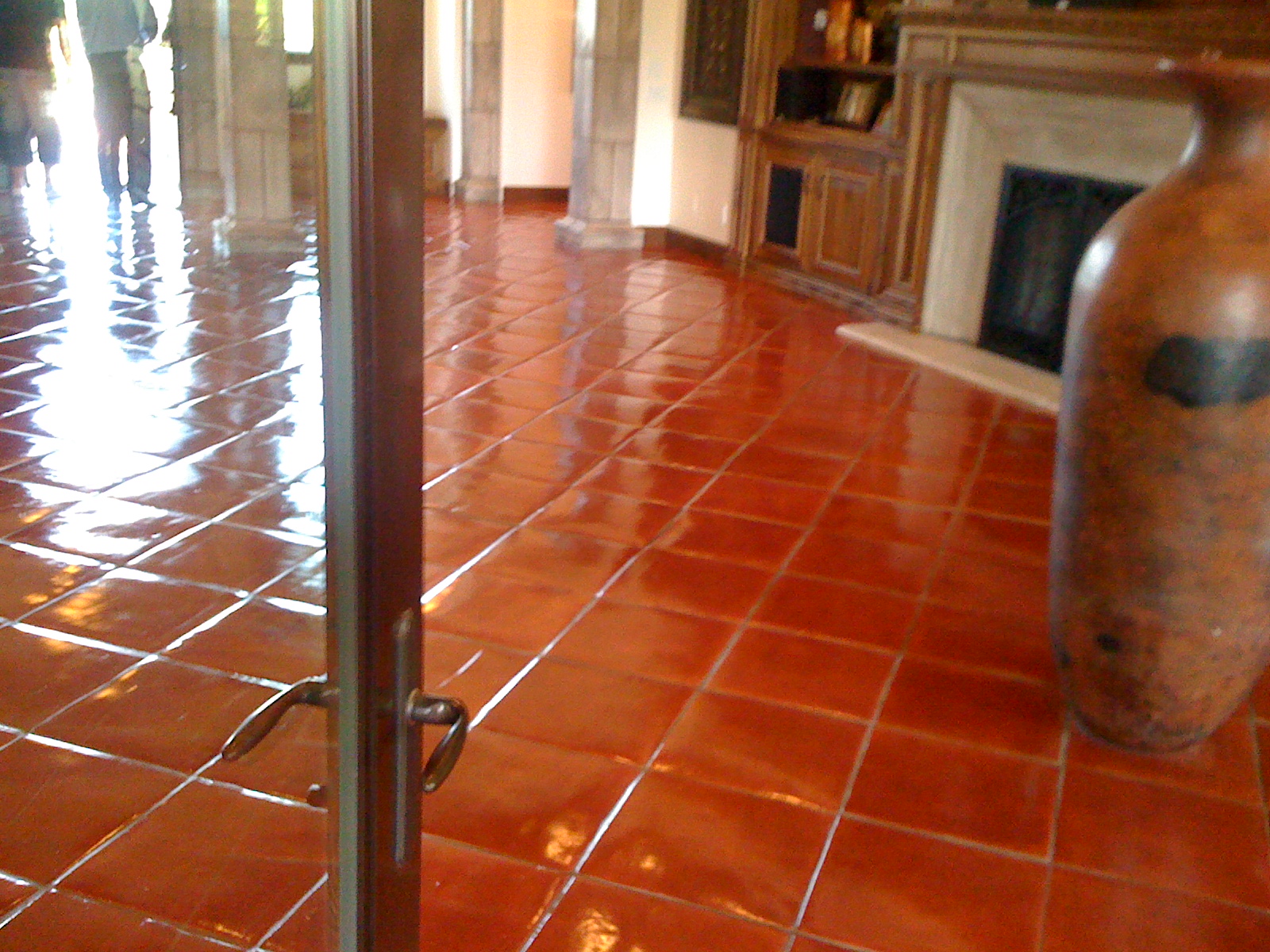
I have also seen buffer equipment strike baseboards, walls, cabinets, and nearby finishes. Water and cleaning solution can migrate into adjoining materials if the process is not carefully controlled.
"I am the machine."
That is what I tell customers. Machines can assist with certain jobs, but the eye for detail and the hand work are what finish the restoration.
Why Sanding Saltillo Tile Can Cause Permanent Damage
Sanding is one of the methods I am most cautious about on Mexican Saltillo pavers. Saltillo is a handmade clay product, and aggressively removing the surface can change both its appearance and its durability.

I often explain Saltillo to homeowners by comparing it to a loaf of French bread. The outer surface is different from the softer material underneath. If you aggressively sand through that original face, you cannot simply put it back.
Sanding can also remove natural blemishes, color variations, and handmade characteristics that are part of what makes Saltillo attractive in the first place. When a glossy coating is later applied, uneven sanding may become even more obvious because some areas reflect light differently than others.
If you are considering refinishing Saltillo, see our tile sealing, staining and polishing options before using an aggressive method that permanently changes the surface.
Pressure Washing Can Damage Porous Tile and Masonry
Pressure washers absolutely have legitimate uses. Concrete is one obvious example. But high-pressure cleaning has to be approached carefully on brick, Saltillo, slate, flagstone, and other porous materials.
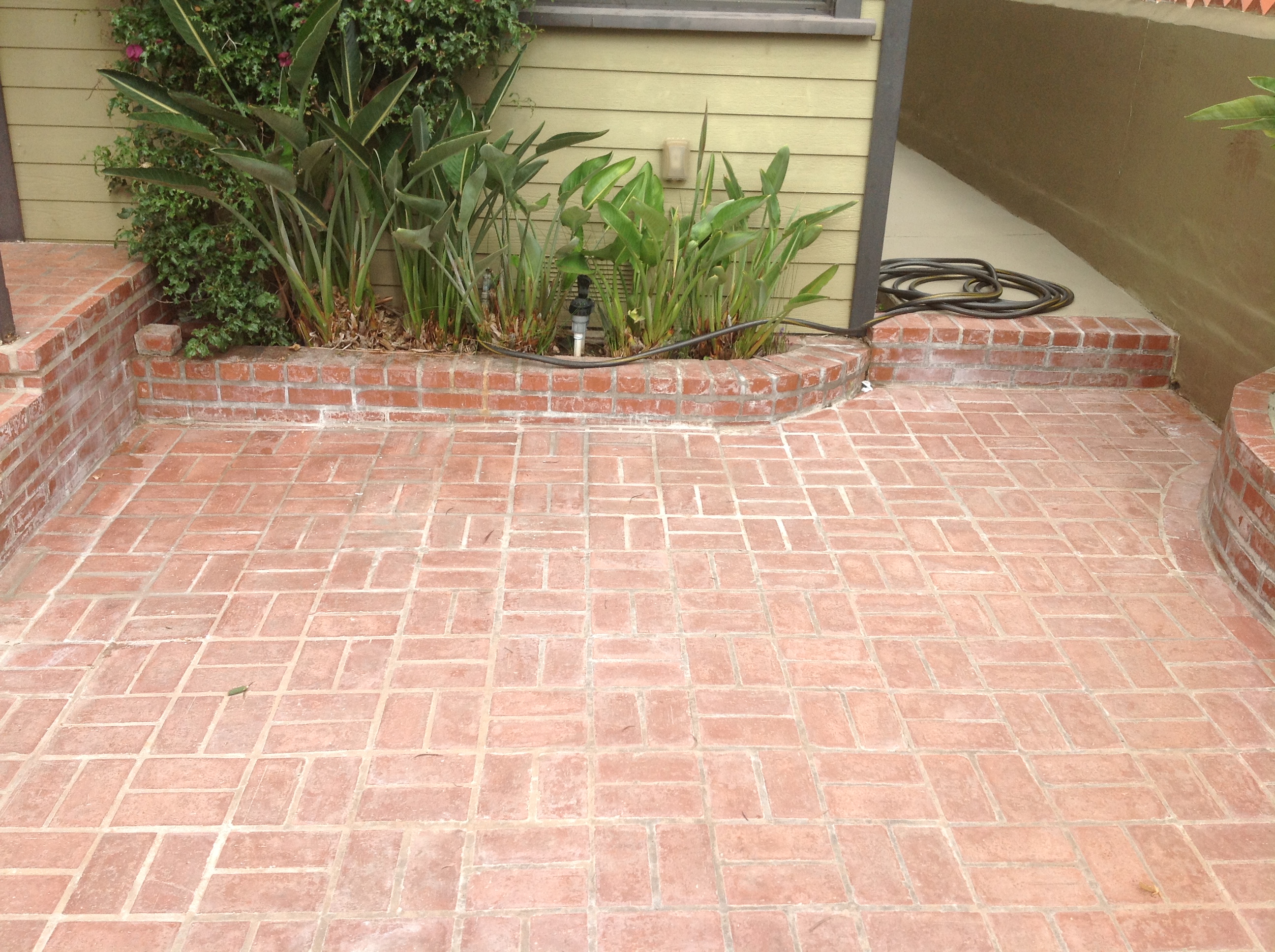
How Pressure-Washer Lines Are Created
The problem is not simply the existence of pressure. It is how consistently that pressure is applied.
If the nozzle is supposed to remain a certain distance from the surface, the operator has to maintain that distance across the entire area. Moving a few inches closer dramatically increases the force hitting the tile.
As the wand moves back and forth, small changes in distance and angle can create visible lines or lighter areas where the surface receives more pressure. On softer or weathered materials, the damage can be subtle at first and become more noticeable with time.
Too Much Water Can Create Another Problem
Saltillo, flagstone, slate, and brick can absorb significant amounts of water. Saturating them during aggressive cleaning can greatly extend drying time.
Moisture moving back through porous material can also carry mineral deposits to the surface, creating the white residue commonly called efflorescence. When a topical coating is present, trapped moisture may also contribute to whitening, cloudiness, or haze.
For a real natural-stone project, see our flagstone patio cleaning and refinishing project in Marin County.
What About Carpet-Cleaning Machines on Tile and Grout?
Extraction equipment can remove surface contamination from certain hard surfaces, but cleaning tile and grout is not always the same thing as restoring them.
A machine may improve the open center of a floor while still leaving difficult areas behind, including edges, corners, cabinet toe kicks, grout repairs, cracked tile, worn coatings, and sections requiring sealer removal.
If the grout needs repair, a coating is failing, or the surface needs refinishing instead of routine cleaning, those conditions have to be addressed as part of the restoration rather than simply cleaned around.
Steam Machines Are Not a Shortcut for Every Tile Surface
Home steam machines are heavily marketed as an easy solution for tile and grout. They may help with some routine surface cleaning, but they are not a replacement for stripping failed coatings, repairing grout, or restoring damaged porous tile.
Heat can also affect certain topical finishes. I have seen steam leave coated surfaces looking hazy or cloudy, particularly when the finish was already worn or compromised.
The bigger point is that there is no single machine that automatically solves every tile-cleaning problem.
Different Materials Need Different Restoration Methods
Saltillo, slate, flagstone, brick, limestone, travertine, and ceramic tile do not all react the same way to chemicals, water, abrasion, heat, or pressure.
A good restoration plan starts by identifying:
- What material is actually installed
- Whether the surface is sealed or unsealed
- What type of sealer or coating is present
- Whether the problem is dirt, failed finish, staining, moisture, or physical damage
- Whether grout repairs or tile repairs are also needed
- Whether the surface is indoors or exposed to exterior weather
Only then does it make sense to choose the cleaning or restoration method.
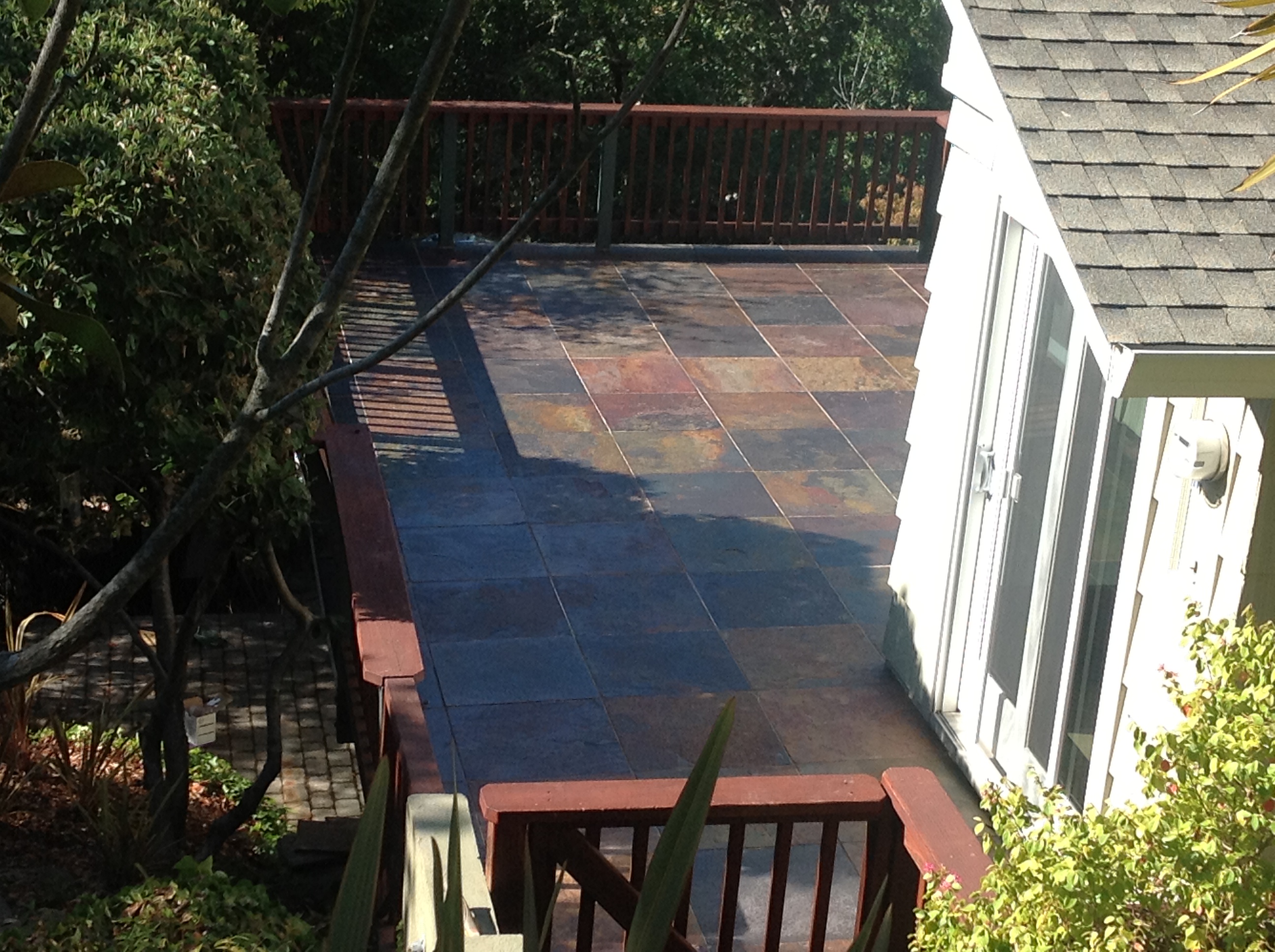
You can also read our guide to refinishing slate tile floors and deep cleaning for a closer look at how slate restoration differs from routine surface cleaning.
Professional Tile and Stone Restoration in Northern California
California Tile Restoration restores Saltillo, slate, flagstone, brick, terracotta, and other tile and stone surfaces throughout Marin County, Sonoma County, Napa, San Rafael, the Bay Area, and surrounding Northern California communities.
The goal is not to use the biggest or fastest machine available. It is to choose the process that protects the material, removes the problem, and produces a consistent result from the center of the floor all the way to the edges and grout joints.
Not Sure How Your Tile Should Be Cleaned or Restored?
If your tile has old sealer, embedded dirt, uneven finish, staining, or surface damage, we can help determine what restoration method makes sense.
View Our Tile Cleaning & Sealer Stripping Services
Call Fritz Wittmann at (707) 384-1172
Frequently Asked Questions About Tile Cleaning Machines
Can a floor buffer completely clean Saltillo or slate tile?
Not always. Buffers use a relatively flat pad or brush, while Saltillo, slate, flagstone, and grout can vary in height and texture. A machine may clean the high areas while missing lower grout joints, edges, corners, and irregular sections that require detailed hand work.
Is it safe to sand Saltillo tile?
Aggressive sanding can permanently change the original surface of handmade Saltillo tile. It can remove natural color variation, texture, and surface characteristics, and uneven sanding may become even more visible after the floor is sealed.
Can pressure washing damage Saltillo, brick, or flagstone?
Yes, excessive pressure or inconsistent nozzle distance can damage softer or porous surfaces. Pressure washing can also saturate porous materials with water, which increases drying time and may contribute to efflorescence or problems with existing coatings.
Do steam cleaners remove old tile sealer?
Steam cleaning is not a substitute for properly stripping failed sealer. Heat may help with some surface cleaning, but it can also haze or cloud certain topical finishes. Sealer removal generally requires a process chosen specifically for the existing coating and tile material.
Are tile cleaning machines always bad?
No. Machines can be useful when the equipment, material, and process are appropriate for the job. The problem occurs when a machine is treated as a universal solution for surfaces that require detailed cleaning, sealer removal, repairs, or careful restoration.