
Refinishing Slate Tile Floors: Deep Cleaning, Sealing & Restoration
Slate floors can be incredibly durable, but once old sealer begins to wear, dirt becomes embedded in the finish, or the stone starts looking dull and ashy, ordinary mopping may no longer be enough. Proper slate floor refinishing can involve stripping away deteriorated coatings, deep cleaning the exposed stone and grout, and applying a sealing system appropriate for the location and desired appearance.
Slate behaves differently from Saltillo, terracotta, and other clay tiles. Its density, texture, porosity, and natural color can vary significantly from one installation to another. It is also used both indoors and outdoors, which means the same cleaning and sealing approach should not automatically be used everywhere.
My recommendations come from years of hands-on tile and stone restoration work. The goal is not simply to make slate look better for a few days. It is to clean it properly, protect it correctly, and make future maintenance easier. If you are dealing with heavily worn or neglected slate, you can also learn more about our professional slate floor cleaning, sealing and restoration services throughout Marin County, the Bay Area, and Northern California.

Why Slate Floors Become Difficult to Clean
One of the biggest problems with an older slate floor is that the dirt you see may not simply be sitting on top of the stone. Oils, grime, cleaning residue, and everyday soil can work their way into worn finishes, textured areas of the slate, grout joints, and sections where the old sealer has begun to fail.
When contamination is trapped beneath or within a deteriorated coating, repeatedly scrubbing the surface may improve it temporarily without solving the underlying problem. In those situations, the existing finish may need to be removed before the slate can be properly deep cleaned.
Stripping Old Sealer From Slate Tile
When old coatings have failed, the first step may be removing the existing sealer or floor finish. This exposes the actual slate underneath so the stone and grout can be cleaned rather than simply washing the worn coating sitting on top.
Slate can have an uneven, cleft surface with grout joints, edges, corners, and low spots where old finish and grime collect. That is why detailed hand work can be so important during restoration. A machine may help on some floors, but it cannot automatically reach every edge, grout joint, stair, corner, or irregular section.
For floors with deteriorated coatings or embedded contamination, our tile cleaning and sealer stripping process is designed to remove old finishes when necessary before the slate is resealed.
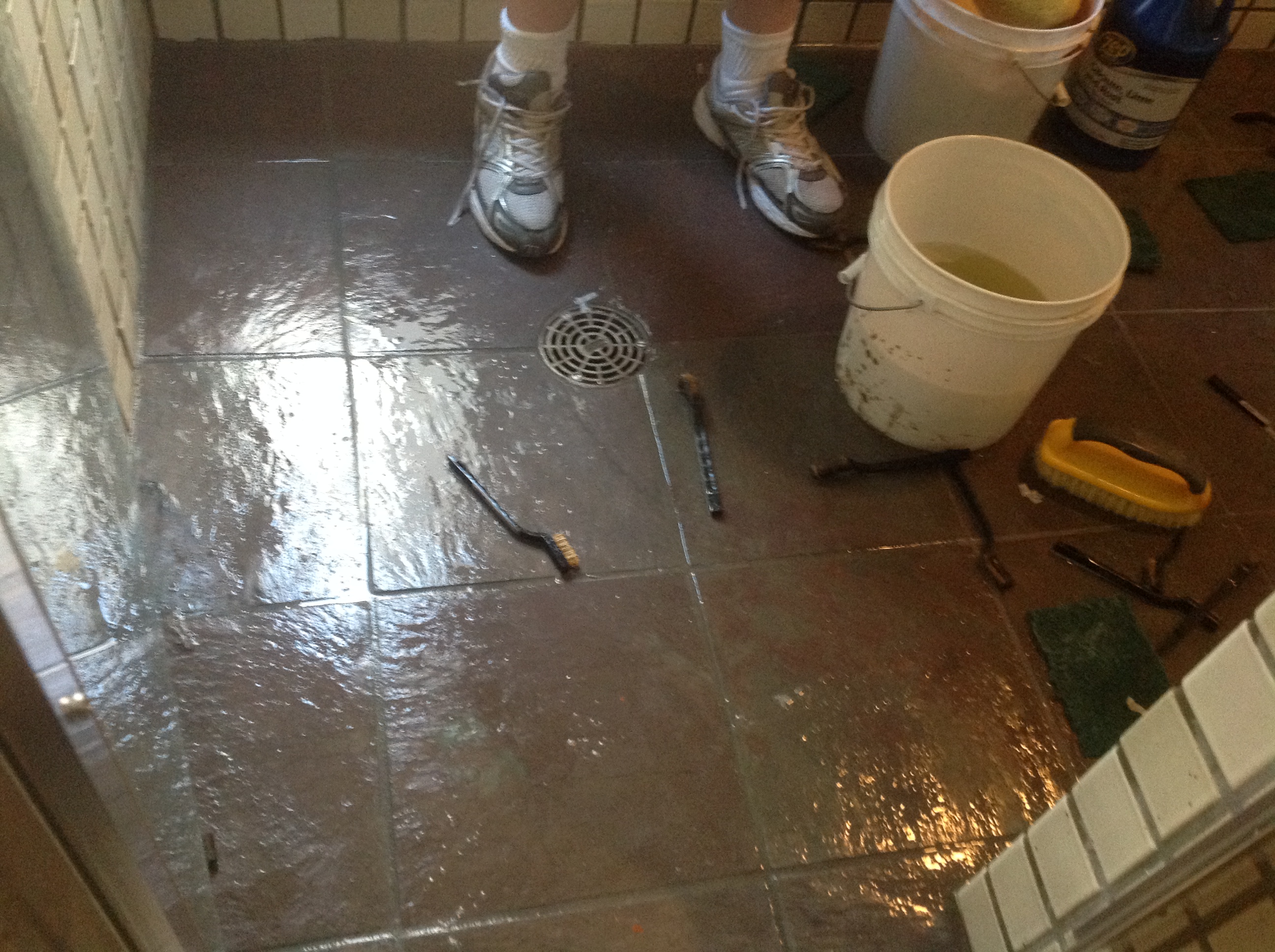
Deep Cleaning the Exposed Slate
Once failed coatings have been removed, the raw stone can often look lighter, flatter, or even somewhat ashy compared with the finished floor. That does not necessarily mean something has gone wrong. The previous coating may have been adding color depth and sheen that disappears once the slate is returned closer to its natural unfinished appearance.
This is the stage where the slate, grout joints, edges, and difficult areas can be carefully detailed. Grease, soil, old cleaner residue, and contamination that were previously trapped in or beneath the finish can then be addressed before a new sealer is applied.


Sealing Indoor Slate Tile Floors
Interior slate has different needs from exterior stone. Indoor floors typically deal with foot traffic, spills, oils, cleaning products, furniture, pets, and everyday dirt rather than constant exposure to rain and sunlight.
Depending on the type of slate and the appearance the homeowner wants, several sealing approaches may be considered.
Penetrating Sealers
A penetrating sealer absorbs into appropriate porous stone and helps reduce the amount of liquid that can soak into the surface. This can make spills easier to manage while maintaining a more natural-looking finish.
Color-Enhancing Sealers
A color-enhancing sealer can provide protection while also deepening the natural colors found in many types of slate. This is useful when the stone looks washed out or faded after cleaning and the goal is to bring more visual depth back to the floor without creating a heavy topical coating.
Topical Finishes for Appropriate Interior Slate
On suitable interior installations where a more finished appearance is desired, a compatible topical sealing and floor-finish system can create a protective layer above the stone. Depending on the system, the finished appearance may range from lower luster to a higher-gloss look.
The advantage of a properly maintained protective finish is that normal foot traffic, light scratching, and everyday contamination affect the sacrificial finish before they reach the slate itself. When maintained correctly, that can make future restoration easier.
Our tile sealing and polishing services include different finish options depending on the material, existing condition, and desired appearance.
Exterior Slate Requires a Different Approach
Outdoor slate is exposed to conditions an indoor floor never sees, including rain, irrigation, direct sunlight, temperature changes, standing moisture, dirt, mold, algae, and organic debris. Because of that exposure, I generally do not treat exterior slate with the same type of topical coating system that might be appropriate indoors.
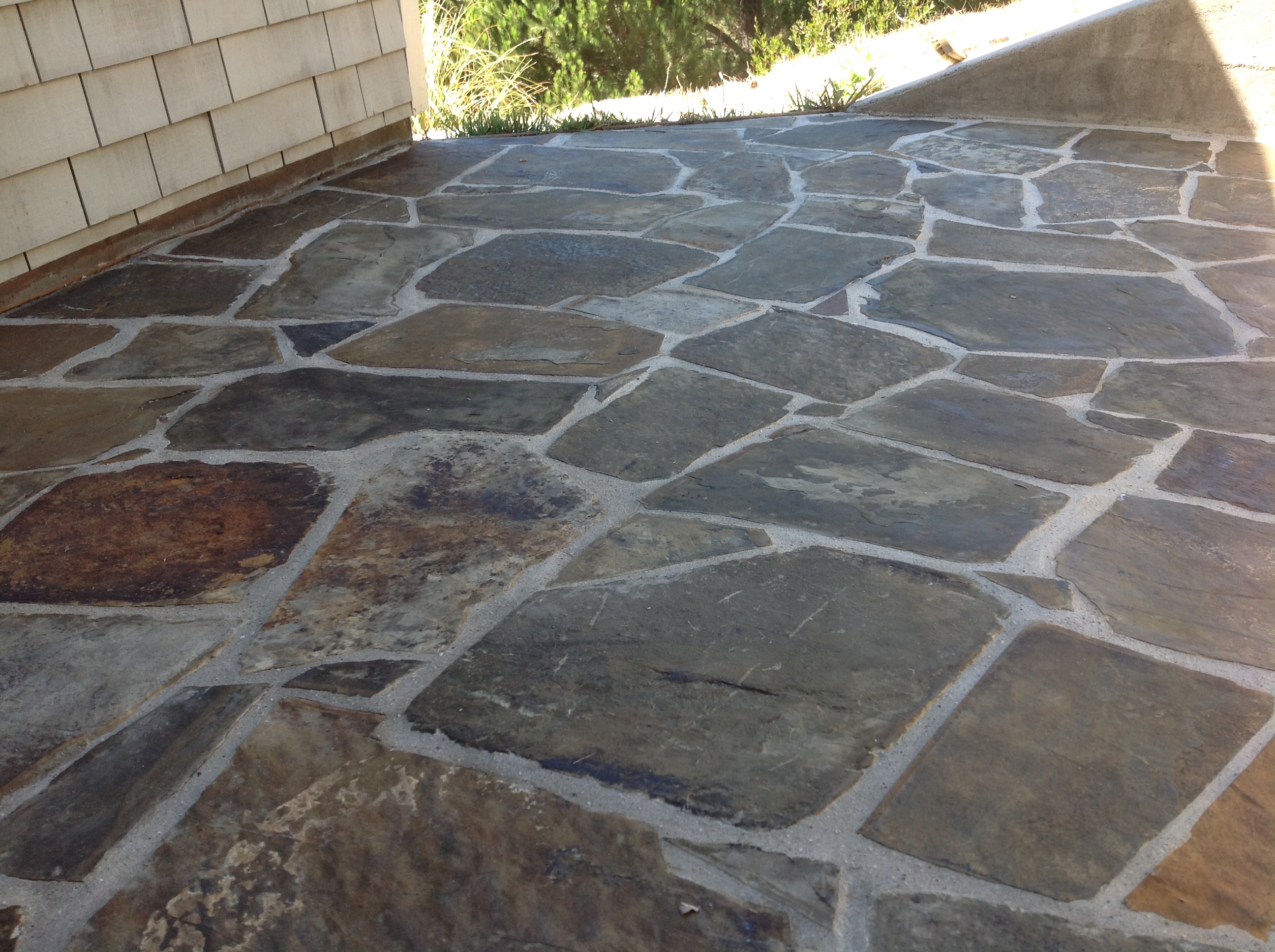
Penetrating or enhancing sealers are often better suited to exterior slate when the specific stone and installation are compatible with them. The correct product should be chosen based on the condition of the slate, exposure, drainage, existing coatings, and the appearance the homeowner wants.
You can see another real Northern California slate project in our article about cleaning and restoring an outdoor slate tile patio.
How Proper Slate Maintenance Can Prevent Another Full Strip
One of the reasons I put so much emphasis on maintenance is that a properly restored slate floor should not have to be completely stripped every time it begins to lose its appearance.
For interior floors using a compatible floor-finish system, periodic deep cleaning and renewing the sacrificial finish can help prevent wear from reaching the underlying sealer and stone. The exact maintenance schedule depends on foot traffic, cleaning habits, the type of finish, and how the floor is being used.
Waiting until the coating is completely worn through, heavily scratched, or filled with embedded dirt can turn a maintenance cleaning into a much larger restoration project.
When Does a Slate Floor Need Professional Restoration?
A slate floor may be ready for more than routine cleaning when you begin seeing several of these conditions:
- Old sealer is peeling, whitening, hazing, or wearing unevenly.
- The floor still looks dirty immediately after normal cleaning.
- Dirt or discoloration appears trapped beneath the existing finish.
- The grout has become heavily soiled and difficult to clean.
- The slate has lost much of its natural color or depth.
- Previous coatings were applied unevenly or are failing.
- High-traffic areas look dramatically different from the rest of the floor.
In many cases, the underlying slate may still be in good condition. The real issue is the worn finish and years of contamination sitting above it.
Professional Slate Floor Refinishing in Northern California
California Tile Restoration restores slate floors, patios, showers, entryways, walls, and other natural stone surfaces throughout Marin County, Sonoma County, Napa, the San Francisco Bay Area, and surrounding Northern California communities.
If your slate is dull, dirty, peeling, hazy, difficult to clean, or covered with an old failing finish, the first step is determining what is actually on the stone and what type of restoration process makes sense.
Need Help Restoring Your Slate?
See how we professionally clean, strip, seal, and restore slate surfaces throughout Northern California.
View Our Slate Floor Cleaning & Restoration Services
Call Fritz Wittmann at (707) 384-1172
Frequently Asked Questions About Slate Floor Refinishing
Can slate floors be deep cleaned without removing the old sealer?
Sometimes, but it depends on the condition of the existing finish. If dirt, grease, or discoloration is trapped beneath or within a deteriorated coating, surface cleaning alone may not reach it. In those cases, the old finish may need to be stripped before the slate and grout can be properly deep cleaned.
Why does slate sometimes look dull or ashy after stripping?
Once old sealer and floor finish are removed, slate can look lighter, flatter, or more ashy because the coating that previously added color depth and sheen is gone. After the stone has been properly cleaned and dried, an appropriate new sealer can restore protection and, depending on the product selected, may also enhance the slate's natural color.
What type of sealer is best for indoor slate floors?
There is no single sealer that is best for every slate floor. Penetrating sealers can provide a more natural appearance, color-enhancing sealers can deepen the stone's natural colors, and some appropriate interior installations may use a compatible topical finish system. The right choice depends on the slate, existing condition, traffic, and desired appearance.
Should topical or lacquer-style sealers be used on outdoor slate?
I generally avoid heavy topical or lacquer-style coatings on exterior slate. Rain, sunlight, moisture movement, and changing weather conditions can cause inappropriate exterior coatings to whiten, haze, peel, or otherwise deteriorate. Penetrating or enhancing sealers are often better suited to exterior slate when compatible with the stone.
How often should a slate floor be professionally maintained?
There is no universal schedule because maintenance depends on foot traffic, cleaning habits, the type of sealer or finish, and how the floor is used. The goal is to deep clean and renew the protective finish before it deteriorates badly enough that the entire slate floor needs to be stripped again.