
How to Stain and Seal Saltillo Tile the Right Way
Successful Saltillo tile staining starts with proper preparation and ends with proper sealing. If the old coating is not completely removed, the stain is applied too heavily, or the finished floor is not sealed correctly, the result can be streaky, blotchy, uneven, or poorly protected.
After more than 23 years of hands-on experience working with Saltillo, terracotta, and Mexican pavers, Fritz Wittmann has learned that the quality of a stained floor comes down to detail. The goal is not to paint every tile one flat color. It is to change the overall hue while still allowing the natural variation and character of the handmade clay to show through.
Preparation Comes First When Staining Saltillo Tile
Before Saltillo tile can be properly stained, the surface must be clean, dry, and free of old coatings that would prevent the stain from interacting evenly with the clay.
If the floor has an existing sealer or finish that needs to be removed, professional tile cleaning and sealer stripping should come first. Applying stain over a contaminated or partially coated surface can produce uneven color and adhesion problems later.
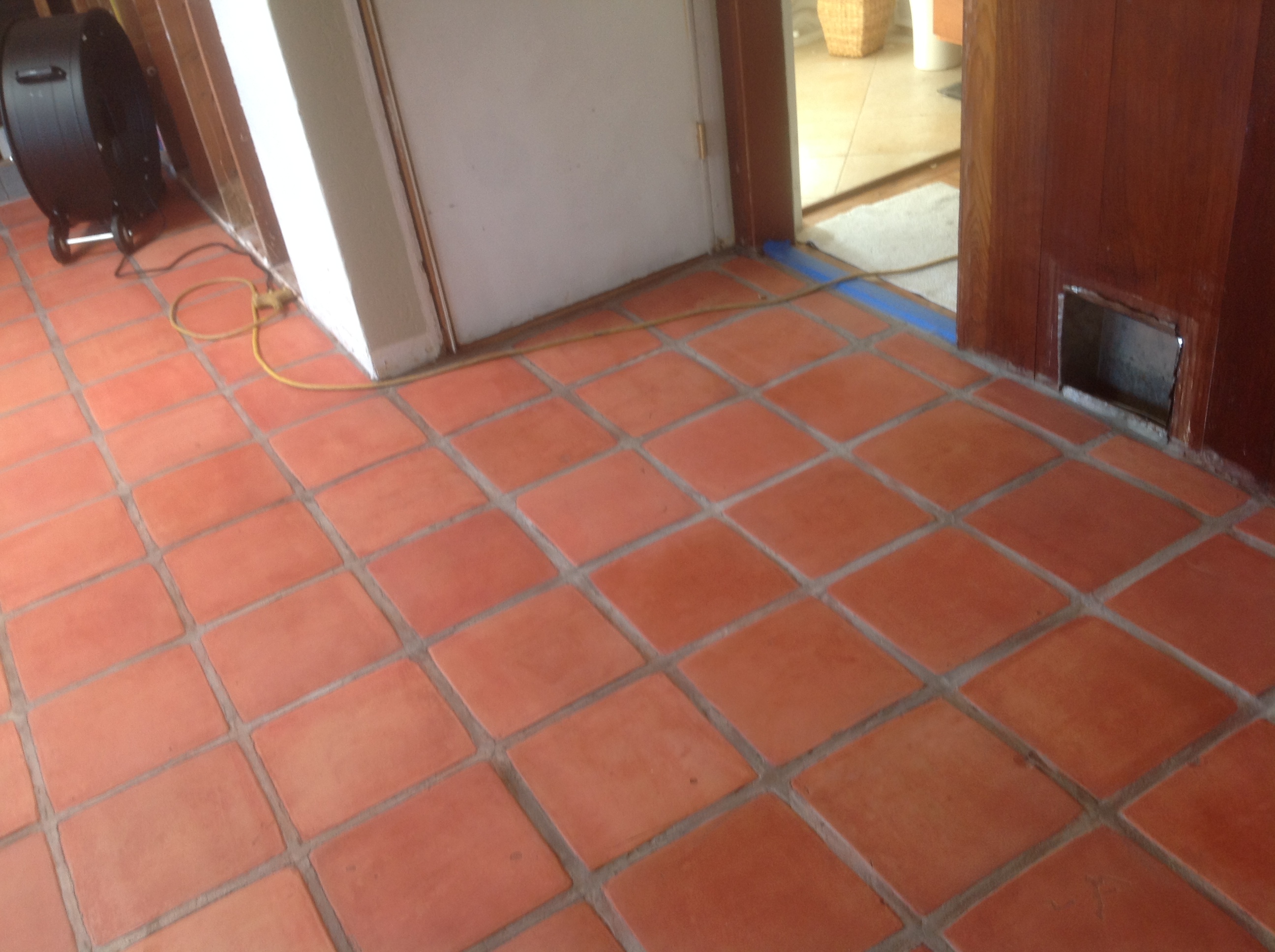
4 Common Saltillo Tile Staining Problems
Careful application matters because stain can quickly change the appearance of porous clay tile. Fritz pays particular attention to four common problems:
1. Streaking
Streaks can make Saltillo tile look artificially colored rather than naturally enhanced. Keeping the stain application controlled and consistent helps preserve the variation that gives Mexican pavers their character.
2. Overstaining
Too much stain can make Saltillo look painted rather than stained. When the color becomes too opaque, the natural blemishes, tones, and handmade characteristics of the clay can disappear beneath a uniform layer of color.
3. Getting Excess Stain Into the Grout
Stain that unintentionally gets into grout joints may need to be removed before sealing, which adds significant detail work. Walls, cabinets, doors, baseboards, and other surrounding surfaces should also be protected before staining begins.
4. Allowing Stain to Puddle
Puddled stain can create dark, blotchy, or mottled areas because too much color collects in one place. Working deliberately and avoiding excess product helps create a more consistent result.
3 Professional Tips for Staining Saltillo Mexican Tile
Fritz has developed his staining technique through decades of hands-on work with clay pavers. For the specific staining products and floors he works with, the following methods help him maintain control over the final color.
1. Keep the Stain Light and Build Color Gradually
Fritz prefers working with a diluted stain rather than applying a heavy color all at once. For products and projects where his established dilution method is appropriate, he may begin around 3 parts water to 1 part stain and adjust from there depending on the desired color and how the tile absorbs the product.
The exact dilution must match the specific stain being used. Product instructions, tile porosity, and test samples should always be considered before treating an entire floor.
2. Use a Grout Sponge for Better Control
A grout sponge can help control the application and minimize unnecessary overlap. Fritz often cuts the sponge down to a comfortable size so it can be handled precisely along tile edges and near grout joints.
The goal is to apply the stain intentionally rather than flooding the surface.
3. Clean Unwanted Stain From Grout Before Sealing
If excess stain reaches grout that is not intended to be colored, it should be corrected before the sealing process locks the finished appearance in place.
Fritz has used detailed hand-cleaning techniques to remove unwanted stain from grout on appropriate projects. The method should be chosen carefully based on the specific grout, stain, and condition of the installation rather than using an aggressive tool indiscriminately.
Why Saltillo Tile Must Be Sealed After Staining
Staining changes the color of the Saltillo; sealing provides the protection. Once the desired color has been achieved, the stained clay tile and grout need an appropriate sealing system to protect the finished surface from dirt, moisture, stains, traffic, and normal wear.
Without proper sealing, the stained appearance may be vulnerable to uneven wear or damage. Improper sealing can also create its own problems.
Common Problems When Sealing Stained Saltillo Tile
Applying Sealer Before the Stain Is Ready
The stained surface must be properly prepared for the next stage before sealer is applied. Rushing the process can affect the final appearance and performance of the finish.
Applying the Sealer Unevenly
Heavy or inconsistent application can create visible streaks or uneven sheen across the floor, particularly when light reflects across a large room.
Applying Too Little Sealer
Stained Saltillo can sometimes look visually finished before it has received enough protection. The clay and grout still need an appropriate sealing system built according to the tile, sealer, porosity, and intended use of the floor.
For more information about professional finishing options, visit our tile staining, sealing and polishing services.


Should Saltillo Tile Look Painted After Staining?
No. A good Saltillo stain should enhance or shift the overall color without completely hiding the natural character of the clay.
One of the biggest advantages of staining Saltillo instead of painting it is that the natural variation, imperfections, texture, and handmade appearance can remain visible.
Fritz began staining pavers at a young age and has spent years developing methods for custom color matching while preserving that natural variation.
If the color is applied too heavily, however, every tile can begin to look identical. Besides producing a more artificial appearance, excessively heavy stain can also affect how the subsequent sealer interacts with the surface.
Can Saltillo Tile Be Custom Stained to Match a Room?
Yes. Saltillo and other compatible Mexican pavers can be custom stained to coordinate more closely with flooring, cabinetry, furniture, wall colors, and other elements of a remodel.
This can be especially valuable when homeowners like the character and durability of their existing Saltillo floor but no longer like its original pink, yellow, orange, or terracotta tones.
Rather than tearing out an otherwise usable floor, custom staining can provide another design option while preserving the existing pavers.
Staining New Saltillo vs. Restoring Existing Saltillo
New and existing floors require different preparation.
New Saltillo Tile
New tiles may contain manufacturing dust and surface contamination that should be addressed before staining and sealing. Test samples are especially important because handmade pavers can absorb stain differently from one tile to another.
Existing Saltillo Tile
An existing floor may already have sealer, polish, stain, dirt, or other coatings that must be evaluated before recoloring. In many restoration projects, complete sealer removal is necessary before the clay can accept a new stain evenly.
Learn more about our complete Saltillo and tile restoration services.
Frequently Asked Questions About Staining Saltillo Tile
Can Saltillo tile be stained a different color?
Yes. Saltillo tile can be custom stained to shift or enhance its overall color while still allowing the natural characteristics of the clay to remain visible when the stain is applied correctly.
Do you have to strip Saltillo tile before staining it?
If an existing coating prevents the stain from reaching the clay evenly, the old sealer or finish needs to be properly removed first. The exact preparation depends on the condition of the existing floor.
Why does stained Saltillo tile look streaky?
Streaking can result from applying stain too heavily, allowing overlap to build up, uneven absorption, or inadequate surface preparation. Test samples and controlled application help reduce these problems.
Should Saltillo tile be sealed after staining?
Yes. The stain provides the desired color, while the sealing system protects the finished tile and grout from dirt, stains, moisture, traffic, and normal wear.
Can you stain Saltillo tile without making it look painted?
Yes. Fritz's preferred approach is to build color gradually so the natural variation, blemishes, and handmade character of the Saltillo remain visible rather than covering every tile with one opaque color.
Professional Saltillo Tile Staining in Northern California
California Tile Restoration provides custom Saltillo and Mexican paver staining, restoration, sealing, and color matching throughout San Rafael, Marin County, Sonoma County, Napa County, the Bay Area, and surrounding Northern California communities.
With more than 23 years of hands-on experience and more than 1,000 paver projects completed, Fritz Wittmann can help determine whether your existing Saltillo floor can be stripped, recolored, restored, and sealed rather than replaced.
Call Fritz at (707) 384-1172 to discuss your Saltillo tile staining project.
California Tile Restoration
CSLB #1074843