

2 Common Terracotta Tile Restoration Misconceptions
Terracotta tile restoration is often misunderstood. Two of the biggest misconceptions are that these porous clay tiles can be stripped just like any ordinary tile floor and that matching old tile and grout for future repairs is easy. In reality, both can create serious problems when the unique characteristics of Saltillo, terracotta, and Mexican pavers aren't properly understood.
After more than 23 years of hands-on experience and over 1,000 paver projects, I've encountered plenty of misinformation about restoring these floors. I've also seen what can happen when soft clay pavers are treated like ordinary ceramic tile or when homeowners discover too late that matching decades-old tile and grout isn't as simple as choosing a similar color from a sample chart.
For homeowners with Spanish-style homes throughout Northern California, the Bay Area, Marin County, Sonoma County, Napa County, San Rafael, and surrounding areas, understanding these two misconceptions can help you make better decisions before cleaning, stripping, refinishing, repairing, or remodeling around an existing terracotta tile floor.
First, Understand the Difference Between Cleaning and Stripping Terracotta Tile
Before getting into the two misconceptions, it's important to understand that cleaning and stripping are not the same process. Cleaning removes accessible dirt and buildup, while stripping involves removing the existing sealer or finish from the tile and grout.
Watch the video below for a closer look at the difference between cleaning and stripping terracotta and Mexican tile:
If dirt has become embedded in an old or deteriorated coating, ordinary cleaning may no longer solve the problem. You can learn more about why cleaning Saltillo tile sometimes stops working and when complete sealer removal may become necessary.
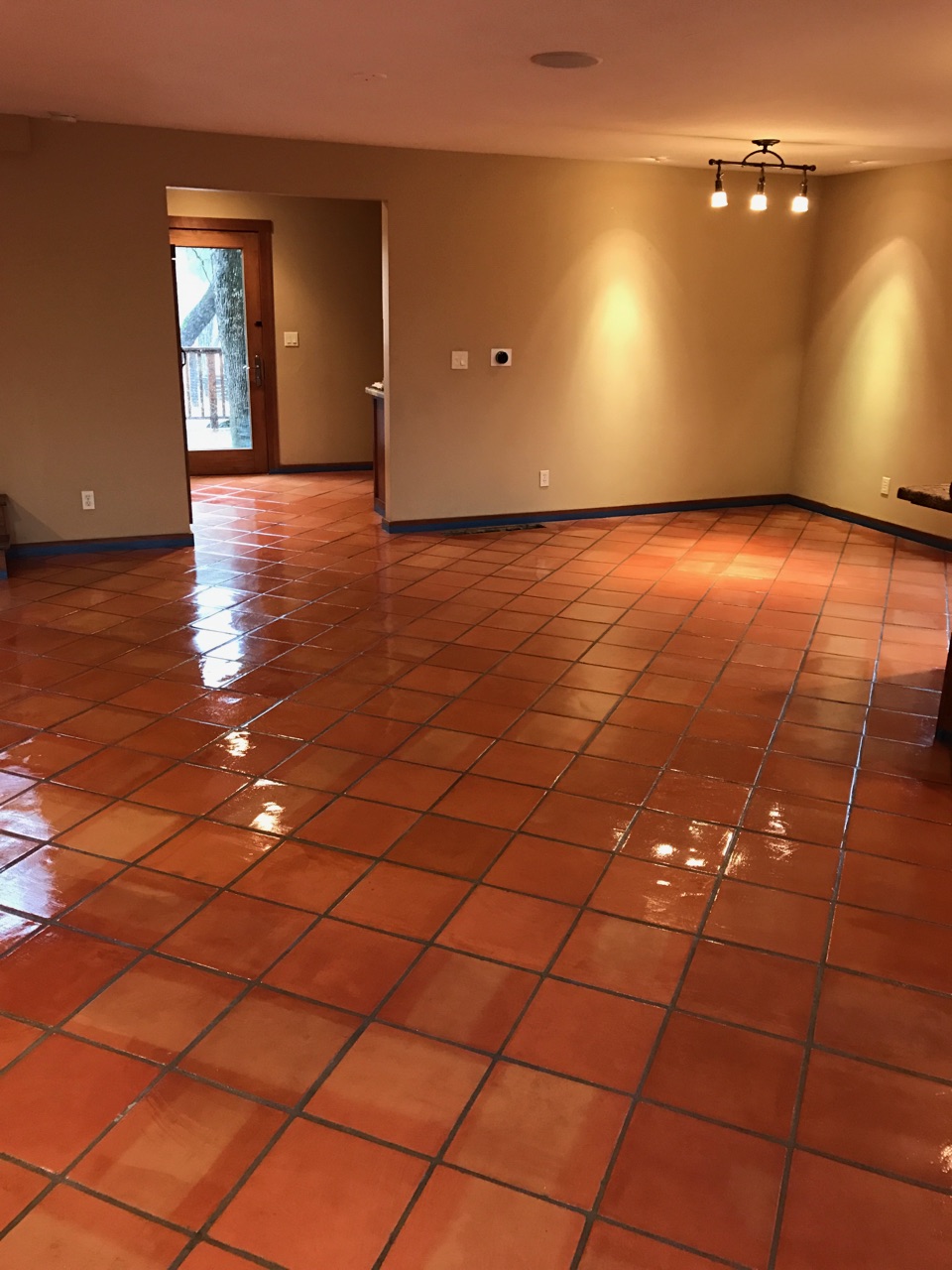
Misconception #1: Terracotta Tile Can Be Stripped Like Any Other Floor
The misconception: Terracotta tile floors can simply be stripped with a machine and a water-based stripper using the same process used on ordinary tile floors.
The reality: Soft, porous clay tiles such as Saltillo, Tecate, and other terracotta pavers require a much more specialized approach. In my experience, machines lack the precision necessary to completely detail the grout joints, edges, corners, stairs, underneath cabinets, behind toilets, and other difficult-to-reach areas.
This is one of the major reasons California Tile Restoration performs detailed paver restoration work by hand, on hands and knees. The goal is to remove the old sealer thoroughly while carefully detailing the entire floor rather than relying on a machine that cannot properly reach every part of the tile and grout.
Why Complete Sealer Removal Matters
When an old sealer or finish has failed, simply cleaning the surface or partially removing the coating may not be enough. Remaining sealer can trap embedded dirt and interfere with the bond and appearance of the new finish.
That's why proper tile cleaning and sealer stripping is such an important part of the restoration process. The existing coating must be addressed correctly before the raw tile and grout can be properly cleaned, detailed, dried, and resealed.
As I explain in my article about whether you should replace or restore an existing Saltillo tile floor, many old paver floors can potentially be brought back to life when the underlying tile is still suitable for restoration.
Why Water and Machines Can Create Problems for Porous Clay Tile
Saltillo and terracotta are porous clay materials, which means excessive water can become a serious concern during restoration. These tiles can absorb moisture and take considerable time to dry completely before a new sealer is applied.
Improper methods may contribute to problems such as white or cloudy areas, efflorescence, deterioration, or moisture-related sealer failure. Exterior pavers face additional challenges from rain, sprinklers, standing water, UV exposure, mold, and algae.
For a deeper look at this issue, see my guide to tile water damage and efflorescence restoration.
Watch the video below for more insight into terracotta and Mexican tile restoration:
Misconception #2: Matching Old Tile and Grout Is Easy
The misconception: If you need future repairs, replacements, or renovations, finding matching tile and grout should be easy.
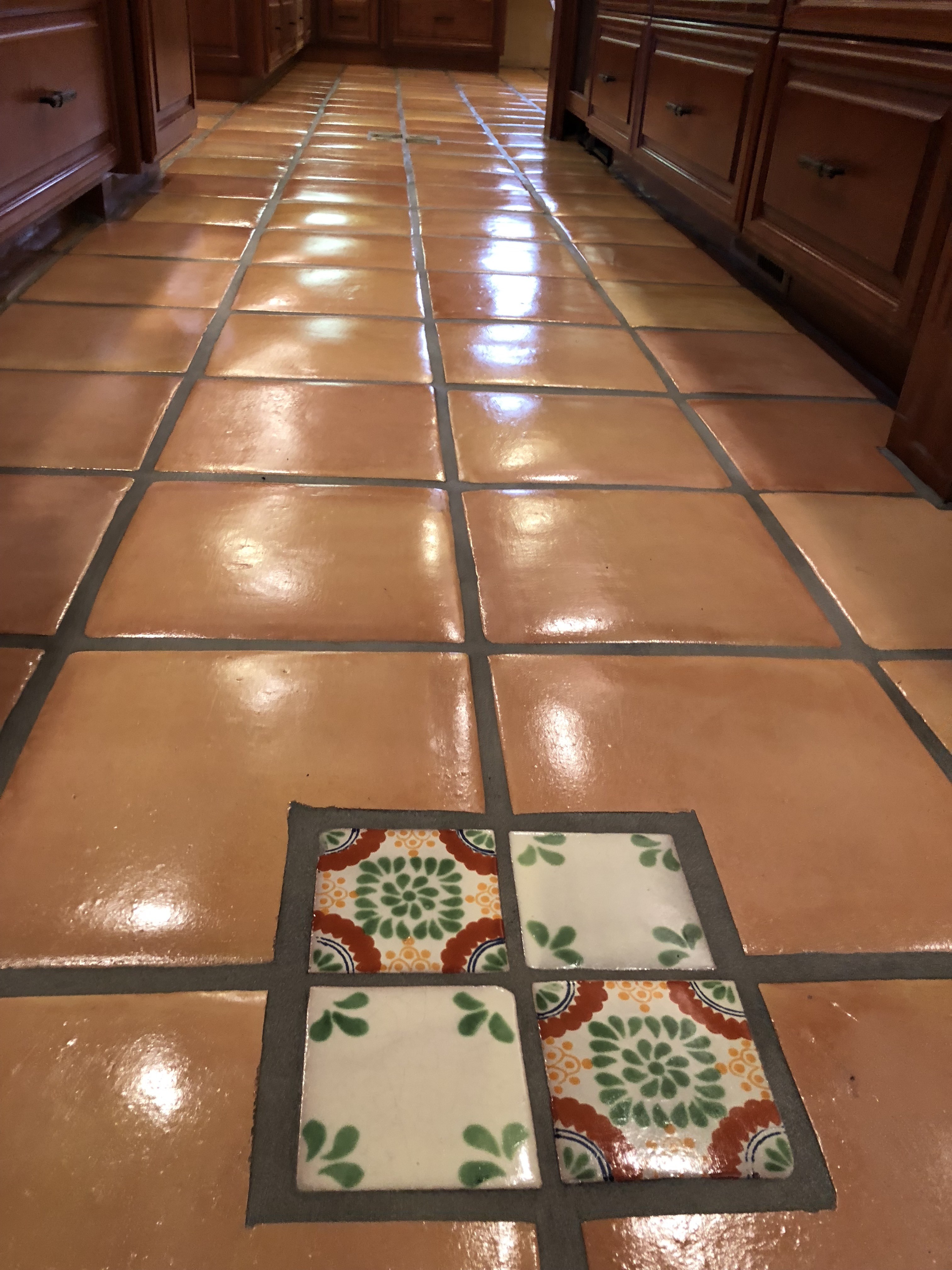
The reality: Matching an existing terracotta floor can be much more difficult than it appears. Grout is available in many similar shades, and the color you see today may not be the original color at all. Years of dirt, cleaning residue, moisture, wear, and old coatings can significantly change its appearance.
It's surprisingly easy to accidentally match new grout to dirty existing grout rather than its original clean color.
Why Old Grout Can Fool You
Dirt buildup is often gradual. When you see the same floor every day, subtle changes can become difficult to notice. Regular mopping can also move dirty water into recessed grout joints, where buildup may accumulate over time.
That's one reason homeowners sometimes believe their grout is clean when its current color is actually the result of years of accumulated dirt.

Keep Records of Your Tile and Grout Products
If you're installing a new floor or already know which products were originally used, keep records of the manufacturer, product line, tile size, color, grout brand, and grout color. Saving a few extra matching tiles can also be extremely valuable for future repairs.
Manufacturers can go out of business, product lines can be discontinued, companies can be acquired, and imported tiles can become difficult or impossible to find years later.
When exact replacement tiles aren't available, specialized paver tile installation and replacement work may require careful selection and color matching to help new material blend more naturally with the existing floor.
Can Existing Terracotta Tile Be Color Matched?
In many cases, staining and custom color matching can help new or replacement pavers coordinate more naturally with an existing floor. However, the process requires experience because the goal should generally be to preserve the natural variation and character of the clay rather than simply covering every tile with a flat, paint-like layer of color.
California Tile Restoration provides tile staining, custom color matching, sealing, and polishing services for Saltillo, terracotta, and other paver surfaces.
What Homeowners Should Remember Before Restoring Terracotta Tile
- Terracotta and Saltillo are porous clay materials and should not automatically be treated like ordinary ceramic tile.
- Cleaning and stripping are different processes. If dirt is embedded in deteriorated sealer, routine cleaning may not be enough.
- Machines cannot properly detail every grout joint, edge, corner, stair, or hard-to-reach area.
- Matching old grout by appearance alone can be misleading because accumulated dirt may have significantly changed its color.
- Keep records and spare materials whenever installing new tile or grout for easier future repairs.
- Experience matters when matching replacement pavers or staining tile to coordinate with an existing floor.
Need Help With Terracotta Tile Restoration in Northern California?
If you're considering restoring, refinishing, repairing, staining, or resealing an existing terracotta or Saltillo tile floor, California Tile Restoration can help you understand what your floor actually needs before work begins.
With more than 23 years of hands-on experience and over 1,000 paver projects completed, Fritz Wittmann specializes in the detailed restoration of Saltillo, terracotta, Mexican pavers, and other tile and stone surfaces.
California Tile Restoration serves homeowners throughout Northern California, including the Bay Area, Marin County, Sonoma County, Napa County, San Rafael, and surrounding communities.
Explore our complete tile restoration services or call (707) 384-1172 to discuss your tile floor and restoration goals.
Frequently Asked Questions About Terracotta Tile Restoration
Can terracotta tile be stripped with a floor machine?
California Tile Restoration does not rely on floor machines for detailed Saltillo and terracotta paver restoration because machines cannot properly reach every grout joint, edge, corner, stair, area under cabinets, or other difficult space. Detailed work is performed by hand to address the entire floor more thoroughly.
What is the difference between cleaning and stripping terracotta tile?
Cleaning removes accessible dirt and buildup from the floor, while stripping removes the existing sealer or finish. When dirt has become embedded in old or deteriorated sealer, ordinary cleaning may no longer restore the floor's appearance.
Why is matching old grout so difficult?
Existing grout may have changed appearance because of years of dirt, cleaning residue, moisture, and wear. This can make it easy to accidentally match new grout to the dirty current color rather than the original clean grout color.
Can new terracotta tiles be matched to an existing floor?
In many cases, careful tile selection, staining, and custom color matching can help new or replacement pavers coordinate with an existing floor. Results depend on the original tile, its age and condition, and the availability of suitable replacement material.
Should I save extra tiles after installing a terracotta floor?
Yes. Saving extra tiles and keeping records of the manufacturer, product line, size, color, grout brand, and grout color can make future repairs much easier because products may later be discontinued, renamed, or become unavailable.
Hi there,
Wondering if terracotta floors can be painted? I’d love to do a dark slate but can’t find information on if that’s a thing once they’re stripped or not. Any information would be appreciated. Thank you! Great videos!
Yes! Terracotta floors CAN be stained! Give me a call or go to our YouTube channel at California Tile Restoration and you can go through tons of staining videos under the staining playlist